VR Real Estate Tours: Key Benefits
Advantages of Virtual Reality Tours for Real Estate Pros
TL;DR:
- Virtual reality tours are immersive 3D walkthroughs that enhance client engagement and shorten decision timelines. They expand market reach, improve emotional connections, and reduce costs by replacing physical showings with virtual previews. Most professionals benefit from photorealistic 3D rendered tours, which offer the best balance of quality and flexibility.
Virtual reality tours are immersive, interactive 3D walkthroughs that let clients explore a property or design from any device, anywhere in the world. The advantages of virtual reality tours extend well beyond novelty. For real estate agents, architects, and marketing professionals, these experiences directly improve client engagement, accelerate purchase decisions, and reduce the operational costs tied to physical showings. Research published in 2026 confirms that immersive VR experiences increase brand loyalty by 66.36% and customer retention by 65.48%. Those numbers represent a fundamental shift in how professionals can build lasting client relationships.
1. the core advantages of virtual reality tours
The primary VR tour advantages are stronger client engagement, broader market reach, faster decision cycles, and lower overhead. These benefits apply across real estate sales, architectural presentations, and digital marketing campaigns. Unlike static photography or 2D floor plans, a virtual reality experience places the client inside the space. That psychological presence changes how people process and remember what they see. Passive media informs. Immersive media convinces.
2. deeper emotional connection with clients
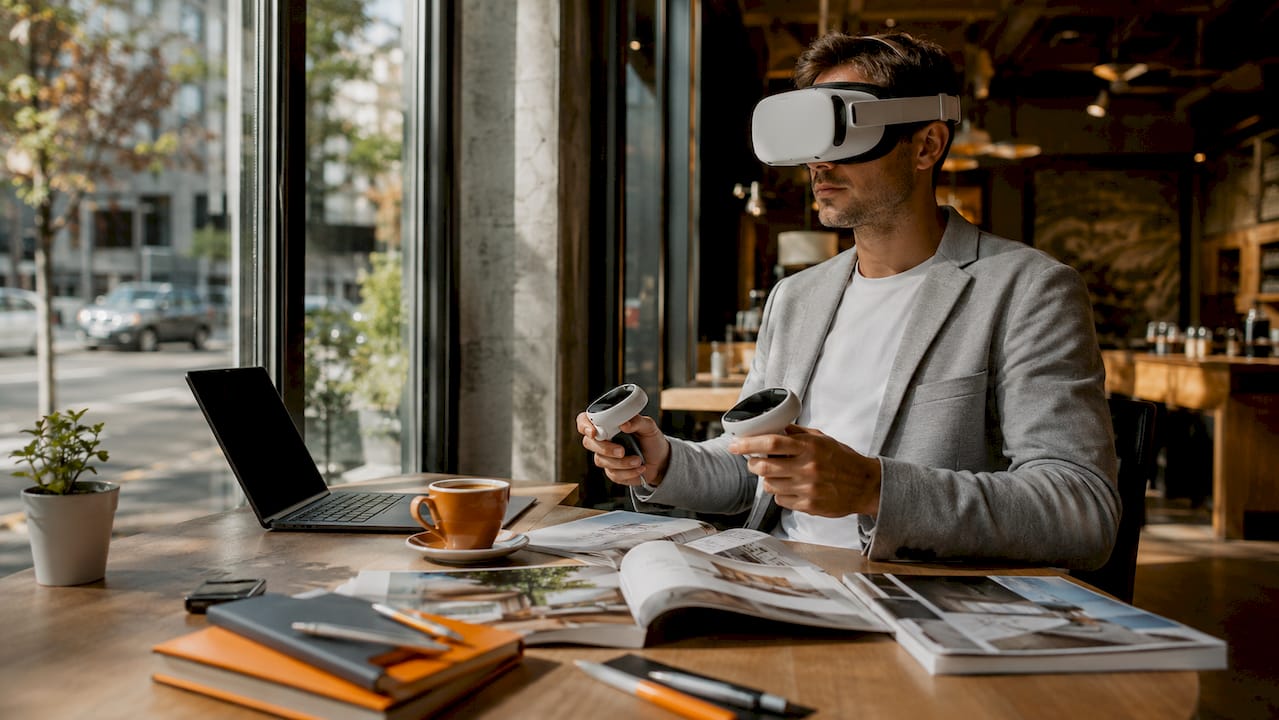
Immersive visualization creates a measurable psychological bond between the client and the property or design. 360° virtual tours enhance both hedonic and utilitarian engagement, improving purchase intentions and the likelihood of a follow-up visit. That means clients who take a VR tour are more likely to schedule an in-person visit and more likely to buy.
The virtual reality tour benefits here go beyond aesthetics. When a client can walk through a penthouse in Miami from their office in Chicago, they form a spatial memory of the space. That memory carries emotional weight. Architects presenting unbuilt projects gain the same advantage: clients approve designs faster when they can experience them rather than interpret them from drawings.
Key emotional engagement drivers in VR tours include:
- Spatial presence: The sense of actually being inside the space, not just viewing it
- Interactive control: Letting clients move at their own pace and focus on what matters to them
- Narrative layers: Embedded hotspots, voiceovers, and material selectors that guide attention
“VR fosters stronger psychological connection to brands than passive digital media, contributing to sustained client loyalty and retention.”, F1000Research
Pro Tip: Add interactive hotspots and audio narration to your VR tours. Clients who engage with embedded content spend significantly more time inside the experience, which correlates directly with higher conversion rates.
3. accessibility and convenience for every client
Virtual reality tours remove every physical barrier between a client and a property. VR previews provide access to otherwise physically challenging or expensive locations, expanding the potential client base for any listing or project. A buyer with mobility restrictions, an investor based overseas, or a time-constrained executive can all tour a property with the same depth of experience as someone who shows up in person.
The practical benefits of VR tours for accessibility and convenience include:
- 24/7 availability: Clients explore on their schedule, not yours. A listing in Miami can be toured at midnight by a buyer in London.
- Geographic reach: International buyers represent a significant share of luxury real estate transactions. VR removes the need for a transatlantic flight before a purchase decision.
- Multiple properties in one session: A client can tour five properties in 30 minutes without leaving their desk, narrowing their shortlist before any physical visit.
- Pre-screening efficiency: Agents and developers use VR to qualify serious buyers before committing staff time to in-person showings.
- Inclusive access: Clients with physical disabilities or health concerns can fully engage with a property without accommodation barriers.
Pro Tip: Use VR previews as a pre-screening step. Send the tour link before scheduling any in-person visit. Clients who complete the virtual tour and still request a showing are far more likely to be serious buyers.
4. time and cost savings in sales and marketing
VR tours reduce time and cost by decreasing unnecessary physical tours and accelerating decision timelines in real estate sales. Fewer in-person showings mean lower travel costs, less staff time, and fewer staged property sessions. For developers marketing pre-construction units, the savings are even more significant because there is no physical product to show at all.
| Factor | Traditional Methods | VR Tour Approach |
|---|---|---|
| Client visits per sale | 8–12 in-person showings | 2–4 after VR pre-screening |
| Geographic reach | Local and regional buyers | Global audience |
| Staging and setup costs | High, recurring per showing | One-time production cost |
| Decision timeline | Weeks to months | Days to weeks |
| Cancellation rate | Higher due to mismatched expectations | Lower with realistic previews |
Travel businesses that adopted VR destination previews report measurable revenue growth and improved operational efficiency. The same logic applies directly to real estate and architecture. When clients arrive at a physical showing already familiar with the space, the conversation shifts from orientation to negotiation.
Pro Tip: For pre-construction projects, a photorealistic VR walkthrough replaces the need for a physical show unit entirely. The production cost is a fraction of building and maintaining a staged model apartment.
5. marketing effectiveness and competitive differentiation
Interactive VR content increases website traffic, lowers bounce rates, and provides competitive marketing differentiation. A listing page with an embedded VR tour holds visitor attention far longer than one with static photos. Longer time-on-page signals quality to search engines and signals seriousness to the agent reviewing analytics.
The impact of virtual tours on marketing performance is concrete:
- Lead quality improves: Prospects who engage with a VR tour self-select as serious. They have already invested time in the experience.
- Listings stand out: In saturated markets like Miami, New York, or Los Angeles, a VR tour is a visible differentiator on any listing platform.
- Client data becomes actionable: VR platforms track where users spend time, what they click, and where they exit. That behavioral data informs follow-up conversations and future marketing decisions.
- Social sharing potential: Immersive experiences are inherently shareable. A compelling VR tour of a luxury property travels across LinkedIn, Instagram, and email chains in ways that a photo gallery does not.
Architects and developers who present unbuilt projects with immersive 3D walkthroughs win more pitches. Clients and investors respond to confidence. A photorealistic virtual tour communicates that the team has fully thought through the design.
6. choosing the right VR tour format
The three primary VR tour formats each serve different professional needs, budgets, and project types.
| Format | Best For | Strengths | Limitations |
|---|---|---|---|
| 360° photo tours | Existing properties, quick turnaround | Low cost, fast production, widely compatible | Limited interactivity, no design flexibility |
| 3D rendered walkthroughs | Pre-construction, architectural presentations | Photorealistic, fully customizable, no physical space needed | Higher production time and cost |
| Interactive VR apps | High-value developments, investor presentations | Maximum immersion, material selectors, real-time changes | Requires VR headset for full experience |
For most real estate and architecture professionals, 3D rendered walkthroughs offer the best balance of quality and flexibility. They work for both existing and unbuilt properties, and they can be delivered as browser-based experiences that require no special hardware from the client.
Selection criteria worth weighing include project complexity, the client’s technical comfort level, the marketing channel where the tour will be deployed, and whether the project is pre-construction or existing. For residential projects where planning approval is still in progress, a VR walkthrough paired with residential project planning services gives stakeholders a complete picture before any ground is broken.
Pro Tip: Partner with a specialized architectural visualization firm for photorealistic tours rather than using automated 360° camera rigs. The quality gap is visible to clients, and quality signals credibility.
Key takeaways
Virtual reality tours give real estate, architecture, and marketing professionals a measurable edge in client engagement, sales speed, and market reach that static media cannot replicate.
| Point | Details |
|---|---|
| Engagement drives loyalty | VR immersion increases brand loyalty by 66.36% and retention by 65.48% compared to passive media. |
| Accessibility expands reach | 24/7 availability and geographic freedom open listings to international and mobility-restricted clients. |
| Cost savings are real | VR pre-screening reduces in-person showings and cuts staging costs with a single production investment. |
| Marketing metrics improve | Interactive VR content lowers bounce rates, improves lead quality, and generates behavioral data for follow-up. |
| Format selection matters | 3D rendered walkthroughs deliver the best quality-to-flexibility ratio for most real estate and architecture projects. |
What we’ve learned after 1,000+ VR projects
The professionals who get the most from virtual reality tours are not the ones with the biggest budgets. They are the ones who deploy VR at the right moment in the client journey. At Rendimension, we have seen this pattern repeat across residential developments, commercial pitches, and architectural competitions.
The most common mistake is treating a VR tour as a final deliverable rather than a sales tool. A tour that sits on a listing page with no follow-up strategy generates curiosity but not conversions. The teams that win use VR to open a conversation. They send the tour link before a call, then discuss what the client noticed, what they loved, and what they want to change. That feedback loop accelerates approvals and reduces revision cycles dramatically.
We have also watched client expectations shift. Two years ago, a VR walkthrough was a differentiator. Today, buyers and investors in competitive markets increasingly expect it. Developers who still rely on static renders and physical show units are not just behind on technology. They are communicating a lower level of preparation and confidence than their competitors.
The technology barrier has also dropped significantly. Browser-based VR tours now work on any laptop or smartphone without a headset. That removes the last practical objection most clients had. The question is no longer whether to adopt VR tours. The question is how quickly you can make them part of your standard process.
, Rendimension
See these benefits in action with Rendimension
Rendimension produces photorealistic VR walkthroughs and 3D rendering services tailored to real estate developers, architects, and marketing teams across the US and globally. With over 1,000 completed projects, the team delivers browser-based virtual tours that work on any device, with no headset required for your clients.
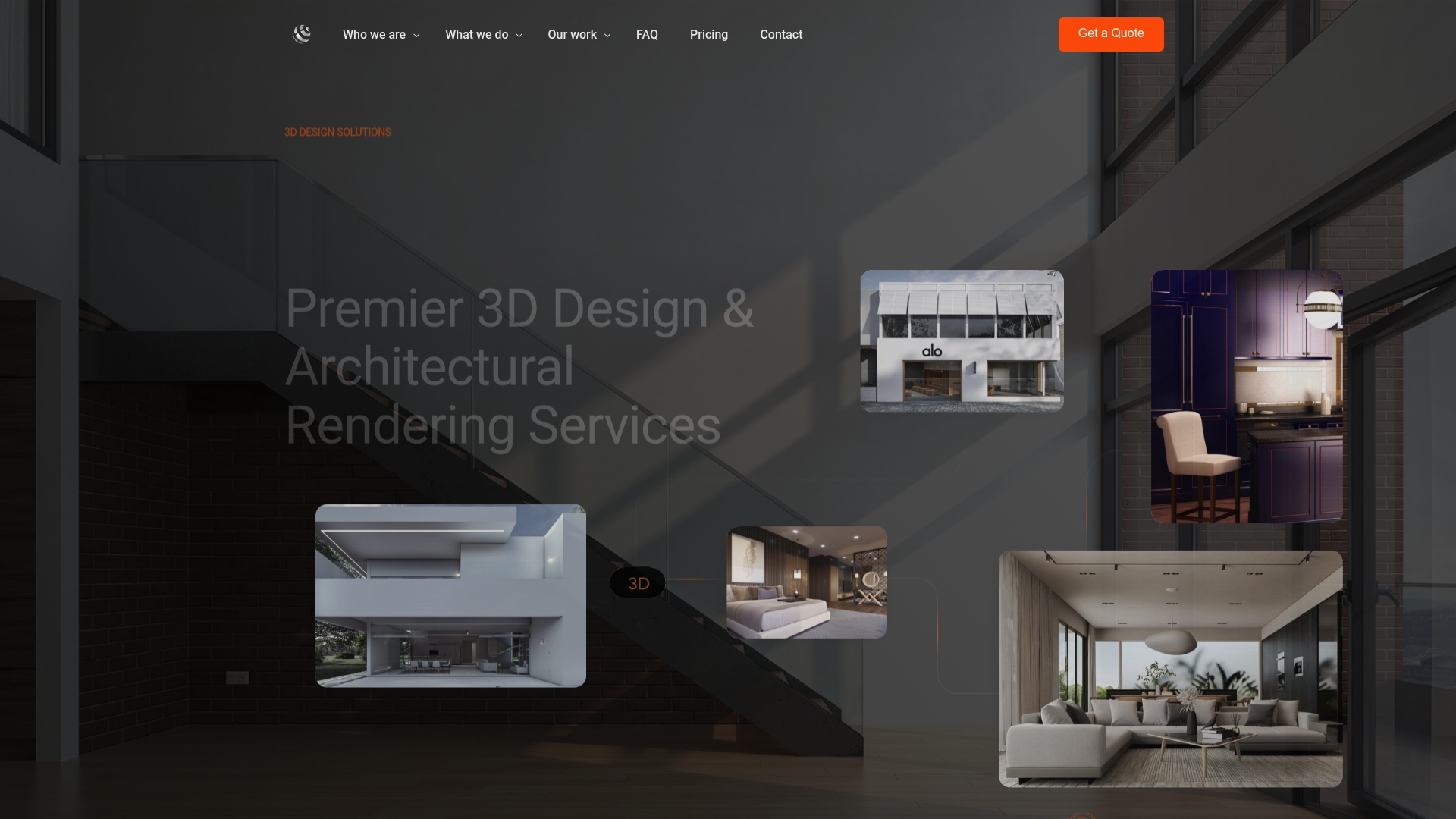
Whether you are marketing a pre-construction development, presenting a design to investors, or building a digital sales toolkit, Rendimension’s VR real estate solutions translate your project into an experience clients remember and act on. The process is collaborative from concept to delivery, with photorealistic quality that reflects the full ambition of your project.
FAQ
What are the main advantages of virtual reality tours in real estate?
VR tours increase client engagement, reduce unnecessary in-person showings, and accelerate purchase decisions. Research confirms they improve brand loyalty by 66.36% and customer retention by 65.48% compared to passive media.
Do VR tours work for pre-construction properties?
Yes. 3D rendered VR walkthroughs are especially valuable for pre-construction projects because they create a photorealistic experience of a space that does not yet exist, enabling sales and investor presentations before a single wall is built.
How do VR tours improve marketing performance?
Interactive VR content increases time-on-page, lowers bounce rates, and generates behavioral data showing where clients focus their attention. That data directly informs follow-up conversations and marketing strategy adjustments.
What VR tour format is best for architectural presentations?
3D rendered walkthroughs offer the strongest combination of photorealistic quality and design flexibility. They work for both existing and unbuilt projects and can be delivered as browser-based experiences requiring no special hardware.
Can VR tours reach international buyers effectively?
VR tours are accessible 24/7 from any device worldwide, making them the most practical tool for engaging international buyers who cannot travel for an initial property review before committing to a visit.
Recommended
- How VR boosts property development outcomes
- Why Choose Digital Walkthroughs for Real Estate in 2026 | Rendimension Blog
- Why VR tours boost property sales and design ROI
- Virtual Tour Examples - Rendimension | 3D Rendering
Frequently asked questions
What are the main advantages of virtual reality tours in real estate?
VR tours increase client engagement, reduce unnecessary in-person showings, and accelerate purchase decisions. Research confirms they improve brand loyalty by 66.36% and customer retention by 65.48% compared to passive media.
Do VR tours work for pre-construction properties?
Yes. 3D rendered VR walkthroughs are especially valuable for pre-construction projects because they create a photorealistic experience of a space that does not yet exist, enabling sales and investor presentations before a single wall is built.
How do VR tours improve marketing performance?
Interactive VR content increases time-on-page, lowers bounce rates, and generates behavioral data showing where clients focus their attention. That data directly informs follow-up conversations and marketing strategy adjustments.
What VR tour format is best for architectural presentations?
3D rendered walkthroughs offer the strongest combination of photorealistic quality and design flexibility. They work for both existing and unbuilt projects and can be delivered as browser-based experiences requiring no special hardware.
Can VR tours reach international buyers effectively?
VR tours are accessible 24/7 from any device worldwide, making them the most practical tool for engaging international buyers who cannot travel for an initial property review before committing to a visit.