6 NDA Steps Architects and Designers Must Take Before Sharing 3D Models

6 NDA Steps Architects and Designers Must Take Before Sharing 3D Models
Require a short, project-specific NDA plus explicit use and ownership terms before sending 3D models or renders anywhere. This applies whenever the files contain confidential floor plans, unreleased designs, or proprietary specs. Pair the 3d rendering NDA with file-security measures, and add a C106-style data license when multiple parties will use the files. Federal trade-secret law and copyright rules back up why this matters, not just contract habit.
TL;DR:
- Using an NDA alone is insufficient without implementing access controls, labeling files clearly, and maintaining detailed audit logs to meet legal standards and protect trade secrets.
- Pairing an NDA with a digital data license like AIA Document C106 clarifies permitted use, transmission procedures, and ownership rights to prevent misuse and enforceability issues.
- Explicitly defining scope, duration, security measures, and remedies in your confidentiality agreement reduces the risk of costly court disputes and strengthens enforceability.
- Ownership of renders defaults to the creator unless a signed work-for-hire or assignment agreement is in place before work begins, so negotiate ownership terms early.
- Establish confidentiality and security protocols at project kickoff, including flow-down clauses for subcontractors, to ensure operational practices support the legal protections of your NDA.
Table of Contents
- What an NDA Actually Does for 3D Models, and What It Can Cost You in Court
- Why an NDA Alone Is Not Enough: AIA C106 and Digital Data Protocols
- What to Insist On in Your Rendering NDA or Data-License
- The File-Handling Habits That Make Your NDA Enforceable
- Who Owns the Renders? Copyright, Work-for-Hire, and Licensing
- The Kickoff Checklist for a Rendering Project That Won’t Bite You Later
- Rendimension’s Perspective: Building Confidentiality Into the Process, Not Bolting It On
- Secure 3D Visualization, Built Around a Contract That Actually Protects You
- Sources
- FAQ
What an NDA Actually Does for 3D Models, and What It Can Cost You in Court
A non-disclosure agreement is a contract where both sides legally commit to keeping specific information confidential. Breach it, and the aggrieved party can sue for injunctive relief and damages, not just a stern email. For 3D rendering work specifically, the stakes are higher than most clients assume, because unreleased floor plans, unbuilt facades, and proprietary product geometry often qualify as trade secrets in their own right.
Under the federal Defend Trade Secrets Act, an owner of misappropriated trade secrets can sue in federal court and pursue injunctive relief, actual damages, a reasonable royalty, and in some cases exemplary damages plus attorney’s fees. That is a meaningfully broader remedy set than a plain breach-of-contract claim. But courts do not hand out trade-secret protection automatically. A design has to derive real economic value from staying secret, and the owner has to show it took reasonable steps to protect it.
That second requirement is where most rendering NDAs fall apart in practice:
- A signed NDA with no access controls behind it reads as thin evidence in court.
- Judges weigh whether files were actually restricted, labeled, and tracked, not just promised to stay private.
- The DTSA and most state trade-secret statutes (following the Uniform Trade Secrets Act) share this “reasonable measures” standard, so the paperwork and the file handling have to match.
Why an NDA Alone Is Not Enough: AIA C106 and Digital Data Protocols
An NDA protects secrecy. It does not answer a separate question: who can use the model, and for what. That is where a data-licensing instrument comes in, and it is a common gap in rendering contracts.
AIA Document C106 is built for exactly this. It grants a nonexclusive, limited license to use digital data on a specific project, sets transmission procedures, and requires the transmitting party to warrant that it actually has the right to share the digital data in the first place. Critically, C106 does not transfer ownership. It just defines permitted use. The 2022 revision sharpened this further, letting parties flag whether data is information only or open to permitted reliance, and adding compensation and termination terms.
Project-level Digital Data Protocol exhibits go a level deeper. They spell out file formats, transmission methods, authorized uses, and model-management rules that every party on the project agrees to follow.
Reach for one of these instruments, on top of your NDA, when:
- More than one firm or contractor will touch the same model or render set.
- You expect the renders to feed marketing, leasing, or investor materials down the line.
- Compensation for reuse of the digital data is likely to come up later.
What to Insist On in Your Rendering NDA or Data-License
A vague confidentiality paragraph copied from a template will not hold up when it matters. Every 3D rendering confidentiality agreement should nail down these clauses before a single file gets transferred.
- Confidential Information, defined precisely. Name the specific files, formats, and project data covered, and require that they be marked “Confidential” in the metadata or subject line, not just described loosely.
- Permitted disclosures and carve-outs. Allow disclosure to named subcontractors on a need-to-know basis, but only if those parties sign on to the same obligations. This flow-down requirement keeps a multi-party project moving without weakening the protection.
- Scope of use. State the permitted purpose (internal review, leasing marketing, construction documentation) and limit modification, reproduction, and public posting outside that purpose.
- IP treatment. Decide up front whether the renderer assigns ownership, grants an exclusive license, or grants a limited project license. If you want work-made-for-hire treatment, it needs a signed written agreement, full stop.
- Duration and post-project obligations. Set a term, plus a return-or-destroy clause for files once the engagement ends.
- Security and transmission requirements. Specify secure portals, watermarking on preview images, or time-limited download links, and require proof of compliance.
- Remedies and governing law. Include injunctive relief language explicitly, since damages alone rarely stop a leak in progress, and name the governing state law.
Pro Tip: Ask your renderer for a one-page “confidentiality and delivery” summary before you sign anything. If they can’t describe how files move, who touches them, and how long they’re kept, that’s your answer about how seriously they take security.
The File-Handling Habits That Make Your NDA Enforceable
Courts weigh operational proof of secrecy just as heavily as the contract language, if not more. A signed NDA sitting next to an unrestricted shared drive undermines its own claim.
The practices that actually hold up:
- Embed “Confidential” directly in file metadata and filenames, not just in an email cover note.
- Watermark preview images and low-resolution proofs before they leave your hands.
- Move files through a project portal or time-limited link rather than open email attachments.
- Require every subcontractor or freelance modeler on the project to sign a confidentiality acknowledgment before they get access.
- Keep a named-access list, plus audit logs showing who downloaded what and when.
- Restrict re-download rights once a deliverable has been finalized and approved.
None of this is bureaucratic overhead for its own sake. Under the DTSA and UTSA standard, these are exactly the reasonable measures that separate an enforceable trade-secret claim from a contract clause nobody can back up in court.
Who Owns the Renders? Copyright, Work-for-Hire, and Licensing
Architectural works and the pictorial and graphic representations of them, including renders, are protected under U.S. copyright law from the moment they’re created. The question isn’t whether copyright exists. It’s who holds it.

A “work made for hire” arrangement, where the client automatically becomes the initial copyright owner, only applies if it’s set out in a signed written agreement before the work begins. Without that paperwork, the creator, meaning the rendering studio or the individual artist, remains the initial owner by default, license or no license.
Clients have three real drafting options:
- Full assignment. The renderer transfers all rights, usually at a higher fee or on completion of a payment milestone.
- Exclusive license. The renderer keeps underlying ownership but grants the client exclusive rights to specific uses.
- Limited project license. The client gets rights for construction or internal use, while marketing and publication rights stay open for separate negotiation.
Registering the final deliverables with the Copyright Office is worth doing when the renders will anchor a major marketing push or public launch, since registration strengthens your position if someone lifts the images later.
The Kickoff Checklist for a Rendering Project That Won’t Bite You Later
Confidentiality and ownership terms belong in the procurement conversation, not the closing invoice. Set this up before the first file transfers:
- Sign an NDA or confidentiality addendum before any model or render leaves the design team’s hands.
- Propose a C106-style data-license exhibit if the project involves multiple firms or expected third-party reuse.
- Spell out permitted uses, required file formats, and transmission methods directly in the scope of work, not left implied.
- Decide ownership terms (assignment, exclusive license, or limited license) before work starts, and include return or destruction steps for the closeout.
- Require subcontractor flow-down language and keep a current named-access list for anyone touching the files.
- Ask the vendor for a short written security summary and a sample of how they deliver files during the proposal stage. This is where you can tell a lot about how a studio actually runs its process, versus how it markets itself.
Rendimension’s Perspective: Building Confidentiality Into the Process, Not Bolting It On
Across more than 1,000 completed projects, Rendimension has learned that confidentiality works best when it’s part of onboarding, not an afterthought. Every kickoff includes a confidentiality designation, clear permitted-use instructions, and a secure delivery method agreed on before files move. Clients who ask for this upfront get fewer surprises later, and vendors who resist the ask are telling you something too.
, Rendimension
Secure 3D Visualization, Built Around a Contract That Actually Protects You
Rendimension treats confidentiality as part of the deliverable, not an add-on you have to negotiate for separately. Whether you need architectural rendering, full visualization packages for a multi-phase development, 3D walkthroughs, or VR experiences for a stakeholder presentation, every engagement starts with the same question: who sees the files, and under what terms.
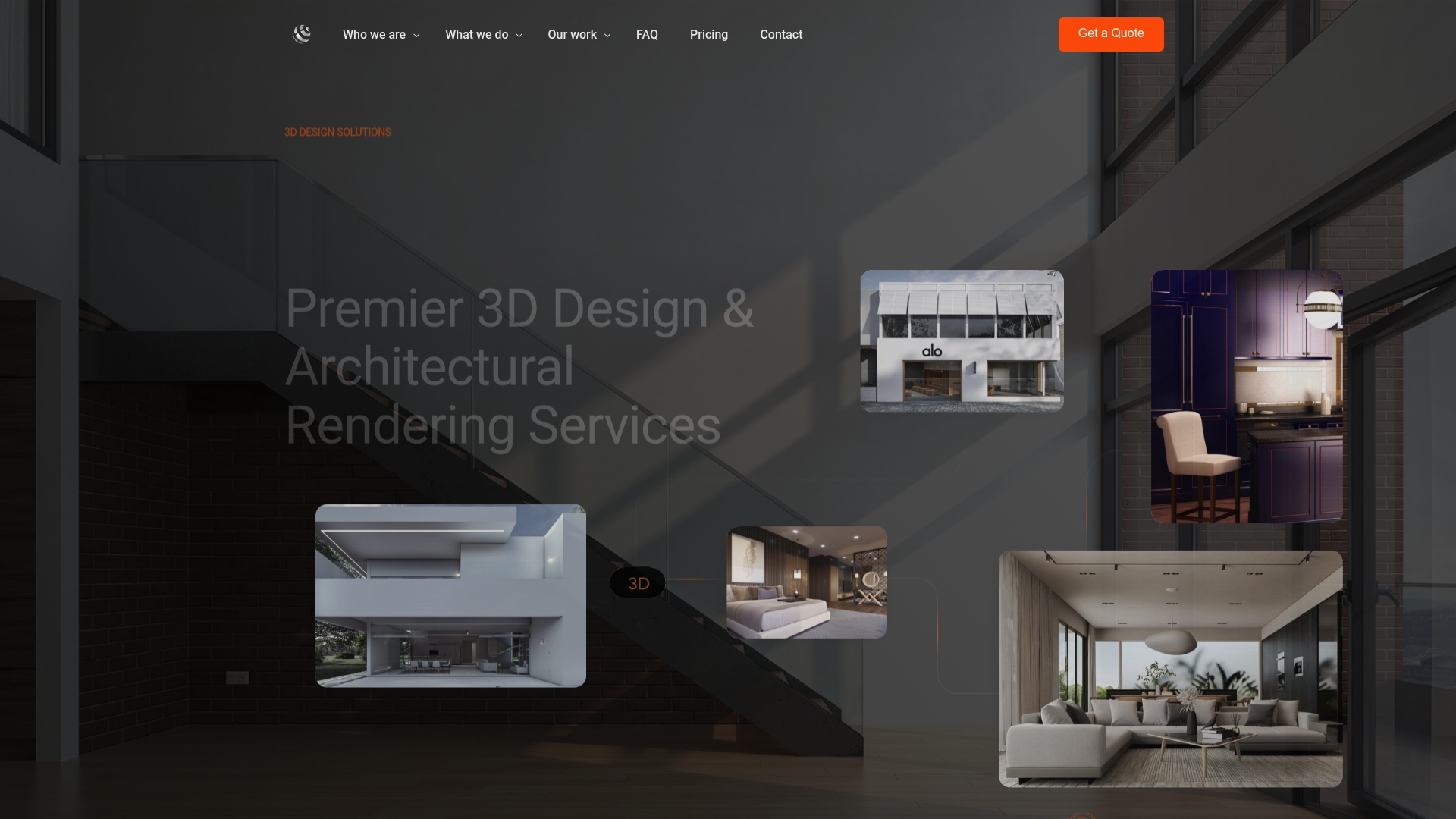
You can request contract terms, a confidentiality addendum, or a written security summary directly during your project inquiry, before a single file changes hands. That transparency extends to how Rendimension structures deliverables for architects and interior designers working under their own client confidentiality obligations, since flow-down protection only works if every party in the chain understands the rules.
If you’re marketing a real estate launch and need explicit permission language covering promotional use, a partner like Baby Love Growth’s architecture SEO services can help you line up marketing rights with what your rendering contract actually allows.

Ready to move forward? Request a project quote and a security and collaboration statement at Rendimension, and get your confidentiality terms in writing before the first model transfers.
Sources
- Cornell Law School, Non-disclosure agreement (NDA)
- WIPO, Trade secrets FAQs (DTSA/UTSA context)
- U.S. Copyright Office, Works made for hire (Circular 30)
- AIA Contracts, Instructions for C106–2013 (Digital Data Licensing Agreement)
- Digital Data Protocol Exhibit (AIA-style example), University of Minnesota / AIA exhibit
FAQ
Do I Need an NDA for Every 3D Rendering Project?
Not every project needs one. A short internal render for a low-stakes interior update may not warrant it, but any project involving unreleased designs, proprietary floor plans, or pre-launch marketing assets should have a signed 3D rendering NDA before files transfer.
What’s the Difference Between an NDA and AIA C106?
An NDA protects secrecy and confidentiality. AIA C106 is a licensing instrument that defines permitted use of digital data without transferring ownership. Many multi-party projects need both.
Who Owns the Copyright on Renders My Vendor Creates?
By default, the creator owns the copyright unless a signed work-made-for-hire agreement or assignment clause states otherwise before work begins. Clients should negotiate ownership terms in the contract, not assume them.
Should NDAs for 3D Projects Be Mutual or One-Sided?
Mutual NDAs make sense when both sides share sensitive information, such as a developer sharing unreleased site plans with a rendering studio that also shares proprietary techniques. A one-sided (unilateral) NDA fits when only the client’s design data needs protection.
Does Rendimension Sign NDAs for Client Projects?
Yes. Rendimension’s onboarding process includes confidentiality designation and secure delivery terms as a standard part of project kickoff, and clients can request specific contract language, including an NDA, during the proposal stage.
How Do I Handle Confidentiality With Subcontractors on a Rendering Project?
Require flow-down language obligating any subcontractor or freelance modeler to sign the same confidentiality terms as the primary vendor. Keep a named-access list so you always know exactly who has touched the files.