Why Collaborate on Design Visualizations
Why Collaborate on Design Visualizations: Proven Benefits
TL;DR:
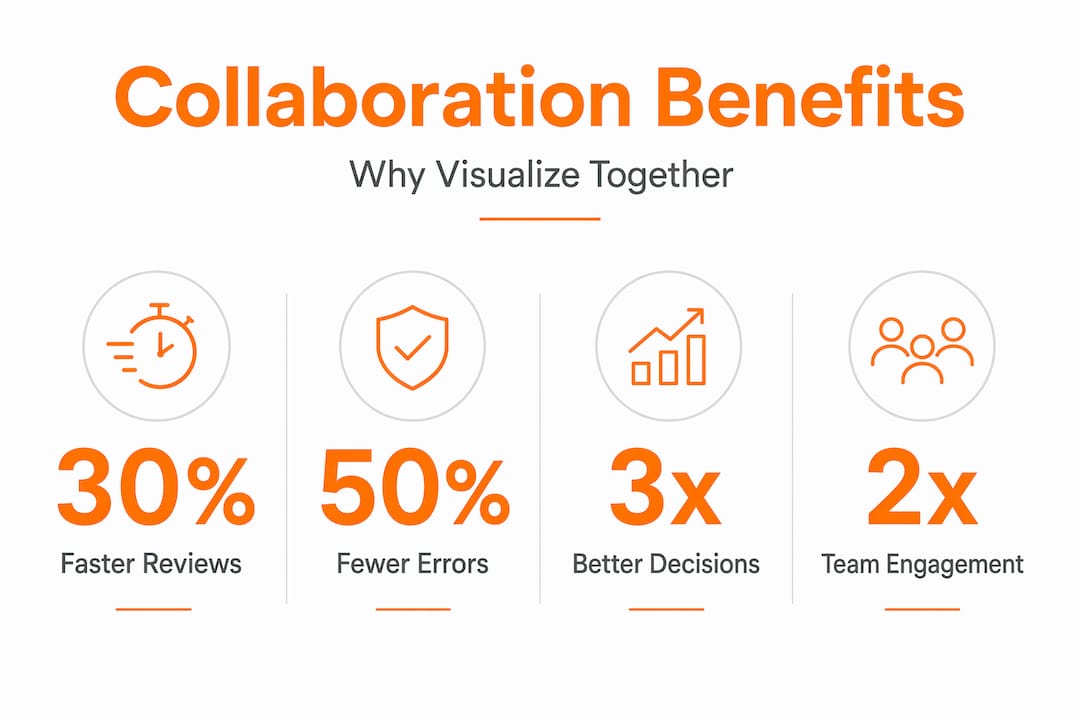
- Effective real-time collaboration reduces rework, accelerates decisions, and enhances visualization quality across projects.
- Sharing synchronized data and templates ensures consistency, traceability, and minimizes costly errors early in workflows.
- Multi-disciplinary input and deliberate visualization formats strengthen decision-making, project accuracy, and stakeholder alignment.
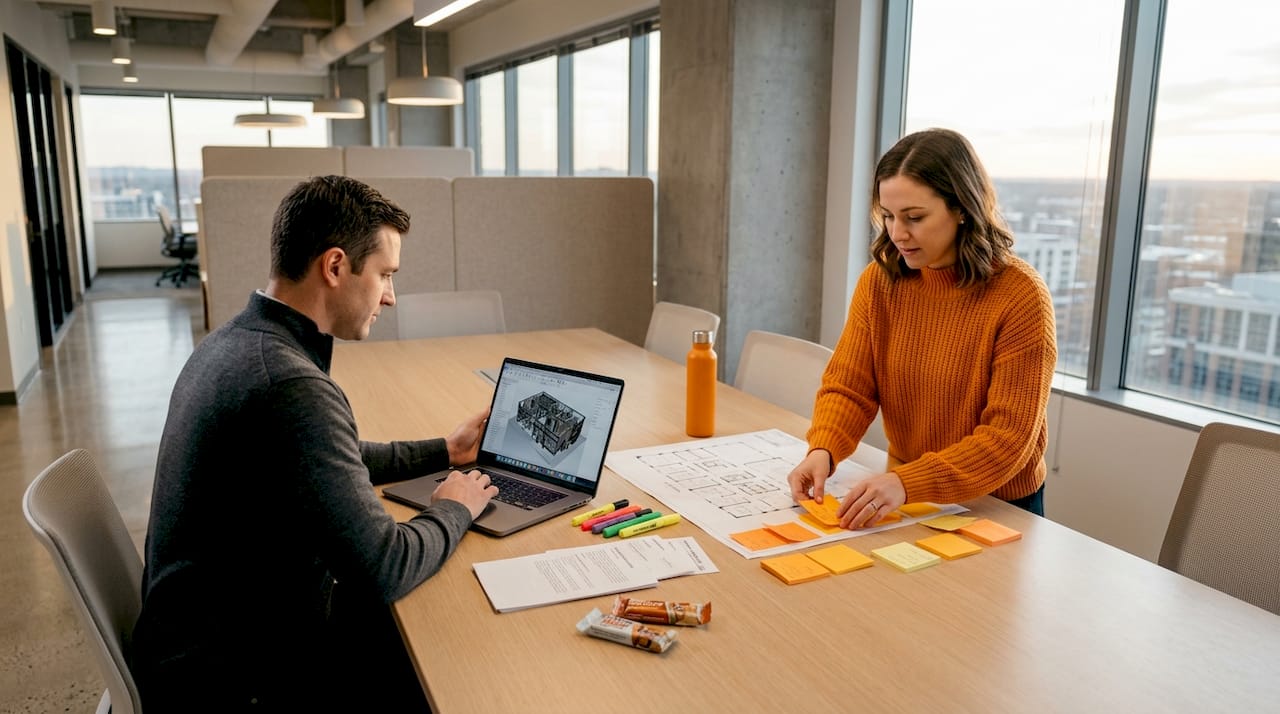
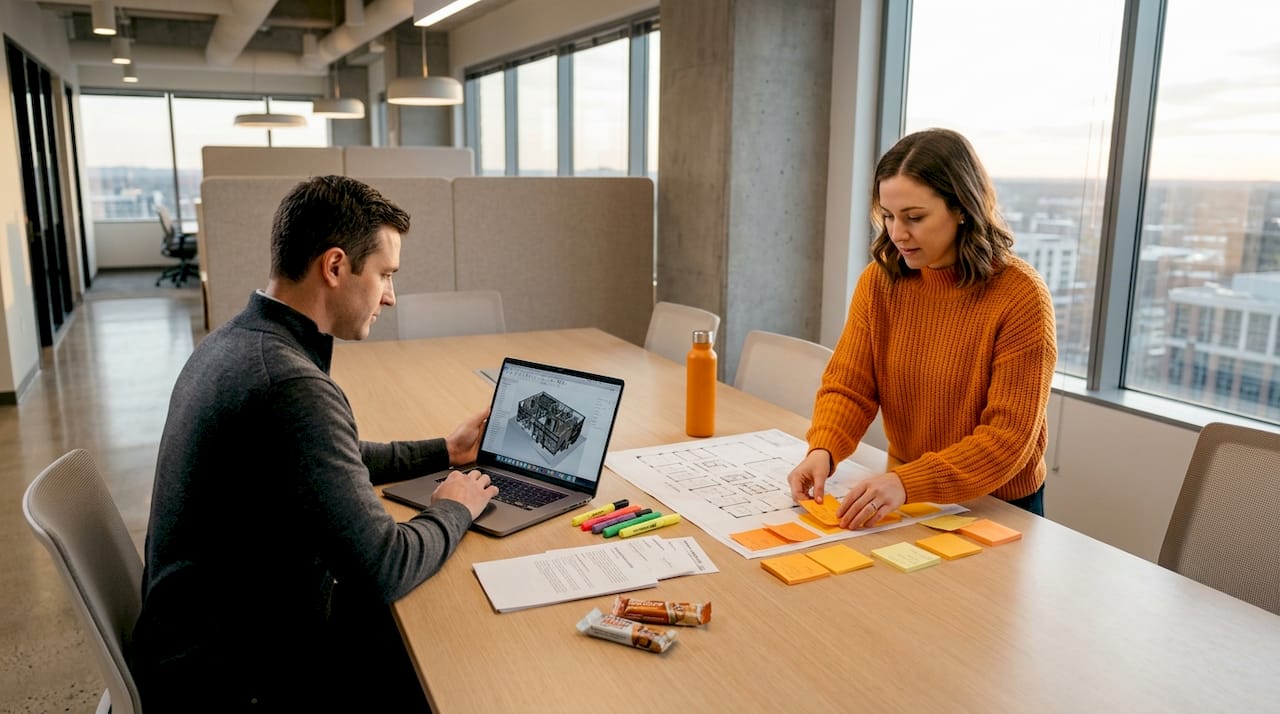
Most design professionals have lived through this exact scenario: a visualization gets passed around via email, three team members revise different versions, a client gives feedback on an outdated render, and a critical deadline slips by two weeks. The question of why collaborate on design visualizations is not academic. It has real cost implications, measured in rework hours, client trust, and missed approvals. This article breaks down what structured, intentional collaboration actually does to visualization quality, decision speed, and project outcomes, with specific techniques you can apply starting with your next project.
Table of Contents
- Key takeaways
- Why collaborate on design visualizations: the real cost of working alone
- Shared data and templates as the operational backbone
- Multi-disciplinary collaboration: more disciplines, better outcomes
- Visualization design choices that shape collaborative decisions
- My perspective on what makes collaboration actually work
- Work with a team built for collaborative visualization
- FAQ
Key takeaways
| Point | Details |
|---|---|
| Real-time collaboration reduces friction | Synchronous tools eliminate version confusion and context lag that slow decision cycles in visualization projects. |
| Shared data prevents costly rework | Teams working from identical design files and templates catch errors early, before they reach construction. |
| Cross-domain input improves quality | Bringing diverse disciplines into visualization early surfaces constraints and produces richer, more usable outputs. |
| Visualization format affects decisions | Superimposed layouts outperform side-by-side comparisons for speed and accuracy in complex collaborative reviews. |
| Early collaboration saves money | Clarifying feasibility before construction begins reduces the cost of late-stage changes significantly. |
Why collaborate on design visualizations: the real cost of working alone
When a team operates asynchronously on a visualization project, invisible friction builds up fast. Context lag is the most damaging form: a project manager comments on a render without knowing that the architect revised the floor plan two days ago. That comment now addresses a design that no longer exists. Real-time collaboration tools eliminate exactly these async failure modes, including duplicate edits, stale feedback loops, and the meeting overhead required to reconcile diverging versions.
The mechanics matter here. When team members can see live edits, add comments in context, and react to changes as they happen, alignment shifts from a scheduled event to a continuous state. You stop needing a weekly sync to ask, “Are we all looking at the same thing?” because the answer is always yes.
Consider a commercial interior fit-out where the architect, lighting consultant, and brand team each produce their own visual representations separately. By the time the client sees a unified presentation, the lighting model contradicts the ceiling plan and the brand palette doesn’t match the rendered materials. None of these errors are hard to fix individually. Together, they represent a full revision cycle, usually two to three weeks of delay.
Benefits of design collaboration in real-time environments include:
- Faster decision velocity because feedback is tied to live visual context
- Reduced meeting overhead since alignment happens continuously
- Creative momentum maintained when contributors build on each other’s work directly
- Fewer approval bottlenecks because stakeholders see accurate, current visuals
Pro Tip: Set a shared live workspace as the single source of truth from day one of a visualization project. Anyone who works in a separate file and merges later reintroduces the very version confusion real-time tools are designed to remove.
Shared data and templates as the operational backbone
Understanding why teamwork improves design requires looking past the interpersonal dynamics and into the infrastructure. The most common source of rework in visualization projects is not creative disagreement. It is people working from different datasets, interpreting the same brief through incompatible tools or file formats.
Industry-leading collaboration practices emphasize that data sharing and workflow templates are foundational to avoiding rework. When every team member accesses the same design data, deviations surface immediately instead of at the final review. Templates standardize how information is structured, which means a new contributor does not need to reverse-engineer the project’s logic before contributing meaningfully.
Shared workflows also create accountability. When changes are logged against a common timeline, it becomes clear who altered what and when. This is not about surveillance; it is about traceability. Decision history and revision tracking make downstream decisions faster and reduce the re-litigation of trade-offs that have already been resolved.

The advantages of shared visualizations extend into client communication as well. When your client portal always reflects the current approved state of a project, you eliminate the confusion of clients referencing the wrong version in a meeting or approving a visual that has since been superseded.
Key operational practices that support collaboration quality include:
- Centralizing all design assets in a single referenced file structure
- Using version-controlled templates for standard visualization deliverables
- Documenting the rationale behind major design decisions, not just the outcomes
- Building review checkpoints into the workflow rather than treating approval as a one-time event
Multi-disciplinary collaboration: more disciplines, better outcomes
The importance of design teamwork becomes especially visible when you move beyond a single discipline. An architect producing renderings independently brings deep spatial expertise. A marketing strategist reviewing those same visuals brings audience psychology. A structural engineer brings material constraints. None of these perspectives is complete on its own, and none can fully substitute for the others.
Research confirms this. An IEEE interview study found that richer visualization outcomes arise when multiple disciplines coordinate from the inception of a project, not after the primary artifact has been finalized. Constraints that engineers or planners would catch in thirty seconds during a concept review can cost weeks to fix once a visualization has been approved and production has started.
Iterative, multi-disciplinary design reviews do something else that single-discipline processes cannot: they build an auditable design narrative. Repeated independent panel reviews during design phases provide clarity, reduce ambiguity, and create a documented record of how decisions evolved. This matters enormously on complex projects where stakeholders change, disputes arise, or planning authorities require justification for design choices.
Interior design teams working on sustainable workspace projects face the same challenge: without early coordination between sustainability consultants, designers, and client operations teams, visualizations often miss functional requirements that only emerge in cross-disciplinary review.
Pro Tip: Schedule a multi-disciplinary visualization review at the concept stage, not after the first draft is polished. Unpolished ideas shared early invite the kind of honest input that polished presentations tend to suppress.
Visualization collaboration strategies that work in multi-disciplinary settings share these characteristics:
- Clear decision ownership defined before each review session begins
- A designated facilitator who captures outcomes as structured decisions, not just notes
- Explicit agreement on what “approved” means at each iteration
- Documentation of alternatives considered and the reasons they were set aside
Visualization design choices that shape collaborative decisions
Not all of this is about process. Some of it is about the actual visual format you choose when presenting options for collaborative review. The structure of what you show directly affects how fast and how accurately a group can reach a decision.
A 2026 study in Frontiers in Psychology found that superimposition reduces cognitive load and speeds stakeholder alignment compared to juxtaposed (side-by-side) views when complexity is high. In practical terms, overlaying two design states in a single render helps reviewers perceive differences immediately, rather than mentally toggling between two separate images.
This distinction plays out in architectural and real estate visualization constantly. Showing a before-and-after superimposed on a single frame, or a proposed facade overlaid on a site photograph, gives stakeholders a clearer reference than two separate renders placed next to each other, especially in large group settings where attention and cognitive bandwidth vary.
| Visualization format | Best use case | Collaborative advantage |
|---|---|---|
| Superimposition | Comparing design states or site impact | Faster perception of differences, lower cognitive load |
| Juxtaposition (side-by-side) | Distinct options with no shared reference | Clearer separation when designs are unrelated |
| Hybrid adaptive interface | Mixed complexity with varied stakeholder expertise | Allows users to toggle between formats based on task |
Collaborative design processes that standardize visual presentation formats see measurable improvements in review efficiency. When everyone in the room processes the visual the same way, discussion moves faster and decisions land with more confidence.
Pro Tip: Default to superimposed layouts for change reviews and juxtaposition for option selection. Matching the format to the cognitive task at hand cuts review time without requiring any additional design work.
Intention-driven visualization design, where you choose the format deliberately based on what decision needs to be made, is one of the most underused advantages of shared visualizations. Most teams pick a format out of habit. The better teams pick it based on what the group needs to understand in order to act.
My perspective on what makes collaboration actually work
After working across more than 1,000 visualization projects at Rendimension, I’ve come to believe that most teams understand collaboration in theory but practice something weaker. They add more voices to the room and call it collaboration. What I’ve learned is that adding people without structure often produces the opposite of clarity: you get vague consensus, where no one disagrees strongly enough to stop the project, but no one actually owns the decision either.
The failure mode I see most often is what some practitioners call collaborative cowardice. The team reviews a visualization, everyone nods, and the session ends with no clear record of what was approved, what was conditionally accepted, and what was deferred. Three weeks later, those unresolved questions resurface as expensive change orders.
What actually works, in my experience, is treating every collaborative review as a decision artifact in the making. You leave with a document, not just a vibe. That document captures what was shown, what was decided, and who owns the follow-through. Revision-aware workflows that build this rationale into the process are not just operationally useful; they change the quality of conversation in the room because participants know their input will be recorded.
I’ve also seen that early collaboration prevents some of the most expensive mistakes in architectural projects, specifically the kind that stem from assumptions about feasibility that no one tested until construction was underway. The instinct to wait until a visualization is “ready” before sharing it is exactly backwards. Share it rough, share it early, and let the friction surface before it costs real money.
, Rendimension
Work with a team built for collaborative visualization
If the collaborative process your team needs requires visualization quality that matches the ambition of your project, Rendimension delivers exactly that. From concept alignment to final presentation, every project runs as a structured collaboration between your team and ours, with shared references, documented feedback cycles, and deliverables that reflect decisions, not just aesthetics.
Rendimension’s architectural visualization services are built around the kind of multi-disciplinary, revision-aware workflow that this article describes. Whether you are preparing a planning submission, a real estate marketing campaign, or a client pitch, the visual output only works when the process behind it is collaborative from the start. Explore our 3D rendering services to see how photorealistic outputs and structured client collaboration combine to produce presentations that move projects forward. You can also review how design collaboration transforms real estate presentations for developers who need visuals that close deals, not just decorate pitch decks.
FAQ
Why does visualization collaboration reduce project costs?
Early collaboration clarifies feasibility and surfaces errors before construction begins, when changes cost a fraction of what they do later in the process.
What is the difference between superimposition and juxtaposition in design reviews?
Superimposition overlays two design states in a single view, which reduces cognitive load and speeds decisions under complexity. Juxtaposition places options side by side, which works better when the designs share no common reference point.
How does shared design data improve visualization quality?
When all team members access identical files and templates, errors are caught earlier and rework drops significantly, because deviations surface in real time rather than at final review.
When should cross-disciplinary input enter the visualization process?
Research shows that multi-disciplinary coordination from inception produces richer visualization outcomes than reviews conducted after the primary artifact has been finalized.
What makes a collaborative design review effective rather than just a group meeting?
Effective reviews end with a documented decision artifact that captures what was shown, what was approved, and who owns each follow-through item, preventing the re-litigation of resolved trade-offs later.
Recommended
- How design collaboration transforms real estate presentations
- Top Advantages Of Product Visualization For Design Teams
- Stakeholder Collaboration For 3D Design: Cut Delays By 40%
Related guides
Frequently asked questions
Why does visualization collaboration reduce project costs?
Early collaboration clarifies feasibility and surfaces errors before construction begins, when changes cost a fraction of what they do later in the process.
What is the difference between superimposition and juxtaposition in design reviews?
Superimposition overlays two design states in a single view, which reduces cognitive load and speeds decisions under complexity. Juxtaposition places options side by side, which works better when the designs share no common reference point.
How does shared design data improve visualization quality?
When all team members access identical files and templates, errors are caught earlier and rework drops significantly, because deviations surface in real time rather than at final review.
When should cross-disciplinary input enter the visualization process?
Research shows that multi-disciplinary coordination from inception produces richer visualization outcomes than reviews conducted after the primary artifact has been finalized.
What makes a collaborative design review effective rather than just a group meeting?
Effective reviews end with a documented decision artifact that captures what was shown, what was approved, and who owns each follow-through item, preventing the re-litigation of resolved trade-offs later.