Benefits of Virtual Staging for Home Sellers and Agents

Benefits of Virtual Staging for Home Sellers and Agents

TL;DR:
- Virtual staging digitally furnishes property photos, saving over 95% on presentation costs compared to traditional methods. It increases online engagement and speeds up sales by creating realistic, customizable images that reduce buyer mental friction. Proper disclosure and structure-preserving tools are essential for legal and ethical virtual staging practices.
Virtual staging is defined as the digital process of furnishing and decorating property photos using 3D rendering software, without placing a single physical item inside the home. The benefits of virtual staging are concrete and measurable: sellers cut presentation costs by over 95% compared to traditional staging, listings attract more online clicks, and properties spend fewer days on the market. For real estate agents managing multiple listings at once, the economics alone make it worth serious attention. The National Association of Realtors (NAR) and state-level regulations like California AB 723 have also shaped how agents must disclose virtually staged images, making ethical practice as important as the visual result.
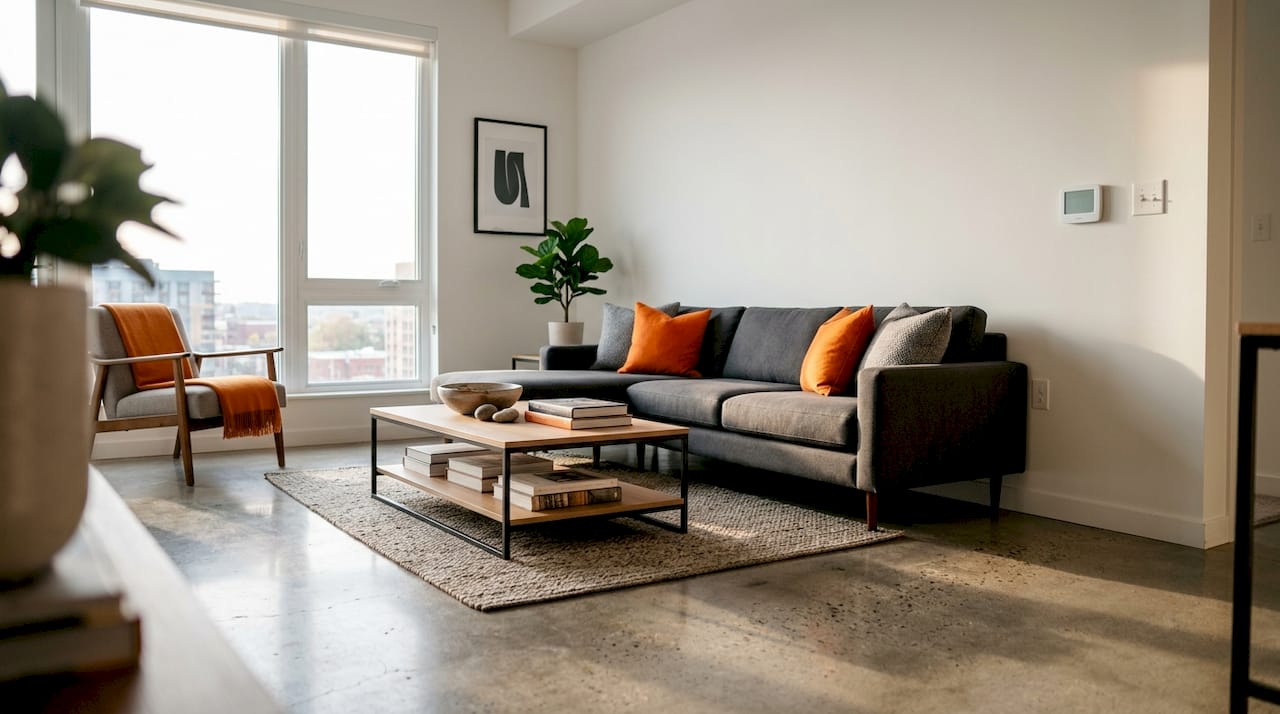
What are the real benefits of virtual staging for sellers?
Virtual staging delivers three core advantages: lower cost, stronger buyer engagement, and faster sales. Each one compounds the others. A listing that costs less to prepare, attracts more views, and sells faster produces a better net outcome for both the seller and the agent.
Traditional physical staging costs between $1,500 and $5,000 or more per property on a 90-day contract. That figure covers furniture rental, delivery, setup, and removal. Virtual staging costs $15 to $200 per room, per photo. The math is straightforward: a four-room listing staged virtually costs $60 to $800 total, versus thousands for the physical version.
High-volume agents feel this difference most sharply. An agent running 20 listings per year at traditional staging rates can spend $30,000 to $100,000 annually on staging alone. Subscription-based virtual staging plans bring that same annual cost down to $30 to $50 per month. That is not a marginal saving. It is a structural change in how agents manage their marketing budgets.
How does virtual staging cut costs compared to physical staging?
The cost gap between physical and virtual staging is not subtle. Physical staging requires logistics: furniture sourcing, movers, stylists, and a monthly rental fee that continues until the property sells. Virtual staging requires a photo and a turnaround time measured in hours.
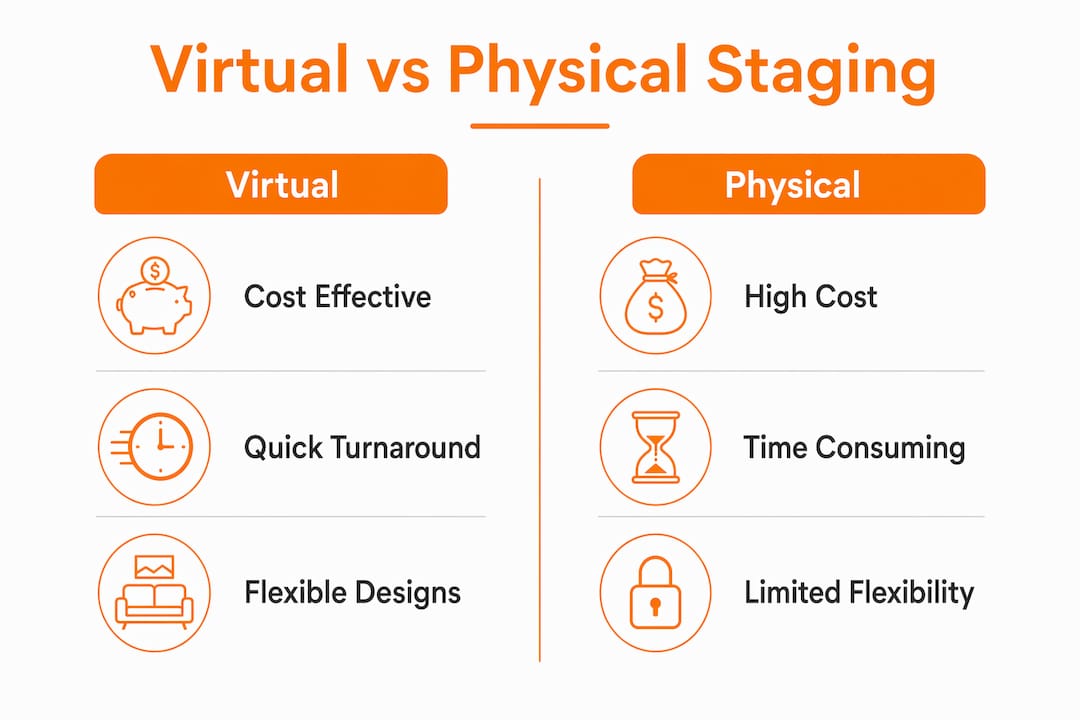
| Staging type | Cost per room | Typical contract | Annual cost (20 listings) |
|---|---|---|---|
| Physical staging | $375–$1,250+ | 90-day rental | $30,000–$100,000+ |
| Virtual staging | $15–$200 | Per image or subscription | $360–$600 (subscription) |
The table above shows why high-volume agents are shifting fast. A subscription model makes the most sense for agents with consistent listing volume. Pay-per-image works better for sellers with a single property or agents who stage infrequently.
Pro Tip: If you manage more than five listings per year, a monthly subscription plan will almost always cost less than pay-per-image pricing. Run the math on your last 12 months of staging invoices before choosing a plan.
Virtual staging also eliminates the risk of a property sitting on the market past the staging contract window. With physical staging, a slow sale means renegotiating rental terms or pulling the furniture and relisting with empty photos. Virtual staging has no expiration date.
Why do virtually staged listings attract more buyers online?
Empty rooms create what researchers call “mental friction.” Buyers scrolling through listings cannot easily picture scale, function, or warmth in a bare space. Vacant rooms cause buyers to scroll past listings without engaging, while furnished images provide context that motivates emotional connection and offers.
This is not a minor psychological effect. A buyer deciding between two similar listings will spend more time on the one that feels like a home. More time on a listing translates directly into more saves, more inquiries, and more showings. Virtually staged listings generate measurably more clicks and saves than their empty counterparts.
The flexibility of virtual staging adds another layer of advantage. The same living room photo can be rendered in a Farmhouse style for one buyer demographic and a Modern Minimalist style for another, all without moving a single piece of furniture. Agents can present multiple design styles for the same property, broadening its appeal across buyer segments simultaneously.
“The primary benefit of virtual staging goes beyond aesthetics. It removes buyer mental friction, helping them imagine living in the space, a crucial step toward purchase decisions.”
Vacant investment properties benefit especially from this approach. A property that looks institutional and cold in empty photos can be transformed into a warm, welcoming home through virtual staging, attracting owner-occupant buyers who would otherwise skip it. That broader appeal directly increases the pool of competing offers.
What is the impact of virtual staging on sales speed?
Staged listings sell faster than unstaged ones. Homes with staged photos spend significantly fewer days on the market than comparable unstaged listings. Fewer days on the market means lower carrying costs for the seller: fewer mortgage payments, utility bills, and property tax cycles before closing.
The connection between presentation and price reductions is equally direct. A listing that sits on the market for 60 or 90 days almost always requires a price cut to generate renewed interest. Strong initial presentation reduces that risk. When a listing attracts competing interest from the start, sellers hold more negotiating power.
The advantages of virtual staging on sales timelines include:
- Stronger first impressions that generate showing requests within the first week of listing
- Reduced days on market compared to empty-room listings in the same price range
- Lower likelihood of price reductions due to sustained buyer interest from launch
- Reduced carrying costs for sellers, including mortgage, insurance, and maintenance
One clarification matters here: virtual staging accelerates sales by improving presentation and buyer engagement. Price premium outcomes vary by market, property type, and local competition. The consistent, documented benefit is speed, not a guaranteed price increase.
Advanced virtual staging techniques and ethical best practices
Not all virtual staging tools produce the same result. Generalist AI image generators often alter room architecture, changing window placement, wall angles, or ceiling height to fit a furniture composition. Structure-preserving AI staging algorithms maintain original room architecture exactly, producing pixel-identical walls, windows, and doors with realistic furniture placement layered on top. The difference matters legally and practically.
Disclosure requirements agents must follow
Ethical virtual staging requires transparent disclosure. NAR guidelines, California AB 723, and REBNY Rule 3.3 all require that virtually staged images be clearly identified as digitally altered. The current standard involves two layers of disclosure:
- XMP metadata embedded in the image file: Invisible metadata embedded in photos flags the image as virtually staged at the file level, satisfying legal and ethical requirements without cluttering the visual presentation.
- MLS listing remarks: A written note in the listing description confirms which photos are virtually staged, protecting both the seller and the agent from misrepresentation claims.
Pro Tip: Always include both metadata disclosure and a written MLS remark. Metadata alone satisfies the technical requirement, but a written remark protects you if a buyer claims they were misled during a dispute.
Hybrid staging for maximum ROI
A hybrid approach combines virtual staging for online listing photos with minimal physical staging for open houses and in-person showings. This hybrid model reduces physical staging costs by 60–70% while maintaining the in-person warmth that closes deals. The logic is simple: online photos drive traffic, and a few well-placed physical pieces convert that traffic into offers. Understanding how visualization supports real estate decisions helps agents see virtual staging as one part of a broader presentation strategy.
Key takeaways
Virtual staging is the most cost-effective way for home sellers and agents to improve listing presentation, attract more buyers, and reduce days on the market.
| Point | Details |
|---|---|
| Cost reduction is dramatic | Virtual staging costs $15–$200 per room versus $1,500–$5,000+ for physical staging. |
| Buyer engagement increases | Furnished images remove mental friction and generate more clicks, saves, and inquiries. |
| Sales speed improves | Staged listings spend fewer days on market, reducing carrying costs for sellers. |
| Disclosure is non-negotiable | NAR guidelines and laws like California AB 723 require metadata and MLS remarks on staged photos. |
| Hybrid staging maximizes ROI | Combining virtual online photos with minimal physical staging cuts costs by 60–70%. |
The real shift happening in real estate marketing
At Rendimension, we work with real estate developers and agents across residential and commercial projects, and the pattern we see in 2026 is consistent: buyers now expect polished, furnished listing photos as the baseline. Empty rooms no longer read as “move-in ready canvas.” They read as neglected or unfinished. That shift in buyer expectation has made virtual staging less of a competitive edge and more of a table-stakes requirement.
What concerns us about some virtual staging workflows is the gap between what looks good on screen and what holds up legally. We have seen agents use generalist AI tools that subtly alter room proportions, making a small bedroom look larger than it is. That is not just an ethical problem. It is a liability. When a buyer walks into a property and the room does not match the photo, trust breaks down immediately.
The agents who get the best results treat virtual staging as part of a complete visual presentation strategy, not a standalone trick. They pair it with VR real estate tours for high-value listings, use structure-preserving tools that keep architecture accurate, and disclose clearly in every MLS listing. That combination builds buyer confidence before the first showing, which is where deals actually begin.
The common pitfall is treating virtual staging as a shortcut rather than a standard. Agents who use it responsibly, with proper disclosure and accurate rendering, consistently outperform those who either skip staging entirely or use misleading imagery.
, Rendimension
How Rendimension supports real estate visual marketing
Real estate agents and developers who want to go beyond basic virtual staging photos have options that create a far stronger buyer experience.
Rendimension produces photorealistic 3D renderings and architectural visualizations for residential and commercial properties across the US. These include interior and exterior renders, immersive 3D walkthrough videos, and virtual reality experiences that let buyers move through a property before it is built or renovated. With over 1,000 projects completed globally, Rendimension works directly with agents, developers, and architects from concept to final delivery. For listings that need more than a staged photo, these tools turn a property into a fully realized visual experience that buyers remember.
FAQ
What does virtual staging cost per room?
Virtual staging costs between $15 and $200 per room depending on the provider and image complexity. Subscription plans for high-volume agents can reduce the per-image cost significantly.
Is virtual staging legal for MLS listings?
Virtual staging is legal when properly disclosed. NAR guidelines and state laws like California AB 723 require that virtually staged photos be identified in MLS listing remarks and, ideally, through embedded XMP metadata in the image file.
Does virtual staging help homes sell faster?
Staged listings spend fewer days on the market than unstaged ones. Strong initial presentation reduces the need for price reductions and generates more competing buyer interest from the first week of listing.
What is the difference between virtual staging and physical staging?
Physical staging involves renting and placing real furniture in a property, costing $1,500 to $5,000 or more per listing. Virtual staging digitally adds furniture to listing photos at a fraction of the cost, with no logistics or rental contracts.
What is a hybrid staging strategy?
A hybrid strategy uses virtual staging for online listing photos and minimal physical staging for open houses and showings. This approach cuts physical staging costs by 60–70% while maintaining the in-person presentation quality that converts buyers.
Recommended
- Why Choose Digital Walkthroughs for Real Estate in 2026 | Rendimension Blog
- VR Real Estate Tours: Key Benefits | Rendimension
Frequently asked questions
What does virtual staging cost per room?
Virtual staging costs between $15 and $200 per room depending on the provider and image complexity. Subscription plans for high-volume agents can reduce the per-image cost significantly.
Is virtual staging legal for MLS listings?
Virtual staging is legal when properly disclosed. NAR guidelines and state laws like California AB 723 require that virtually staged photos be identified in MLS listing remarks and, ideally, through embedded XMP metadata in the image file.
Does virtual staging help homes sell faster?
Staged listings spend fewer days on the market than unstaged ones. Strong initial presentation reduces the need for price reductions and generates more competing buyer interest from the first week of listing.
What is the difference between virtual staging and physical staging?
Physical staging involves renting and placing real furniture in a property, costing $1,500 to $5,000 or more per listing. Virtual staging digitally adds furniture to listing photos at a fraction of the cost, with no logistics or rental contracts.
What is a hybrid staging strategy?
A hybrid strategy uses virtual staging for online listing photos and minimal physical staging for open houses and showings. This approach cuts physical staging costs by 60–70% while maintaining the in-person presentation quality that converts buyers.