3D Rendering Checklist: Essential Steps for Stunning Results

TL;DR:
- A structured checklist aligns stakeholders and prevents costly rendering rework.
- Defining goals, gathering references, choosing suitable software, and meticulous scene setup are essential steps.
- Strong storytelling and emotional engagement distinguish persuasive renders from technically flawless but ineffective visuals.
Misaligned expectations between architects, developers, and clients cause more rendering rework than any technical error. You submit a polished visualization, the client says it “doesn’t feel right,” and suddenly you’re rebuilding scenes from scratch. That cycle is expensive and avoidable. A structured 3D rendering checklist eliminates guesswork by giving every stakeholder a shared framework before a single polygon is placed. This article walks you through the exact steps that separate forgettable renders from visualizations that win approvals, close deals, and genuinely represent your design intent.
Table of Contents
- Define project goals and gather reference materials
- Choose the right rendering software and workflow
- Model building: Geometry, materials, and lighting setup
- Camera, composition, and client feedback cycles
- Beyond the checklist: What renders actually persuade clients
- Get expert 3D visualization support from Rendimension
- Frequently asked questions
Key Takeaways
| Point | Details |
|---|---|
| Start with clear goals | Well-defined project objectives prevent costly mistakes and guide every rendering decision. |
| Pick the right tools | Match rendering engines and workflows to project needs for efficiency and quality results. |
| Structure and light meticulously | Accurate geometry and realistic lighting are essential for client buy-in and technical clarity. |
| Iterate with clients | Multiple structured feedback cycles ensure final renders meet expectations before presentation. |
| Go beyond technical accuracy | Renders that tell a story and connect with clients deliver more persuasive results. |
Define project goals and gather reference materials
Every rendering project that goes sideways shares one common origin: someone skipped the planning phase. Before opening any 3D software, you need to establish exactly what each rendering must accomplish and for whom.
Start by identifying the core purpose of each image. Is this rendering for a planning approval board that needs technical accuracy? A marketing campaign targeting luxury buyers? An investor pitch requiring dramatic impact? Each purpose demands different stylistic choices, camera angles, and levels of detail. Conflating them leads to renders that serve no one well.
Next, identify every decision-maker and end viewer. The architect, the developer, the marketing team, and the end buyer all interpret visuals differently. Knowing your audience shapes everything from material choices to time-of-day lighting. Visualization checklist essentials often get overlooked here, but audience mapping is one of the highest-leverage steps in the entire process.
Once goals and audiences are clear, gather your reference materials:
- Architectural drawings (floor plans, elevations, sections)
- Material samples or specification sheets
- Brand or style guides from the developer
- Competitor or aspirational project images
- Site photography and environmental context
“The shift toward hybrid human-AI workflows makes clear project goals essential for accuracy and nuance that automated tools alone cannot deliver.”
Collecting these materials upfront prevents mid-project detours where you’re hunting for a tile specification or guessing at a facade color. It also gives your rendering team a single source of truth.
Pro Tip: Create a shared cloud folder (Google Drive or Dropbox works fine) organized by category: drawings, materials, references, and approvals. Every project stakeholder should have access. Version confusion is one of the most common causes of expensive revision cycles, and a centralized folder eliminates it entirely.
This foundation phase typically takes one to two days but saves far more time downstream. Treat it as non-negotiable, not optional.
Choose the right rendering software and workflow
With project parameters defined and references organized, the next decision is which tools will actually produce the results you need. Not all rendering engines are equal, and choosing the wrong one for your project type is a costly mistake.
Here is a practical comparison of the most widely used platforms:
| Rendering engine | Photorealism | Speed | Real-time output | Best for |
|---|---|---|---|---|
| V-Ray | Excellent | Moderate | No | High-end stills, complex materials |
| Corona | Excellent | Moderate | No | Interior visualization, soft lighting |
| Lumion | Good | Fast | Yes | Iterative walkthroughs, quick feedback |
| Enscape | Good | Very fast | Yes | Real-time client reviews, BIM workflows |
| Unreal Engine | Very good | Variable | Yes | VR experiences, cinematic animation |
As noted in visualization best practices, V-Ray and Corona deliver photorealism while Lumion and Enscape excel at speed and iterative feedback. The right choice depends on your specific project demands.
When selecting your platform, evaluate these criteria:
- Photorealism requirement: High-end residential or commercial marketing needs V-Ray or Corona
- Feedback cycle speed: If clients need to review frequently, real-time engines reduce turnaround dramatically
- Animation or VR deliverables: Unreal Engine or Lumion handle motion and immersive output better
- Team familiarity: The best engine is the one your team can use confidently under deadline pressure
The role of a 3D designer increasingly involves navigating hybrid AI-assisted workflows alongside traditional rendering pipelines. AI tools can accelerate texture generation and scene population, but human oversight remains critical for design accuracy and brand consistency. Review the rendering guide insights to understand how workflow decisions affect final output quality.
Pro Tip: Before committing to a full scene build, run a basic test render using a simplified version of your geometry and one or two key materials. This confirms your workflow settings, lighting rig, and output resolution are all calibrated correctly before you invest significant modeling time.
Workflow discipline matters as much as tool selection. Establish naming conventions, file organization standards, and checkpoint renders at each major stage so errors are caught early rather than discovered at final delivery.
Model building: Geometry, materials, and lighting setup
With tools chosen and workflow mapped, actual scene construction becomes the focal task. The order in which you build matters as much as the quality of each individual element.
Follow this sequence to avoid compounding errors:
- Build geometry first. Model all architectural elements to correct scale. Check for non-manifold geometry, overlapping faces, and missing surfaces before moving forward.
- Apply materials second. Assign base materials to all objects. Use physically based rendering (PBR) materials for accurate light interaction. Verify texture scales match real-world dimensions.
- Set up lighting last. Introduce your primary light source (sun, sky, or artificial), then add secondary fill lights and area lights as needed. Adjust exposure and white balance before adding detail.
Common model errors to check before rendering:
- Inverted normals that cause dark patches
- Missing geometry on visible surfaces
- Incorrect material IDs causing texture bleed
- Geometry intersecting where it should not
- Proxy objects not loading correctly
Lighting setup deserves particular attention. Daytime exterior scenes require accurate sun angle and sky model settings tied to the actual project location and season. Dusk scenes need warm artificial lighting balanced against a deep blue sky, a combination that consistently produces dramatic, emotionally resonant results. Night renders require careful control of artificial light falloff to avoid blown-out or underlit areas.
“Meticulous geometry and realistic lighting are non-negotiable for achieving client buy-in and visual clarity in architectural visualization.”
Refer to the step-by-step visualization process for a detailed breakdown of how each modeling stage connects to the next.

Pro Tip: Organize your scene using a clear layer structure: separate layers for structural geometry, furniture, vegetation, lighting rigs, and cameras. When a client requests changes to landscaping or interior furnishings, you can isolate and modify those layers without disturbing the rest of the scene.
Camera, composition, and client feedback cycles
With your model complete, the focus shifts to how the rendering is framed, refined, and communicated for approval. Composition is not a cosmetic afterthought. It is a strategic decision that shapes how viewers emotionally respond to the space.
For architectural presentations, these camera angles consistently perform well:
- Eye-level exterior: Mimics the pedestrian experience, making scale feel natural and relatable
- Elevated three-quarter view: Shows massing, roofline, and site relationship simultaneously
- Interior wide-angle: Communicates spatial flow and material quality in a single frame
- Detail close-up: Highlights premium finishes, joinery, or facade texture for high-end marketing
Render settings directly affect image quality and file size. Use this reference table when configuring output:
| Setting | Low quality | Production quality | Impact |
|---|---|---|---|
| Resolution | 1920×1080 | 3840×2160 (4K) | Sharpness and print usability |
| Sampling/noise | High noise | Near-zero noise | Render time vs. image cleanliness |
| Global illumination | Basic | Full GI with bounces | Realism of light interaction |
| Depth of field | Off | Subtle, lens-accurate | Cinematic focus and spatial depth |
Structured review processes and strong composition are what consistently drive client approval across the 3D rendering process. Build at least two formal review cycles into every project timeline.
For client feedback cycles, follow this checklist:
- Send draft renders with a numbered annotation guide so clients can reference specific areas
- Request written feedback rather than verbal comments to create a clear revision record
- Confirm which changes are approved before starting revisions
- Deliver a second draft with a side-by-side comparison to the first version
- Lock final files only after written sign-off from the primary decision-maker
Pro Tip: Always maintain separate folders for raw render files and post-processed outputs. If a client requests a format change or additional crop six months later, you can go back to the original without rebuilding the scene.
Beyond the checklist: What renders actually persuade clients
Here is something most technical guides will not tell you: completing every step on a checklist does not guarantee a rendering that moves people. We have seen technically flawless renders fall flat in client presentations, and we have seen simpler images close deals instantly. The difference is almost always storytelling.
Clients do not buy geometry. They buy the feeling of standing in a finished space. The most persuasive renders show a lifestyle, not just a building. That means choosing a time of day that flatters the architecture, populating the scene with people and activity that match the target buyer profile, and selecting a camera angle that makes the space feel aspirational rather than just accurate.
Rigid adherence to a checklist can actually suppress this creative instinct. The checklist handles technical correctness. What it cannot prescribe is the specific emotional hook that resonates with your client’s vision. That requires listening carefully during briefings, studying the developer’s brand positioning, and making judgment calls that no automated process can replicate.
As human oversight ensures visualizations resonate with client vision in ways AI alone cannot anticipate, the most effective rendering teams treat the checklist as a floor, not a ceiling. Review real-world best practices to see how the strongest studios blend technical rigor with creative intuition.
The checklist gets you to the table. Storytelling closes the deal.
Get expert 3D visualization support from Rendimension
Following a structured checklist is the right approach, but executing every step at a professional level requires experience, the right tools, and a team that has refined its process across hundreds of real projects.
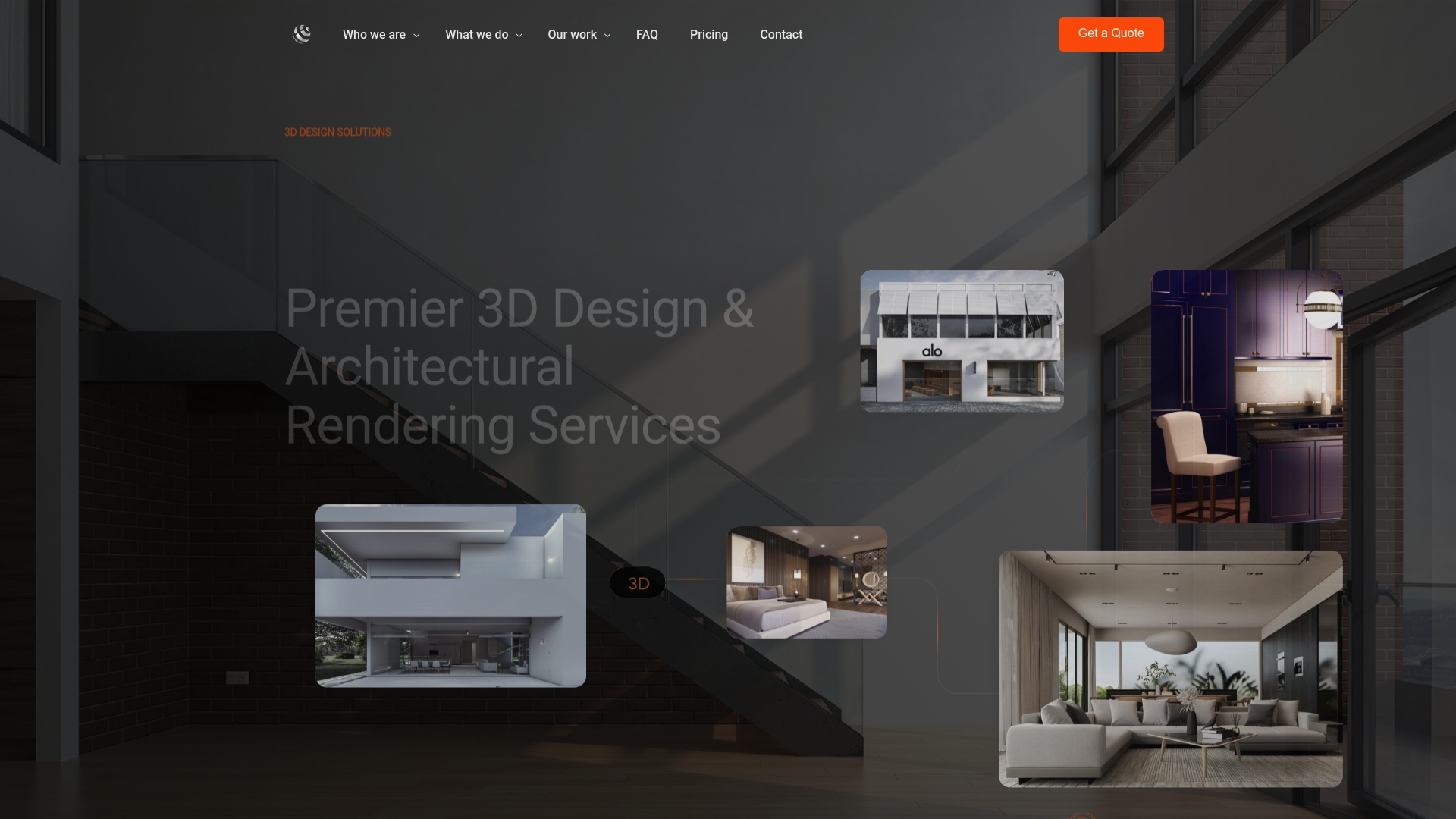
Rendimension’s professional rendering services are built around exactly this kind of disciplined, client-focused process. With over 1,000 projects completed globally, our architectural visualization experts bring both technical precision and creative storytelling to every deliverable. Whether you need a single hero image or a full campaign suite, our step-by-step project support keeps your timeline and quality targets on track from brief to final file. Reach out to discuss your next project.
Frequently asked questions
What is the first step in a 3D rendering checklist?
Define your project’s goals and gather all necessary reference materials before design begins. Clear project goals are especially critical in hybrid human-AI workflows where accuracy depends on well-defined parameters from the start.
Which rendering engines are best for photorealistic results?
V-Ray and Corona are the leading choices for photorealism, while Lumion and Enscape offer speed and iterative feedback advantages for projects with frequent client review cycles.
Why is lighting setup critical in 3D rendering?
Lighting dramatically influences perceived realism and ensures architectural features are accurately presented for client approval. Realistic lighting is non-negotiable for achieving the visual clarity that drives stakeholder buy-in.
How often should you review render drafts with clients?
Plan for at least two structured review cycles, ensuring all feedback is fully integrated and confirmed in writing before final file delivery.