3D Animation in Marketing Your Brand
The Role of 3D Animation in Marketing Your Brand
TL;DR:
- D animation enhances brand storytelling by activating consumer imagery, creating emotional connections faster. It enables scalable, flexible, and cost-efficient visualizations of unbuilt spaces and complex technical features, outperforming traditional photography. Effective campaigns rely on precise layering and photorealistic lighting to deliver believable, impactful visuals across multiple marketing channels.
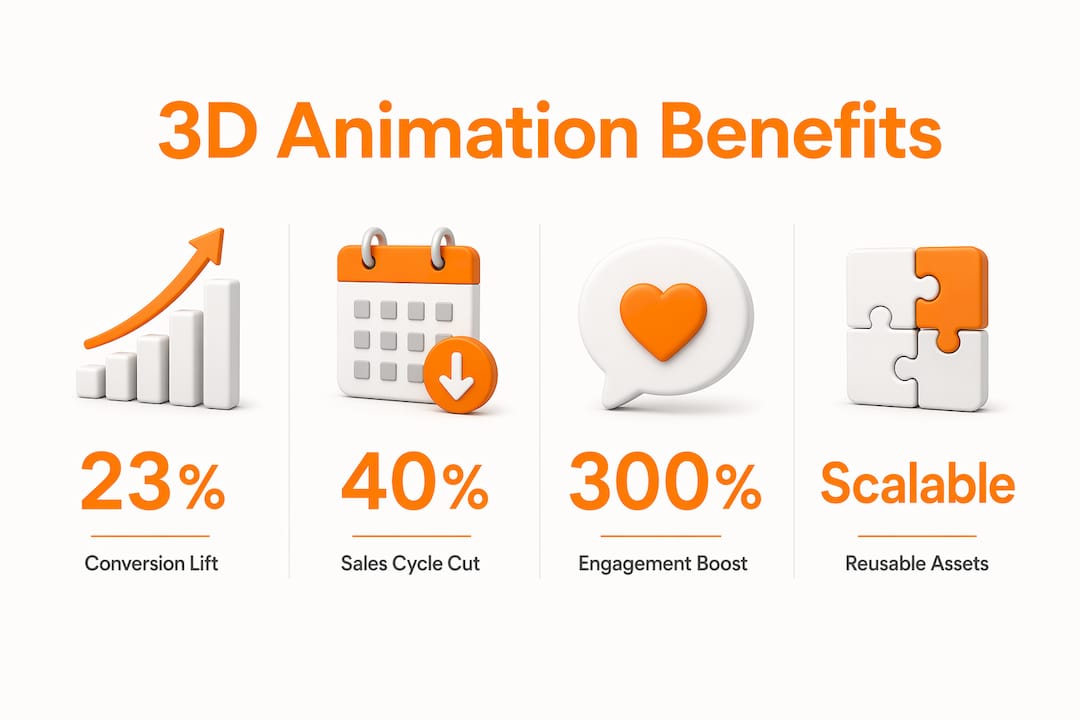
3D animation in marketing is defined as the use of computer-generated, three-dimensional moving imagery to communicate brand stories, demonstrate products, and drive consumer decisions. The role of 3D animation in marketing has shifted from a premium novelty to a measurable performance tool. According to a 2024 Wyzowl study, 3D animation boosts conversions an additional 23% beyond standard video content. That number alone reframes the conversation from “is this worth the investment?” to “how do we deploy it strategically?” For marketing professionals and business owners, the real question is not whether 3D animation works. It is how to use it to outpace competitors who are still relying on flat photography and live-action shoots.
How 3D animation transforms brand storytelling
The mechanism behind 3D animation’s power is not purely aesthetic. Research confirms that 3D animation activates imagery-based processing in consumers, meaning viewers mentally simulate using or experiencing the product rather than reading about it. This mental simulation creates emotional connection faster than any text-heavy campaign can. The implication is significant: a well-produced 3D sequence can do in eight seconds what a product brochure cannot do in eight pages.

Brands across real estate, product design, and architecture use this mechanism to tell stories that live-action simply cannot support. Consider a luxury residential developer who needs to sell units before construction begins. Static floor plans fail to communicate the experience of standing in a sun-drenched penthouse. A photorealistic 3D walkthrough places the buyer inside that space, with accurate lighting, material finishes, and spatial proportions. The emotional response is immediate and visceral.
Motion graphics extend this capability further. Abstract visual languages allow brands to represent complex functionalities, sensor systems, or internal mechanisms that no camera can film directly. MGI Golf used this approach to launch its AI Navigator HALO buggy, visualizing AI-driven features that are invisible to the naked eye. The result was a campaign that communicated technical superiority without a single line of technical copy.
- 3D animation creates emotional resonance through mental simulation, not just visual appeal
- Motion graphics make invisible technology legible to consumers within seconds
- Pre-construction real estate marketing depends on 3D to sell the experience before the building exists
- Extended viewer attention from 3D content improves ad recall and lowers cost-per-impression in paid campaigns
Pro Tip: When briefing a 3D animation project, lead with the emotional outcome you want the viewer to feel, not just the product features you want to show. The best 3D storytelling is built around a feeling first and a feature second.
Why 3D animation outperforms traditional marketing visuals
The strategic advantages of using 3D graphics in marketing go well beyond visual quality. The most decisive advantage is the ability to visualize subjects that cannot be filmed. Internal product mechanisms, structural engineering details, sensor data flows, and pre-built architectural spaces all fall outside what a camera crew can capture. 3D animation removes that constraint entirely.
Consistency and scalability are equally compelling. A single set of 3D assets can be adapted for a social media reel, a trade show display, a website hero section, and an out-of-home billboard without a single reshoot. Traditional photography requires separate productions for each format, each market, and each seasonal update. The cost differential compounds quickly across a multi-channel campaign.
Rapid iteration is another factor that traditional production cannot match. When a product specification changes or a client requests a different color palette, a 3D asset can be updated in hours rather than weeks. This flexibility is particularly valuable for product launches in architecture and real estate, where design changes are frequent and deadlines are fixed.
| Factor | 3D animation | Traditional photo/video |
|---|---|---|
| Visualize unbuilt or internal subjects | Yes, with full photorealism | No, requires physical subject |
| Cross-channel asset reuse | Single asset, multiple formats | Separate shoot per format |
| Design change turnaround | Hours to days | Days to weeks, plus reshoot cost |
| B2B sales cycle impact | Shortens cycles by 40% | Minimal measurable impact |
| Brand perception | Perceived as premium and forward-thinking | Dependent on production budget |
Brands using 3D animation are perceived as more premium than competitors using conventional visuals. This perception advantage compounds over time, building brand equity that is difficult for competitors to replicate quickly.
Pro Tip: Build your 3D asset library with reuse in mind from day one. A modular set of 3D scenes, materials, and camera angles created during one campaign can fuel six months of social content without additional production costs.
What makes a 3D animation marketing campaign actually work
The difference between a 3D animation that converts and one that merely impresses comes down to process discipline. High-quality 3D animation requires precise layering of blocking, timing, and offset before any polishing of animation curves begins. Skipping these foundational steps produces motion that looks mechanical and unconvincing, which undermines the brand perception you are trying to build.
Here is the layered process that separates professional-grade 3D marketing animation from mediocre output:
- Blocking: Establish the key positions and camera angles before any motion is added. This is the structural foundation of the sequence and determines whether the story reads clearly.
- Timing: Define the pacing of each movement. Timing controls whether a product reveal feels dramatic or rushed, and whether a walkthrough feels immersive or disorienting.
- Offsetting: Stagger the motion of individual elements so they do not all move simultaneously. Simultaneous movement reads as robotic. Offset motion reads as natural.
- Animation curve polishing: Refine the acceleration and deceleration of each motion path. Smooth easing curves are what separate a professional production from a student project.
- Photorealism pass: Apply lighting, shadows, and texture fidelity in priority order. Lighting and shadows are established first because they account for the largest share of realism perception. Texture fidelity follows, with view-dependent micro-details applied last.
The photorealism pass is where marketing impact is won or lost. Research on perceptual cues in 3D-rendered architectural scenes confirms that global illumination and coherent shadows drive realism perception more than any other factor. A beautifully modeled product with flat lighting reads as a prototype render. The same model with accurate global illumination reads as a photograph. For marketing, that distinction is the difference between a viewer who trusts the brand and one who scrolls past.
How to integrate 3D animation across your marketing channels
3D animation has moved from a supporting asset to a central campaign engine that links digital and physical brand activations. The most effective 3D animation marketing strategies treat the 3D asset library as the source of truth for all campaign visuals, ensuring consistency from Instagram to a Times Square billboard.
Here is how marketing professionals are deploying 3D assets across channels right now:
- Social media: Short-form 3D product reveals and architectural walkthroughs perform strongly on Instagram and LinkedIn, where visual differentiation is the primary driver of engagement. A six-second 3D loop of a product rotating in perfect lighting outperforms a static photograph in every measurable metric.
- Website integration: Interactive 3D models on product and property pages increase time-on-page by 300% and reduce pre-sale support queries by 40%. Visitors who can rotate, zoom, and explore a 3D model need fewer follow-up conversations before committing.
- VR walkthroughs: For real estate developers and architects, immersive VR experiences allow prospects to tour a property that does not yet exist. This capability is transformative for pre-sales campaigns and investor presentations.
- Out-of-home advertising: Lenovo’s 3DA billboard campaign demonstrated how a single 3D asset can be adapted for a large-format physical display that stops foot traffic and generates social sharing organically.
- Product launch events: 3D animations projected at launch events or embedded in sales presentations give sales teams a visual proof point that addresses objections before they are raised.
The omni-channel advantage compounds when all these touchpoints draw from the same 3D asset library. Brand consistency is automatic, and the cost per touchpoint drops with every additional channel added. For marketing professionals managing complex campaigns across multiple markets, this scalability is one of the most practical benefits of 3D animation available today.
Key takeaways
3D animation in marketing delivers measurable conversion lifts, shortens sales cycles, and creates brand perception advantages that traditional photography and live-action video cannot replicate at scale.
| Point | Details |
|---|---|
| Conversion impact | 3D animation boosts conversions 23% beyond standard video, making it a direct revenue driver. |
| Storytelling mechanism | Imagery-based consumer processing creates emotional connection faster than text or static images. |
| Production efficiency | A single 3D asset library scales across social, web, OOH, and events without reshoots. |
| Photorealism priority | Lighting and shadows drive realism perception most; establish these before textures or micro-details. |
| Sales cycle acceleration | B2B campaigns using 3D animation shorten sales cycles by 40% through visual proof of value. |
What Rendimension has learned about 3D animation and marketing
The most common mistake we see from marketing teams approaching 3D animation for the first time is treating it as a production upgrade rather than a communication strategy. They brief for visual spectacle and are surprised when the campaign does not move the needle. The projects that perform consistently are the ones where the brief starts with a specific audience decision. What does this viewer need to understand, feel, or believe in order to take the next step?
From over 1,000 projects completed globally, Rendimension has found that the highest-impact 3D marketing work happens at the intersection of technical precision and narrative clarity. A photorealistic render of an unbuilt penthouse does not sell because it looks beautiful. It sells because it answers the buyer’s unspoken question: “Can I actually see myself living here?” The 3D animation is the answer.
The brands that treat 3D animation as a long-term asset investment, rather than a one-off production, consistently outperform those that commission single pieces. When you build a library of modular 3D assets, every future campaign becomes faster, cheaper, and more consistent. That compounding efficiency is the real competitive advantage. Knowing how to present 3D visuals to clients and stakeholders is just as important as the quality of the visuals themselves.
— Rendimension
See what Rendimension’s 3D animation can do for your campaigns
Rendimension specializes in photorealistic 3D rendering and animation for marketing professionals and business owners who need to communicate complex products, architectural designs, and real estate developments with precision and visual authority.
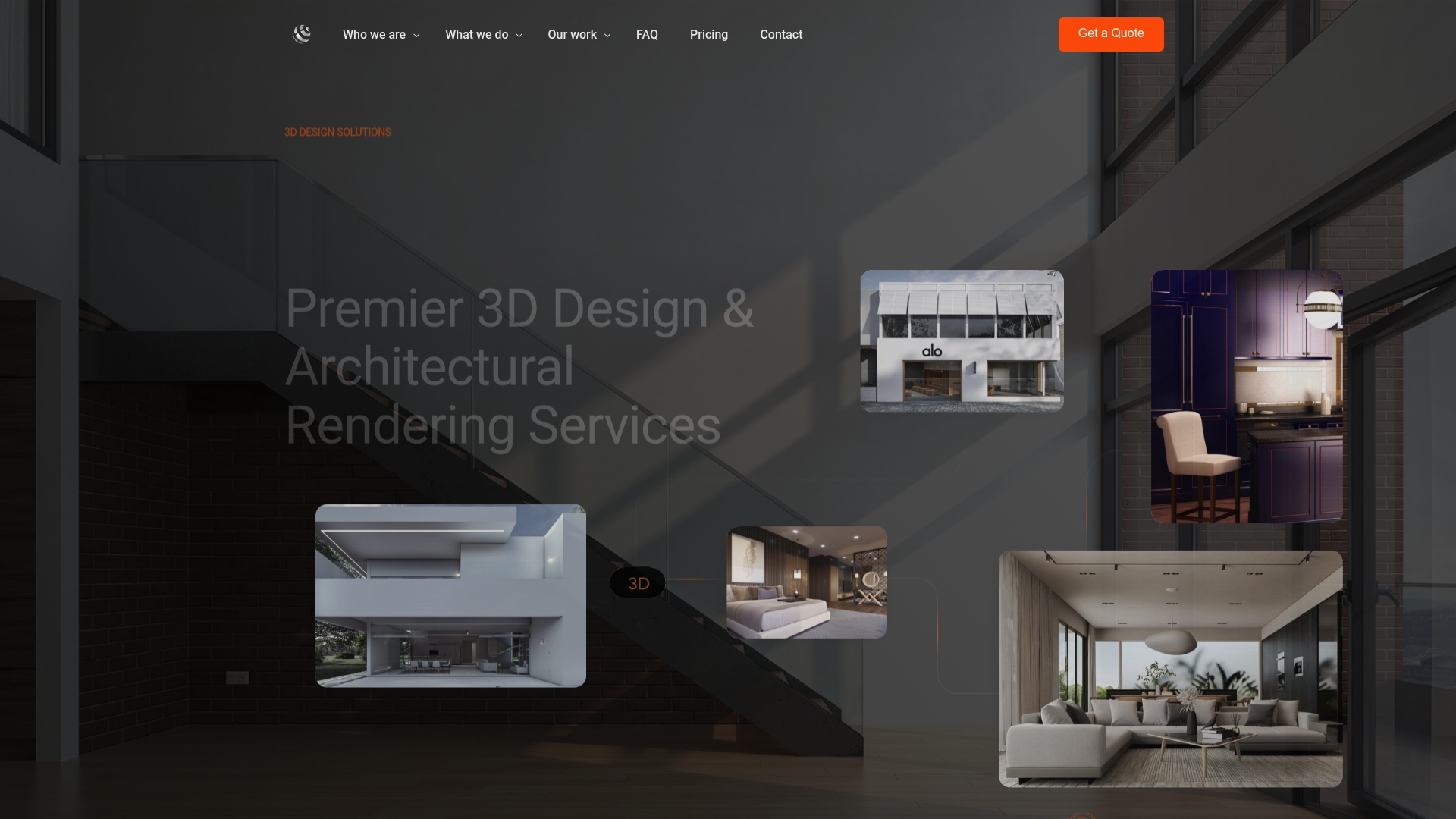
From pre-construction property visualizations to product launch animations and expert 3D animation services built for multi-channel campaigns, Rendimension delivers assets that perform across every touchpoint. With over 1,000 projects completed globally, the team brings both technical depth and marketing awareness to every brief. If your next campaign needs visuals that convert, not just impress, explore what Rendimension can produce for your brand.
FAQ
What is the role of 3D animation in marketing?
3D animation in marketing serves to communicate brand stories, demonstrate products, and create emotional engagement through immersive visuals that static photography and live-action video cannot replicate. It is particularly effective for visualizing unbuilt spaces, internal product mechanisms, and complex technical features.
How does 3D animation influence consumer behavior?
3D animation activates imagery-based processing in consumers, meaning viewers mentally simulate experiencing the product, which builds emotional connection and accelerates purchase decisions. Research links this mechanism to a 23% conversion lift over standard video content.
What are the main benefits of 3D animation for B2B marketing?
The primary benefits include a 40% reduction in B2B sales cycle length, the ability to visualize products before they are manufactured, and consistent asset reuse across all marketing channels without additional production costs.
How do interactive 3D models improve website performance?
Interactive 3D models on product and property pages increase time-on-page by 300% and reduce pre-sale support queries by 40%, according to data on 3D configurator integrations. Visitors who can explore a product in three dimensions require fewer follow-up interactions before committing.
When should a business invest in 3D animation over traditional photography?
3D animation is the stronger choice when the subject cannot be filmed directly, such as unbuilt architecture, internal product mechanisms, or pre-launch products. It is also preferable when the campaign requires consistent assets across multiple channels and markets without the cost of repeated photo shoots.