3D rendering trends for 2026: innovations architects must use
TL;DR:
- Clients now expect their visualizations to feel inhabited and realistic, which builds trust and accelerates approvals.
- Adopting cloud collaboration and high-performance hardware optimizes workflows, reduces errors, and improves project turnaround times.
Clients no longer walk into a pitch ready to imagine a finished building from a set of blueprints. They expect to feel it. The gap between a developer who wins a project approval in the first meeting and one who cycles through three rounds of revisions often comes down to the quality of one thing: visualization. The 3D rendering market is accelerating at a pace that rewards those who adapt early and penalizes those who coast on outdated technique. This article breaks down what’s working in 2026, what’s fading, and where your next investment will actually move the needle.
Table of Contents
- What makes a 3D rendering trend matter in 2026?
- Top trend: Lived-in realism over digital perfection
- Essential workflow: Cloud collaboration and real-time access
- Hardware evolution: Staying ahead with the right tools
- Comparison: Which 3D rendering trends deliver the most value?
- Why following every 3D trend is a mistake
- Bring your renderings to life with 2026’s best solutions
- Frequently asked questions
Key Takeaways
| Point | Details |
|---|---|
| Lived-in realism | Subtle imperfections now drive trust and client engagement over hyper-polished visuals. |
| Cloud collaboration | Real-time shared workflows reduce delays and improve team productivity for architectural projects. |
| Hardware matters | Investing in modern GPUs and plenty of RAM ensures you stay competitive as visualization demands grow. |
| Market growth | 3D rendering adoption is booming, so staying current with trends directly impacts business success. |
| Critical focus | Prioritize trends that offer practical benefits rather than following every new technology blindly. |
What makes a 3D rendering trend matter in 2026?
Not every new software feature or visual gimmick deserves space in your workflow. The real question is whether a trend moves business outcomes. Does it shorten your client’s decision timeline? Does it reduce revision cycles? Does it make your proposal stand out against a competitor presenting a similar project?
The criteria for a trend that actually matters in 2026 come down to four pillars:
- Realism: Does it produce output that a non-technical client immediately reads as believable and desirable?
- Speed: Does it reduce time to delivery without sacrificing quality?
- Collaboration: Does it allow your team, your client, and your contractors to iterate without losing version control?
- Hardware practicality: Can you implement it now with available equipment, or does it require hardware that’s still three years from mainstream adoption?
Trends that score well across all four are worth early adoption. Trends that score high on novelty but low on practical workflow integration tend to consume budget without generating proportional returns.
The 3D rendering services market is projected to reach USD 7.2 billion by 2033 at a CAGR of 8.5% from 2026, with architecture and real estate as primary growth drivers. That kind of growth signals that your clients are being exposed to more and better visualizations every year. Standing still is not neutral. It’s falling behind.
Understanding project success with visualization starts with knowing which tools genuinely elevate the client experience versus which ones just look impressive in a demo. The former generates approvals. The latter generates questions.
Pro Tip: Before adopting any new rendering technology, run a small test project first. Evaluate time cost, learning curve, and client reaction before committing to a full workflow overhaul.
Top trend: Lived-in realism over digital perfection
There is a specific moment in every client presentation where you either build trust or quietly lose it. A rendering that looks too perfect, too clean, too much like a brochure from a utopian future, actually triggers skepticism. Clients increasingly recognize the sterile signature of over-polished CGI, and their reaction is emotional distance rather than excitement.
The shift in 2026 is toward renderings that feel inhabited. This means subtle imperfections like dust particles catching light, faint scuff marks on a hardwood floor, soft glare on a window that hasn’t been staged to artificial perfection. These micro-details communicate that the space is real, livable, and already full of life before anyone has moved in.
Techniques that drive this effect include:
- Surface inconsistency: Varying material texture maps slightly across a surface instead of using a perfectly tiled repeat
- Atmospheric depth: Adding subtle haze, dust motes, or humid air effects to interior environments
- Contextual lighting: Simulating time-of-day light that creates natural shadows rather than evenly distributed studio light
- Aged material detail: Introducing slight weathering on exterior facades, especially for residential projects in mature neighborhoods
“Hyper-polished renderings are increasingly rejected as fake. Subtle imperfections—dust, wrinkles, soft glare—build the kind of visual trust that closes deals and wins approvals.”
For residential developers, this approach is especially powerful in lifestyle marketing. A kitchen rendering where steam rises slightly from a pot on a lit burner communicates something that no floor plan ever could. For commercial projects, lived-in realism translates into showing a retail environment at full occupancy, with the controlled chaos of actual customers.

Understanding how visualization drives architectural success means recognizing that emotional resonance is not a soft metric. It directly correlates with how quickly stakeholders align on a design direction and how confidently investors commit capital.
Pro Tip: When briefing a renderer on residential work, specify a “market-ready but lived-in” look. Ask for at least one render variant that includes deliberate atmospheric imperfection alongside the clean hero shot. Use both in your presentation and watch which one sparks more conversation.
Essential workflow: Cloud collaboration and real-time access
Here is a scenario that still plays out too often in architecture and development firms. A rendering gets revised by the lead architect, saved to a local server, emailed to a contractor, re-exported by someone on a separate machine, and then the client opens an outdated version in a meeting. The revision history is in three different inboxes and a messaging thread. Nobody is certain what is current.
Cloud collaboration eliminates this entirely. Shared 3D environments allow AEC teams to access the same model in real time, make edits that are visible to all stakeholders immediately, and reduce the handoff delays that add days or weeks to a project timeline.
The practical difference between traditional and cloud-based rendering workflows is substantial:
| Workflow type | Version control | Team access | Revision speed | Error risk |
|---|---|---|---|---|
| Local/traditional | Manual, prone to gaps | Requires physical access or file transfer | Slow, 1-3 days per round | High, version conflicts common |
| Cloud-based | Automatic, timestamped | Any device, anywhere, real-time | Fast, hours per round | Low, single source of truth |
The advantages go beyond speed. When a client requests a material change during a virtual review session, a cloud-connected team can implement and reflect that change during the meeting itself, turning a passive presentation into an active design conversation. That level of responsiveness is a competitive differentiator.
Key operational benefits of cloud-based rendering workflows:
- Instant sync: No more “which version is current?” confusion across departments
- Remote team integration: Structural engineers, interior designers, and MEP consultants all access the same live model
- Client-facing portals: Some platforms allow clients to review and comment on models directly, cutting down on interpretation errors
- Audit trails: Every change is logged, which is especially valuable when navigating project approvals or client disputes
Understanding how visualization drives real estate sales means accounting for the entire pipeline from concept to close, not just the final image quality. Cloud workflows compress that pipeline significantly.
Hardware evolution: Staying ahead with the right tools
Your rendering output is only as good as the hardware running it. In 2026, GPU performance benchmarks have shifted dramatically, and the rendering professionals who invested in updated equipment early are producing work that would have been computationally impractical even 18 months ago.
Lumion hardware benchmarks for 2026 point to a clear sweet spot for professional architectural visualization: the RTX 5080 and RTX 5070 Ti, both with 16GB VRAM, cover the majority of project scales efficiently. For city-scale or large mixed-use development visualization, the RTX 5090 with 32GB VRAM becomes the practical standard. Across all tiers, 64GB DDR5 RAM is now considered baseline for professional work.
Here is how those recommendations break down by project scale:
| Project scale | Recommended GPU | VRAM | System RAM | Use case |
|---|---|---|---|---|
| Residential single unit | RTX 5070 Ti | 16GB | 64GB DDR5 | House renders, interior walkthroughs |
| Mid-rise residential/commercial | RTX 5080 | 16GB | 64GB DDR5 | Multi-unit buildings, retail environments |
| Large commercial/mixed-use | RTX 5090 | 32GB | 128GB DDR5 | High-rise towers, campus developments |
| City-scale master planning | RTX 5090 (multi-GPU) | 32GB+ | 128GB+ DDR5 | Urban planning, large-scale phased development |
The 8.5% CAGR market growth in 3D rendering services means the bar for visual quality is rising industry-wide. Clients who have recently seen a competitor’s proposal rendered on top-tier hardware will notice the difference immediately when presented with output from a machine that’s two GPU generations behind.
For developers and architects who are not at city-scale volume but still need premium output, the practical alternative to hardware investment is outsourcing compute-intensive renders to a professional visualization studio. This approach gives you access to top-tier hardware capability on a per-project basis without carrying the capital cost.
The 2026 house rendering guide breaks down exactly where hardware investment pays off most for residential projects specifically, which is useful context if your practice is primarily focused on single-family or low-rise residential work.
Comparison: Which 3D rendering trends deliver the most value?
Pulling these threads together, here is how the major trends for 2026 compare across the dimensions that matter most for architects and developers making investment decisions:
| Trend | Investment level | Best for | ROI timeline | Primary benefit |
|---|---|---|---|---|
| Lived-in realism | Low to medium | Residential, lifestyle marketing | Immediate | Emotional trust, faster client sign-off |
| Cloud collaboration | Medium | Multi-discipline teams, complex projects | Short-term | Speed, error reduction, team integration |
| High-end GPU hardware | High | Studios with high project volume | Medium-term | Output quality, render speed at scale |
| Real-time rendering engines | Medium to high | Design development, client-facing reviews | Short to medium | Interactivity, rapid iteration |
Choosing the right blend depends on who your clients are and what’s slowing down your current workflow. For a boutique residential architect, lived-in realism and a cloud-based workflow may be the entire upgrade needed to close deals faster. For a large commercial developer managing multiple concurrent projects across offices, the hardware investment and cloud infrastructure are both essential.
A few guidelines for making the call:
- Lead with realism when your primary challenge is winning emotional commitment from buyers or investors
- Lead with cloud workflow when your bottleneck is revision speed or multi-team coordination
- Lead with hardware when you are producing high volumes of complex renders and time-to-delivery is a direct revenue factor
- Explore the benefits for visualization pros to get a clear picture of how each approach translates to measurable business outcomes
Why following every 3D trend is a mistake
Here is something you will not hear at most tech conferences: the practices that win the most client approvals in our experience are rarely the flashiest ones.
We have seen firms invest heavily in VR walkthroughs for every pitch, only to discover that most clients in their market segment were disoriented by headsets and walked away less confident, not more. The technology was genuinely impressive. It just did not match what that particular audience needed to feel certain about a decision.
The discipline that actually builds a reputation in this industry is knowing your client profile better than your competitors do. A private equity group evaluating a commercial tower responds differently than a family reviewing their custom home design. The same rendering approach does not close both rooms.
Trend selection should follow a simple filter. Ask: does this trend make my specific client more confident or more confused? Does it reduce the time between proposal and decision, or does it add complexity that requires explanation? The pro visualization benefits that consistently show up across high-performing projects are almost always rooted in clarity and emotional resonance, not technical novelty.
The firms we see getting the most leverage from 2026’s rendering landscape are not the ones chasing every new feature. They are the ones who have made lived-in realism their visual signature, streamlined their internal workflow with cloud tools, and invested in hardware that matches their actual project volume. Selective, deliberate, and measurably effective.
Bring your renderings to life with 2026’s best solutions
Knowing which trends matter is only half of the equation. Executing them at the standard your clients now expect requires the right partner alongside the right process.
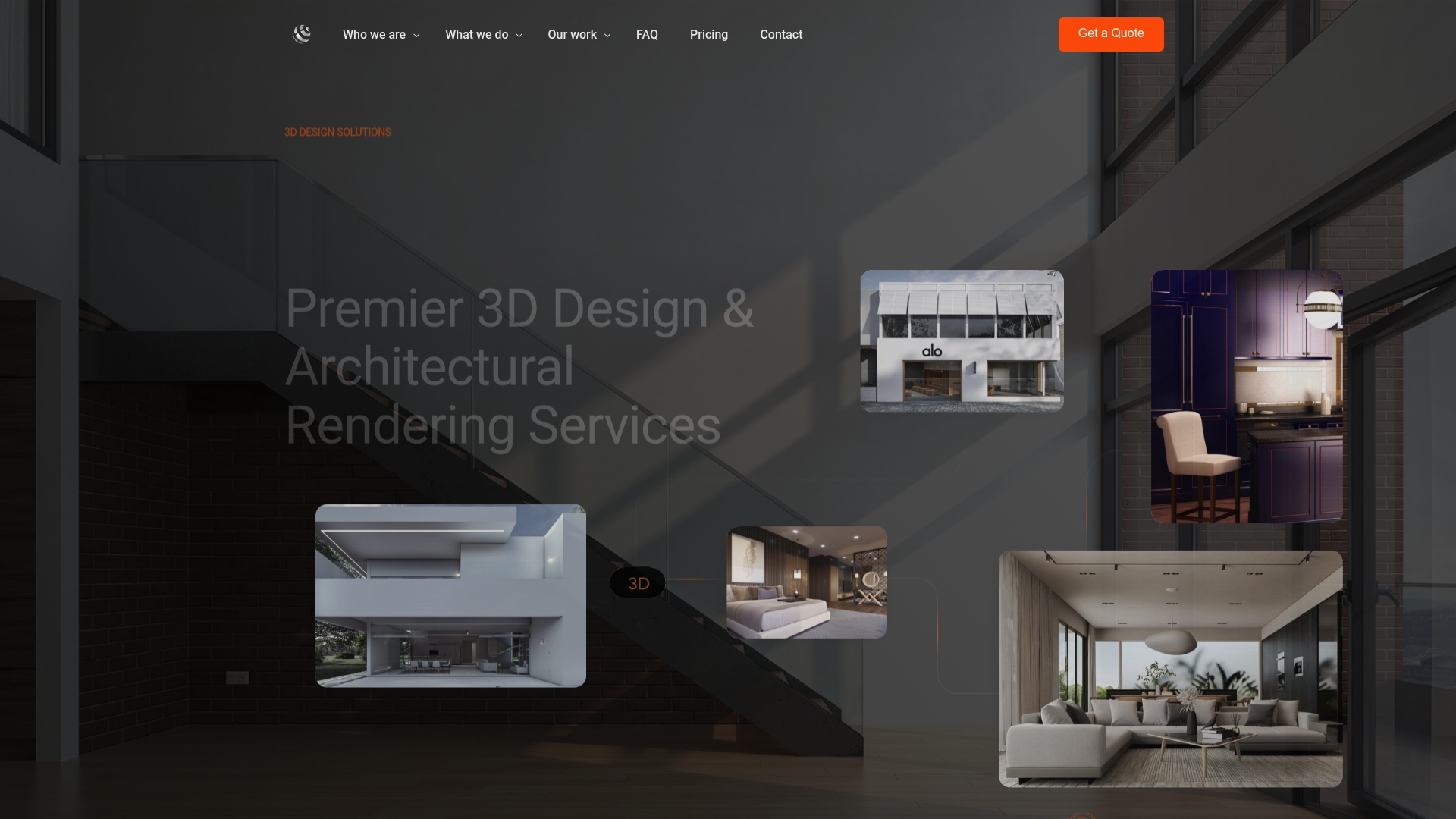
Rendimension works directly with architects and developers to translate these insights into finished visualizations that win approvals, accelerate sales, and communicate design intent with precision. From cutting-edge 3D rendering services to full architectural visualization projects, the team brings over 1,000 completed projects and a deeply collaborative process to every engagement. Whether you are working on a single residential commission or a multi-phase commercial development, a complete 3D rendering of a house or a large-scale masterplan, Rendimension has the technical capability and creative expertise to make your 2026 presentations stand out.
Frequently asked questions
How does lived-in realism increase trust with clients?
Subtle imperfections in renderings like dust, soft glare, and natural wear make visuals feel authentic rather than staged, which increases emotional confidence and reduces client skepticism during presentations.
What hardware is essential for professional 3D rendering in 2026?
A GPU with at least 16GB VRAM alongside 64GB DDR5 RAM is the current standard for professional architectural visualization, with the RTX 5080 and RTX 5070 Ti recommended as the practical sweet spot for most project scales.
Why is cloud collaboration now considered essential?
Shared cloud environments reduce handoff delays, eliminate version control confusion, and allow multi-discipline AEC teams to access and edit the same model in real time, compressing project timelines significantly.
What is the projected growth for the 3D rendering market?
The 3D rendering market is projected to reach USD 7.2 billion by 2033, growing at a CAGR of 8.5% from 2026, with architecture and real estate as the leading demand sectors.
How do I decide which rendering trends to invest in?
Focus on trends that directly address your current workflow bottleneck or client engagement challenge, and prioritize those that offer measurable ROI through faster approvals, shorter revision cycles, or stronger marketing conversion.