Immersive Walkthrough Examples for Architects
Examples of Immersive Walkthroughs for Architecture Pros
TL;DR:
- Immersive walkthroughs are interactive virtual experiences replacing static visuals to communicate spatial design effectively across industries. They enhance real estate leasing, design validation, and educational projects, with platform choice tailored to project phase, audience, and fidelity needs. Early strategic implementation ensures immersive walkthroughs serve as valuable tools, reducing costs, accelerating decisions, and improving stakeholder understanding.
Immersive walkthroughs are defined as interactive, virtual explorations that allow clients and stakeholders to move through a digital representation of a space before it is built or leased. Across architecture, real estate, and marketing, these experiences are replacing static floor plans and flat renderings as the primary tool for communicating spatial design. Platforms like Matterport, Vectorworks Odyssey, and custom CGI pipelines built on Unreal Engine 5 now power the best immersive walkthroughs in the industry. The data confirms the shift: 72% of renters would lease a property without visiting in person if the listing included a 3D tour. That single statistic reframes what a walkthrough is worth to your business.
1. Examples of immersive walkthroughs in real estate marketing
Real estate is where immersive walkthrough examples have produced the most measurable commercial results. Matterport 3D tours allow prospective tenants and buyers to navigate a property from any device, at any time, without scheduling a physical showing. Jellis Craig Stonnington, an Australian real estate agency, deployed Matterport across its listings and saved up to AUD$200,000 annually by reducing vacant-property costs and cutting the number of in-person inspections required per lease.
The benefits extend beyond cost savings. Renters exposed to 3D tours are 95% more likely to rent when the listing includes one. That conversion lift is not a marginal improvement. It is the difference between a property sitting vacant for three weeks and leasing in three days.
- Remote leasing: Buyers in different cities or countries can commit to a lease or purchase without traveling.
- Reduced vacancy costs: Fewer physical showings mean lower staging, staffing, and utility expenses per listing.
- Expanded buyer pool: International investors and relocating professionals become viable prospects.
Pro Tip: When uploading a Matterport tour to a listing portal, embed the direct 3D tour link rather than a thumbnail image. Click-through rates on direct tour links outperform static image galleries in most major listing platforms.
2. Interactive showroom experiences powered by Unreal Engine 5
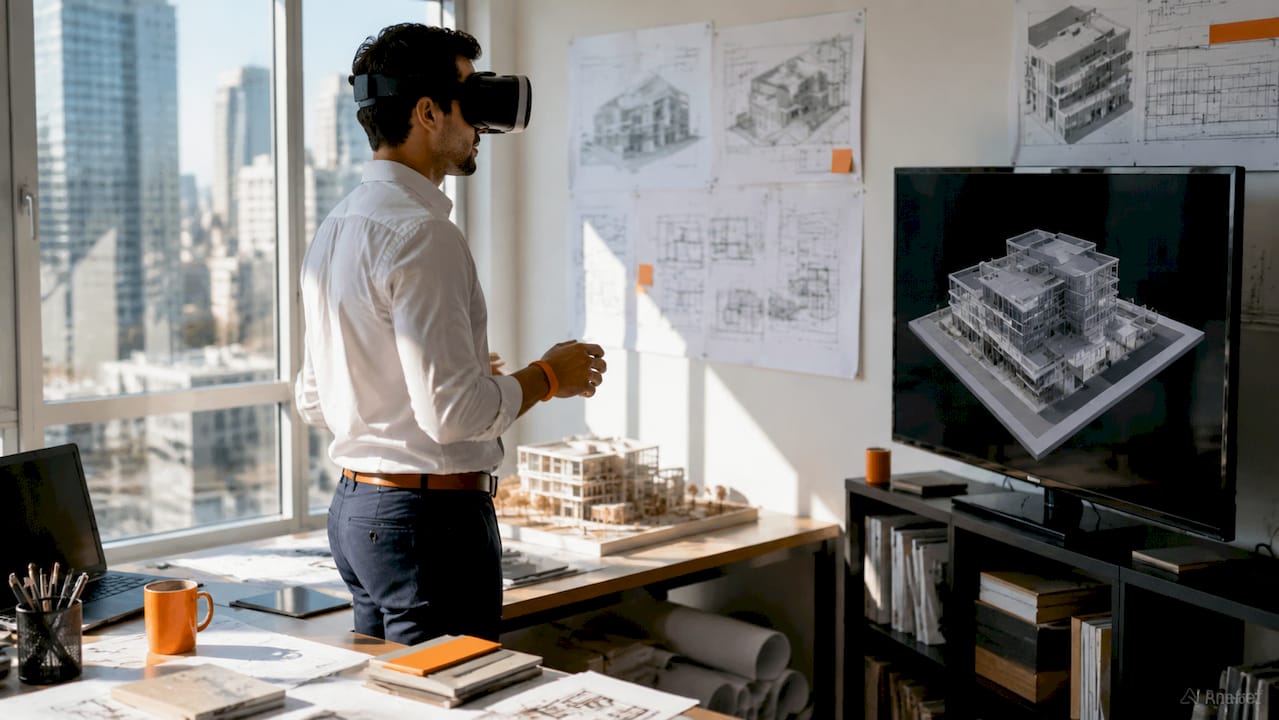
Off-plan property sales centers now use Unreal Engine 5 digital twins to let buyers explore photorealistic representations of developments that do not yet exist. These interactive showroom setups typically feature 4K touchscreens, optional VR headsets, and live CRM integration that updates unit availability in real time. A buyer can switch between day and night lighting, view the development from street level, and explore the surrounding neighborhood context including parks, transit links, and retail.
The emotional impact of this format is significant. When a prospect can stand inside a virtual apartment and look out at a rendered skyline, the decision to purchase accelerates. The experience moves the conversation from “what will this look like” to “I can picture living here.” Sales teams using this format report shorter decision cycles and fewer requests for physical site visits during pre-construction phases.
This approach works particularly well for luxury residential towers, mixed-use developments, and master-planned communities where the surrounding context is as important as the unit itself.
3. Vectorworks Odyssey VR for architectural design validation
Vectorworks Odyssey VR allows design teams to walk through their own architectural models at true scale inside a virtual environment. This is not a marketing tool. It is a design validation tool, and the distinction matters. When an architect or production designer puts on a headset and stands inside a model, they immediately perceive spatial relationships that no plan view or section drawing can communicate.
The Athenaeum Theatre project demonstrated this directly. The production design team used Vectorworks Odyssey to validate sightlines between the stage and audience seating, identify rigging conflicts, and confirm that scenic elements would read correctly from every seat in the house. Issues that would have required expensive on-site corrections were caught during the virtual review phase.
- Sightline validation: Confirm that audience members in every seat have unobstructed views of key stage elements.
- Rigging conflict detection: Identify clashes between lighting rigs, fly systems, and scenic pieces before fabrication begins.
- Cross-departmental review: Share recorded flythroughs with lighting designers, structural engineers, and clients who are not on-site.
Pro Tip: Use the teleportation feature in VR walkthroughs to jump between critical viewpoints rapidly during a client review session. This keeps the meeting focused and prevents motion discomfort for users who are new to VR.
Immersive VR walkthroughs reduce costly change orders by surfacing design and interaction issues before construction begins. The earlier a problem is found, the cheaper it is to fix.
4. Smithsonian Starstruck and educational immersive experiences
The Smithsonian Starstruck experience is a free-roam, 40-minute immersive walkthrough of the cosmos built on real astronomical data from the Harvard Center for Astrophysics. Visitors walk through a physically tracked environment, moving between nebulae, star systems, and galactic structures at a scale that makes the data visceral rather than abstract. There are no controllers and no seated positions. The experience is fully walkable.
For architects and marketers, Starstruck is worth studying not for its subject matter but for its structural approach. The experience uses guided storytelling layered over a free-roam environment. Visitors have agency to explore, but narrative cues direct attention to the most important spatial moments. This is exactly the tension that well-designed architectural walkthroughs must resolve: freedom to explore versus guided comprehension of the design intent.
“The most effective immersive walkthroughs do not just show a space. They direct attention within it. Smithsonian Starstruck proves that even in a free-roam environment, narrative architecture shapes what visitors actually experience.”
- Guided storytelling: Narrative cues keep visitors oriented and focused on key design moments.
- Real data integration: Grounding the experience in verifiable information builds credibility and trust.
- Free-roam agency: Allowing physical movement increases emotional engagement compared to passive video.
5. Daher Snap and Legrand CGI product walkthroughs
Daher’s Snap digital product walkthrough uses cinematic photorealistic CGI and fluid camera choreography to present an aircraft interior as a fully navigable architectural environment. The camera moves through the cabin with the pacing of a film sequence, pausing on material details, spatial transitions, and functional features. The result transforms a technical product specification into a spatial experience that clients can emotionally respond to.
Legrand’s architectural CGI takes a different approach. Rather than a single camera path, Legrand uses color-coded cutaways to reveal integrated power, lighting, and digital infrastructure systems within a building. Each system is animated in a distinct color, allowing viewers to understand how electrical, data, and lighting networks coexist within the same wall cavity or ceiling plenum. This technique is directly applicable to architectural presentations where MEP coordination needs to be communicated to non-technical clients or investors.
| Walkthrough type | Best application | Key technique |
|---|---|---|
| Daher Snap cinematic CGI | Product launches, investor presentations | Fluid camera choreography with material close-ups |
| Legrand color-coded cutaway | MEP coordination, infrastructure briefings | Dynamic color separation of building systems |
| Matterport 3D tour | Active listings, remote leasing | Navigable dollhouse and room-level views |
| Unreal Engine 5 showroom | Off-plan sales centers | Real-time digital twin with CRM integration |
6. Choosing the right immersive walkthrough platform
Selecting the right tool depends on three variables: project phase, audience technical literacy, and required fidelity. Matterport works best for completed or near-complete spaces where a physical scan is possible. It is fast to deploy, requires no 3D modeling expertise, and produces a navigable result within hours. For active listings and leasing campaigns, it is the most cost-effective option available.
Vectorworks Odyssey and similar VR design tools are built for the pre-construction phase. They require an existing 3D model, which means they integrate naturally into an architectural workflow but add friction for real estate agents who do not have design software experience. The payoff is spatial accuracy at true scale, which no scan-based tool can replicate for a building that does not yet exist.
Custom CGI walkthroughs built in Unreal Engine 5 or produced through a studio like Rendimension occupy the highest tier of fidelity and the highest investment. They are appropriate for major pre-sales campaigns, award submissions, planning applications, and investor presentations where the quality of the visual directly influences the credibility of the project.
| Platform | Phase | Fidelity | Best for |
|---|---|---|---|
| Matterport | Existing spaces | High (scan-based) | Leasing, active listings |
| Vectorworks Odyssey | Design phase | True-scale VR | Design validation, collaboration |
| Custom CGI (Unreal Engine 5) | Pre-construction | Photorealistic | Sales campaigns, investor decks |
Pro Tip: For client presentations, pair a Matterport tour of a comparable completed project with a custom CGI walkthrough of the proposed development. The contrast between the two formats communicates both your track record and your vision simultaneously.
You can explore the step-by-step production process for creating immersive walkthroughs to understand what each format requires in terms of assets, time, and technical input before committing to a platform.
Key takeaways
The most effective immersive walkthroughs combine photorealistic fidelity, guided spatial storytelling, and platform selection matched to the project phase and audience.
| Point | Details |
|---|---|
| Real estate conversion lift | 3D tours make renters 95% more likely to commit, directly reducing vacancy periods. |
| Design validation value | VR walkthroughs catch sightline and coordination issues before construction, cutting change order costs. |
| Platform matching | Choose Matterport for existing spaces, Vectorworks Odyssey for design review, and custom CGI for pre-sales campaigns. |
| Storytelling structure | Guided narrative within a free-roam environment, as used in Smithsonian Starstruck, improves spatial comprehension. |
| CGI technique variety | Color-coded cutaways and cinematic camera paths serve different communication goals within the same project. |
What working with immersive walkthroughs has taught us
The most common mistake professionals make with immersive walkthroughs is treating them as a finishing touch rather than a strategic asset. At Rendimension, we have seen projects where a photorealistic walkthrough was commissioned after the client had already raised objections about a design. By that point, the walkthrough is damage control. When it is commissioned at the start of the client engagement, it prevents the objections from forming in the first place.
The second pattern we notice consistently is the gap between technical fidelity and user accessibility. A walkthrough rendered at the highest possible quality is worthless if the client cannot navigate it confidently. For non-technical audiences, a guided flythrough with a fixed camera path outperforms a fully interactive VR experience every time. The goal is comprehension, not demonstration of technical capability.
We also push back on the assumption that immersive walkthroughs are only for large-scale commercial projects. A residential architect presenting a custom home to a single family gains as much from a photorealistic 3D walkthrough as a developer presenting 200 units to an investment committee. The scale of the project does not determine the value of the tool. The complexity of the spatial decision does.
The professionals who gain the most from these tools are the ones who integrate them into their workflow from the first client meeting, not the last.
— Rendimension
Bring your next project to life with Rendimension
Rendimension produces photorealistic 3D walkthroughs and VR tours for architecture, real estate, and marketing professionals who need to communicate design intent with precision and visual impact. Every project is developed collaboratively, from initial asset review through final delivery, with a focus on spatial accuracy and presentation quality that accelerates client approvals.
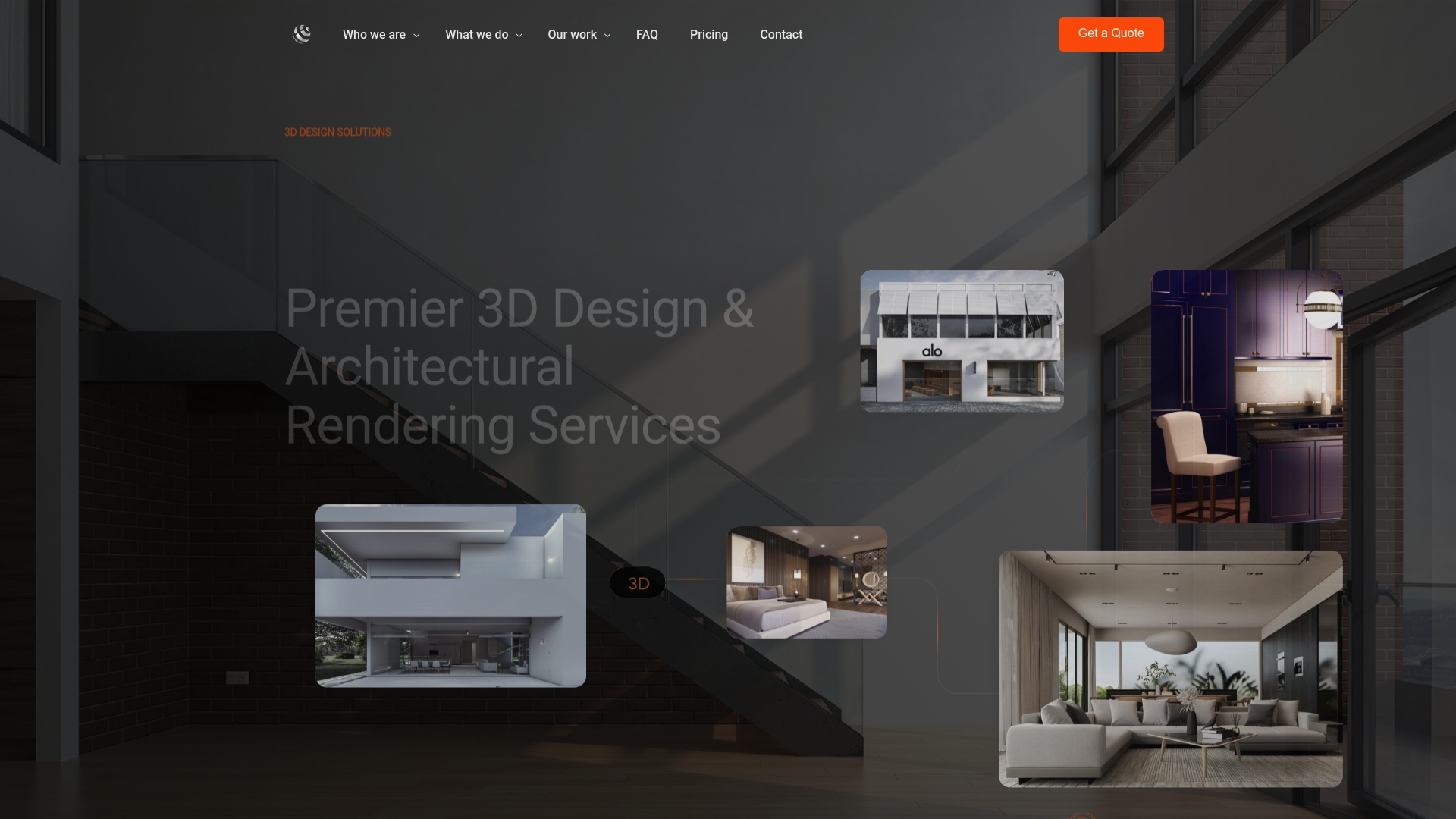
With over 1,000 projects completed globally, Rendimension’s architectural visualization services cover residential, commercial, and mixed-use developments at every scale. Whether you need a pre-sales campaign walkthrough, a design validation VR experience, or a cinematic CGI flythrough for an investor presentation, the team delivers outputs built for your specific audience and goal. Request a project consultation to see what your next development looks like before a single foundation is poured.
FAQ
What are the best examples of immersive walkthroughs for real estate?
Matterport 3D tours and Unreal Engine 5 interactive showrooms are the leading formats. Matterport suits active listings, while Unreal Engine 5 digital twins work best for off-plan pre-sales campaigns with live CRM integration.
How do immersive walkthroughs benefit architectural design teams?
Vectorworks Odyssey VR lets teams walk through models at true scale, catching sightline errors and coordination conflicts before construction begins. This reduces change orders and improves cross-departmental communication.
Can immersive walkthroughs be used for educational or cultural projects?
Yes. The Smithsonian Starstruck experience demonstrates that free-roam immersive walkthroughs built on real data can deliver guided educational experiences at a level that traditional exhibits cannot match.
What is the difference between a VR walkthrough and a CGI flythrough?
A VR walkthrough gives the viewer spatial agency to navigate a model independently, while a CGI flythrough follows a fixed camera path produced in post-production. VR suits design review; CGI flythroughs suit marketing presentations where narrative control matters.
How much does it cost to create an immersive walkthrough?
Cost varies significantly by format. Scan-based Matterport tours are the most affordable option for existing spaces. Custom photorealistic CGI walkthroughs require a higher investment but deliver the fidelity needed for major pre-construction sales and investor presentations.