Commercial Rendering Styles: 2026 Guide
Commercial Rendering Styles: Examples and 2026 Guide
TL;DR:
- Commercial rendering styles are chosen based on project phase and purpose, ranging from photorealistic CGI to conceptual sketches. Photorealistic renders dominate marketing and investor presentations by emphasizing lighting and material accuracy, while conceptual styles facilitate early design feedback. AI-assisted rendering accelerates workflows but requires human refinement, making style selection crucial for effective communication and project success.
Commercial rendering styles are specialized CGI techniques that visually communicate commercial architecture through distinct aesthetic and technical approaches, each calibrated to a specific phase of the design and approval process. Whether you are presenting a mixed-use tower to investors, seeking planning approval for a retail center, or pitching a hotel concept to a hospitality brand, the rendering style you choose shapes how your design is perceived before a single brick is laid. The examples of commercial rendering styles available in 2026 span photorealistic CGI, conceptual sketches, AI-generated visuals, and hybrid approaches that blend artistic intent with technical precision. Choosing the wrong style for the wrong audience is one of the most common and costly mistakes in architectural visualization.
1. Photorealistic rendering: the dominant style for commercial projects
Photorealistic rendering is the most widely used visualization method in commercial architecture, defined by its use of physically plausible lighting, global illumination, and physically based rendering (PBR) materials to produce images indistinguishable from photography. This style dominates investor presentations, marketing brochures, and client approval processes because it removes ambiguity. Stakeholders see exactly what they are getting.

Perceived photorealism depends primarily on specific visual cues including contact shadows, global illumination, and texture fidelity rather than scene complexity alone. A review of 41 peer-reviewed studies confirmed this finding, which means a well-lit, simply composed render outperforms a complex scene with poor lighting every time. This is a critical insight for architects who over-specify geometry but under-invest in lighting setup.
The visual cues that define a convincing photorealistic commercial render include:
- Contact shadows at the base of columns, furniture, and building edges
- Global illumination that bounces light naturally through interior and exterior spaces
- Micro-imperfections in materials such as subtle scratches on glass or grain variation in stone cladding
- Translucency in materials like frosted glass partitions or fabric canopies
- Atmospheric depth created by haze, ambient occlusion, and sky conditions
Lighting hierarchy shapes atmosphere in photorealistic renders, with global illumination and contact shadows critical to spatial coherence and emotional impact. A render of a corporate office lobby lit with a single flat light source will always feel unconvincing, regardless of how detailed the geometry is. Lighting is the single most important production decision in photorealistic commercial visualization.
Pro Tip: Always include entourage elements such as people, vehicles, and street furniture in exterior commercial renders. Scale context is essential to avoid misinterpretation of building scale and dramatically improves stakeholder understanding of spatial relationships.
2. Conceptual and artistic rendering styles for early design phases
Conceptual rendering styles prioritize form, massing, and design intent over photographic detail. These include hand-drawn sketches, digital collages, watercolor-style CGI, and non-photorealistic rendering (NPR) techniques that deliberately leave elements unresolved to invite feedback rather than close it down.
Early-stage conceptual styles such as sketches and collages focus on hierarchy and form over detail, facilitating team and client design iterations before materials and lighting are finalized. This is not a shortcut. It is a deliberate communication strategy that signals to clients that the design is still open to their input.
The practical advantages of conceptual rendering styles in commercial architecture include:
- Open feedback loops: Clients are less likely to fixate on material choices or color when the image is clearly abstract
- Speed and cost efficiency: Conceptual renders are produced at a fraction of the time and budget of photorealistic outputs
- Design hierarchy clarity: Massing, proportion, and spatial relationships read more clearly without photorealistic surface noise
- Team alignment: Internal design teams use conceptual renders to test ideas before committing to detailed modeling
A digitally enhanced sketch of a retail facade, for example, communicates the rhythm of storefronts and the relationship between glazing and solid panels without requiring finalized material specifications. For commercial projects in early schematic design, this approach accelerates decision-making without creating false expectations about the final appearance.
Artistic rendering styles also serve a distinct marketing function. Watercolor-style CGI of a boutique hotel or a charcoal-effect render of a cultural center can communicate brand personality and design ambition in ways that photorealistic images sometimes cannot. These styles are increasingly used in press releases, award submissions, and social media campaigns for commercial developments.
3. AI-assisted rendering in commercial architecture visualization
AI-enhanced rendering represents the most significant shift in commercial visualization workflows since the adoption of real-time rendering engines. AI rendering platforms generate photorealistic commercial architecture visuals rapidly by interpreting design inputs such as photographs, sketches, and massing models with high accuracy and customization.
The use cases for AI-assisted rendering span the full spectrum of commercial typologies:
- Office towers: Multi-angle exterior renders with site-context accuracy and consistent facade lighting
- Retail centers: Interior and exterior visuals calibrated to brand standards and tenant mix
- Hotels and hospitality: Lobby, suite, and amenity renders produced at speed for investor decks
- Mixed-use developments: Aerial and street-level views that communicate the relationship between uses
Commercial AI tools produce multi-angle, site-context aware renders rapidly, making them highly suitable for large-scale commercial projects. The speed advantage is substantial. A project that previously required two weeks of production time for a full set of exterior and interior renders can now be turned around in days, which matters enormously during competitive bid processes or fast-moving development timelines.
The limitations of AI-assisted rendering are real and worth understanding. AI outputs require professional review and refinement to meet the precision standards expected in planning submissions or high-end marketing campaigns. Material accuracy, lighting consistency across angles, and entourage quality all require human oversight. The best commercial visualization workflows use AI to accelerate production and human expertise to validate and refine the output.
Pro Tip: When using AI-assisted renders for planning submissions, prioritize environmental context and site integration over interior detail. Planning-focused visuals should direct stakeholder attention to site compliance and massing relationships, not surface finishes.
Commercial visualization workflows increasingly integrate AI tools to shorten turnaround times and customize facade and interior visualizations for client and investor needs. This is not a future trend. It is current practice at leading architectural visualization studios globally.
4. Comparing commercial rendering styles: a practical overview
Choosing between photorealistic, conceptual, and AI-enhanced rendering styles requires a clear understanding of what each delivers and where each falls short. Rendering style selection should be driven by the image’s purpose, whether that is marketing, client approval, or planning, which dictates the required level of detail, realism, and style.
The table below provides a direct comparison across the four most common commercial rendering styles:
| Rendering style | Visual fidelity | Production time | Relative cost | Best application |
|---|---|---|---|---|
| Photorealistic CGI | Very high | 1 to 3 weeks | High | Investor decks, marketing, sales launches |
| Conceptual / NPR | Low to medium | 1 to 5 days | Low | Schematic design, team alignment, press |
| AI-enhanced rendering | High | 1 to 5 days | Medium | Fast-turnaround marketing, multi-angle sets |
| Hybrid (AI + manual) | Very high | 3 to 7 days | Medium to high | Planning submissions, award entries |
Production trade-offs between styles are significant. Photorealistic renders are resource-intensive but ideal for marketing, whereas conceptual styles accelerate early feedback at lower cost. The hybrid approach, where AI generates the base image and a visualization specialist refines lighting, materials, and entourage, is becoming the preferred method for commercial projects that need both speed and precision.
Practical considerations beyond the table include client expectations and project scale. A 50-story office tower in a major urban market demands photorealistic exterior renders for its sales center, regardless of budget pressure. A community retail development in a suburban market may achieve its planning approval goals with a well-composed conceptual render that emphasizes site integration. Scale, audience, and purpose determine style. Not personal preference.
For interior commercial spaces, the same logic applies. A luxury hotel lobby requires photorealistic detail to communicate material quality and spatial atmosphere to a hospitality brand’s ownership group. A co-working space in early design development benefits from a conceptual render that communicates layout and flow without locking in furniture specifications prematurely.
Key takeaways
The most effective commercial rendering style is always the one matched to the project phase, audience, and communication goal rather than the one with the highest visual fidelity.
| Point | Details |
|---|---|
| Match style to project phase | Use conceptual renders in schematic design and photorealistic CGI for marketing and investor presentations. |
| Lighting drives photorealism | Global illumination and contact shadows matter more than scene complexity for perceived realism. |
| AI accelerates production | AI-enhanced rendering cuts turnaround time significantly, but requires professional refinement for high-stakes outputs. |
| Scale context is non-negotiable | Always include people and vehicles in commercial exterior renders to calibrate building scale for stakeholders. |
| Purpose dictates detail level | Planning submissions prioritize site context and legibility; marketing renders prioritize material quality and atmosphere. |
What 1,000+ commercial projects taught us about rendering style choices
After completing over 1,000 projects globally, Rendimension has developed a clear point of view on how design professionals should approach rendering style selection. The most common mistake we see is treating photorealistic rendering as the default for every deliverable. It is not. Photorealism is the right choice for a specific set of outputs, and deploying it indiscriminately wastes budget and, more importantly, can actually slow down the design process.
The second most common mistake is the opposite: using conceptual renders too late in the process. When a client has already approved a schematic design and expects to see a finished product, presenting a sketch-style render at the design development stage creates confusion and erodes confidence. The render style signals where you are in the process. Misalign the signal and you misalign the relationship.
What actually works is a staged approach. Start with conceptual renders to align on massing, proportion, and spatial hierarchy. Move to AI-enhanced renders for rapid multi-angle exploration during design development. Commit to full photorealistic production for the marketing and approval deliverables that carry the most weight. This sequence respects both the client’s time and the project budget.
Lighting and composition deserve more attention than most design professionals give them at the briefing stage. The difference between a render that wins a planning approval and one that generates objections is often not the design itself. It is the angle, the time of day, and the quality of the sky. These are decisions that should be made deliberately, not left to the visualization team to guess.
The emerging trend worth watching is immersive VR walkthroughs combined with AI-refined photorealistic stills. For large commercial developments, the ability to walk a client or planning board through a space before it is built is a fundamentally different communication tool than a static image. Rendimension’s architectural visualization services now integrate both, and the client response has been consistently stronger than static-only presentations.
— Rendimension
Bring your commercial project to life with Rendimension
Rendimension specializes in photorealistic, AI-enhanced, and conceptual rendering styles tailored to commercial architecture across offices, retail, hospitality, and mixed-use developments. Every project begins with a collaborative brief that aligns rendering style to your specific audience, whether that is an investor group, a planning board, or a marketing campaign.
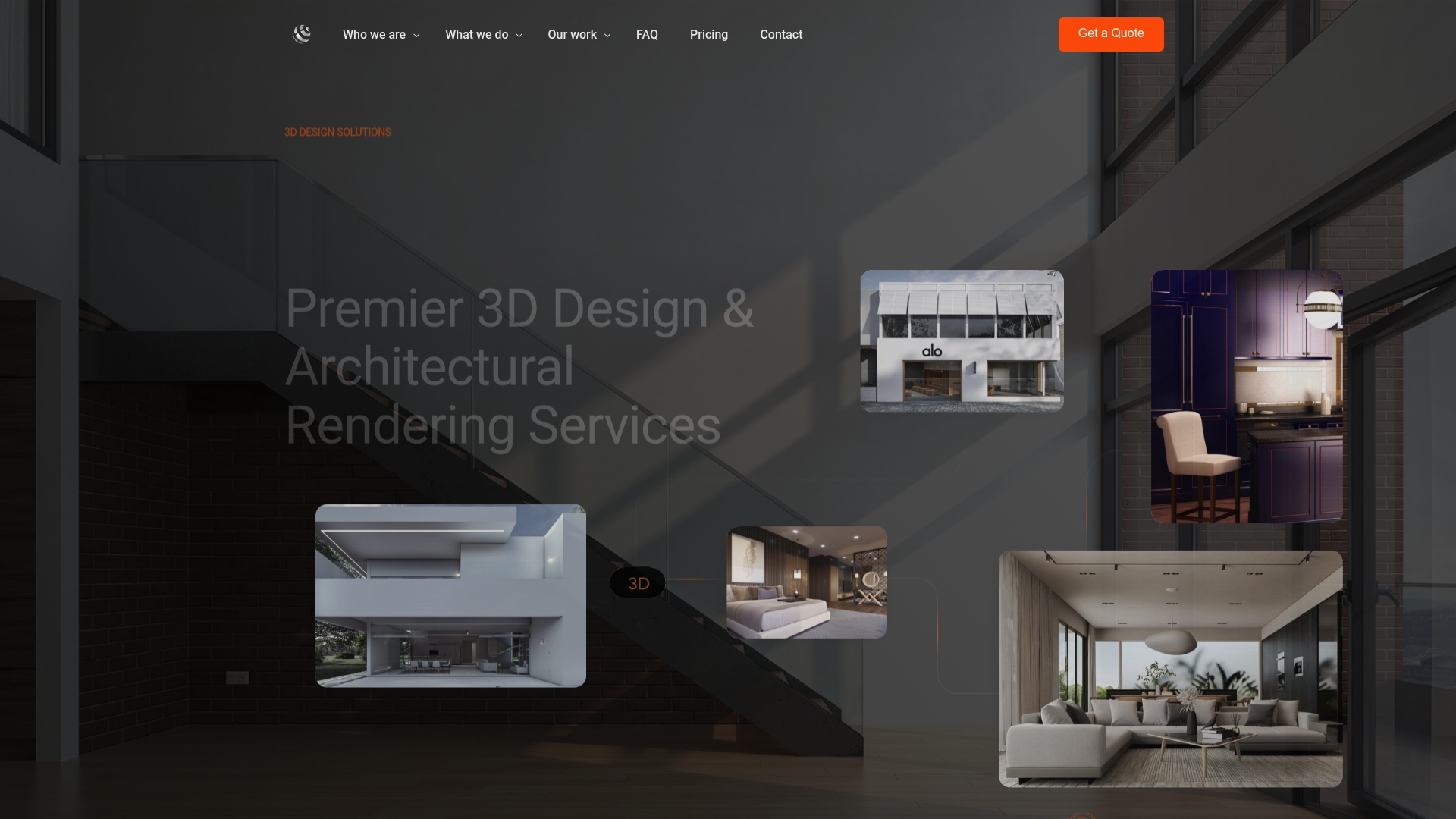
With over 1,000 projects delivered globally, Rendimension’s team produces 3D architectural renders that meet the precision and visual standards required for high-stakes commercial presentations. From a single hero exterior to a full suite of interior and aerial views, the studio scales its output to your project’s phase and budget. Contact Rendimension to discuss your next commercial visualization project and receive a tailored production proposal.
FAQ
What are the main examples of commercial rendering styles?
The main examples of commercial rendering styles are photorealistic CGI, conceptual or non-photorealistic rendering, AI-enhanced rendering, and hybrid approaches that combine AI speed with manual refinement. Each style serves a different project phase and audience.
Which rendering style is best for investor presentations?
Photorealistic rendering is the standard for investor presentations because it communicates material quality, spatial atmosphere, and building scale with the highest visual fidelity. AI-enhanced rendering is an effective alternative when turnaround time is a priority.
How does AI-assisted rendering differ from traditional photorealistic CGI?
AI-assisted rendering generates high-quality commercial visuals from sketches, photographs, or massing models in a fraction of the time required for traditional photorealistic production. Traditional CGI offers greater control over lighting, material accuracy, and composition, making it the preferred choice for final marketing and planning deliverables.
When should architects use conceptual rendering styles?
Conceptual rendering styles are most effective during schematic design and early design development, when the goal is to communicate massing, proportion, and spatial hierarchy rather than finalized materials. They keep feedback loops open and reduce the risk of clients fixating on details that have not yet been resolved.
What makes a photorealistic commercial render convincing?
High perceived realism arises from alignment with human visual expectations of shape, material, and spatial layout, not just rendering detail. Contact shadows, global illumination, texture fidelity, and scale-calibrating entourage elements are the primary factors that determine whether a render reads as believable.