Architects and real estate developers face a persistent challenge: conveying intricate design concepts to clients and stakeholders who lack technical training. Traditional blueprints and 2D sketches often fail to communicate spatial relationships, material textures, or the emotional impact of a finished space. This communication gap leads to misunderstandings, costly revisions, and delayed approvals. 3D visualization transforms this dynamic by rendering complex architectural ideas into photorealistic, immersive experiences that anyone can understand instantly. This article explores the critical benefits of 3D visualization, revealing how advanced rendering techniques enhance stakeholder engagement, streamline design workflows, and deliver measurable project success.
Table of Contents
- Key takeaways
- Understanding the critical benefits of 3D visualization
- Benefit 1: Superior client engagement through immersive 3D walkthroughs
- Benefit 2: Early detection of design issues to save time and costs
- Benefit 3: Enhanced marketing impact and stakeholder confidence
- Comparing 3D visualization benefits for your architectural projects
- Explore professional 3D visualization services to elevate your projects
- Frequently asked questions about 3D visualization benefits
Key Takeaways
| Point | Details |
|---|---|
| Client engagement boost | Immersive walkthroughs create emotional connections and shorten decision cycles before construction. |
| Design accuracy gains | Photorealistic renderings reveal spatial conflicts, lighting issues, and material incompatibilities early in the planning phase. |
| Marketing impact and investor confidence | High quality visuals elevate promotional materials and improve investor confidence for financial stakeholders. |
| Team alignment improvements | Shared visual references reduce ambiguity across contractors, engineers, and design teams. |
Understanding the critical benefits of 3D visualization
Architectural visualization represents a fundamental shift in how design professionals communicate ideas. Rather than asking clients to interpret technical drawings, you present them with realistic visual experiences that mirror the finished product. This approach transforms abstract concepts into tangible previews, bridging the expertise gap between architects and non-technical stakeholders.
The core benefits of 3D visualization fall into four strategic categories:
- Client engagement and approval acceleration: Immersive walkthroughs create emotional connections to spaces before construction begins, shortening decision cycles.
- Design accuracy and error prevention: Photorealistic renderings reveal spatial conflicts, lighting issues, and material incompatibilities during the planning phase.
- Marketing effectiveness and investor confidence: High-quality visuals elevate promotional materials and demonstrate project viability to financial stakeholders.
- Team alignment and communication efficiency: Shared visual references eliminate ambiguity across contractors, engineers, and design teams.
Modern 3D visualization encompasses multiple techniques tailored to different project stages and stakeholder needs:
- Static renderings: High-resolution images showcasing specific views, materials, and lighting conditions
- Animated walkthroughs: Sequential video presentations guiding viewers through spaces with controlled pacing
- Interactive virtual tours: Real-time exploration allowing users to navigate freely and examine details on demand
- Virtual reality experiences: Fully immersive environments providing scale perception and spatial awareness
Each technique serves distinct purposes, and 3D visualization significantly enhances project presentations for architects and developers by matching visualization methods to specific communication goals. Selecting the appropriate approach depends on your audience, project complexity, and presentation context. The following sections examine each major benefit in depth, providing frameworks for maximizing visualization impact across your architectural practice.
Benefit 1: Superior client engagement through immersive 3D walkthroughs
Immersive 3D walkthroughs revolutionize client presentations by replacing static images with dynamic spatial experiences. Instead of viewing disconnected room renders, clients move through virtual environments exactly as they would navigate the completed building. This continuity builds intuitive understanding of circulation patterns, room proportions, and sight lines that static images cannot convey.
The engagement advantage stems from psychological factors. When clients experience spaces rather than view them, they form emotional connections to the design. They envision themselves using the space, which transforms abstract approval decisions into personal investment. This emotional resonance accelerates buy-in and reduces the hesitation that often accompanies major project commitments.
3D walkthroughs transform design presentations by delivering these specific advantages:
- Spatial comprehension: Clients grasp room relationships, ceiling heights, and scale instantly without interpreting floor plans
- Material visualization: Realistic textures and finishes eliminate uncertainty about final appearances
- Lighting accuracy: Accurate shadow rendering and natural light simulation reveal how spaces feel at different times
- Iterative refinement: Real-time feedback during walkthroughs identifies client preferences before construction documentation
Effective walkthrough creation requires strategic planning. Focus camera movements on key design features rather than comprehensive coverage. Maintain consistent pacing that allows viewers to absorb details without rushing. Include contextual elements like furniture and landscaping to establish scale and functionality.
Pro Tip: Schedule walkthrough reviews with clients in two phases. First, present the complete sequence without interruption to establish overall spatial understanding. Then replay with pause capability, inviting detailed feedback on specific elements. This approach balances comprehensive vision with focused refinement.
The approval acceleration from walkthroughs compounds throughout project timelines. Early spatial clarity reduces mid-construction change orders, which typically cost 5 to 10 times more than design-phase modifications. When you present 3D visuals effectively, you compress decision cycles and maintain project momentum, delivering measurable schedule and budget advantages.
Benefit 2: Early detection of design issues to save time and costs
Precise 3D visualization functions as a comprehensive design validation tool, exposing problems that remain hidden in 2D documentation. When you model spaces with accurate dimensions, structural elements, and system placements, conflicts become immediately visible. This early detection prevents expensive field corrections and maintains construction schedules.

The cost implications are substantial. Construction-phase changes require demolition, material reordering, and schedule delays that multiply initial costs. Design-phase corrections involve digital modifications that take hours rather than weeks. Accurate 3D renderings help detect design flaws early, minimizing costly changes during construction by identifying issues when corrections remain inexpensive.
Common design errors revealed through 3D visualization include:
- Spatial conflicts: HVAC ductwork intersecting structural beams or lighting fixtures blocking door swings
- Circulation problems: Insufficient clearances in corridors or awkward transitions between spaces
- Material incompatibilities: Clashing finishes or textures that looked acceptable in isolation but conflict when combined
- Code compliance gaps: Inadequate egress paths, missing accessibility features, or insufficient natural light
- Constructability challenges: Details that appear feasible on paper but prove impractical during assembly
“The true value of architectural visualization lies not in creating beautiful images, but in revealing the problems you cannot see on paper. Every conflict identified in the digital model represents a crisis avoided on site.”
This validation extends beyond physical conflicts to experiential quality. Lighting simulations reveal whether spaces feel welcoming or institutional. Material renderings show whether finish combinations create the intended atmosphere. Viewing angles expose whether key design features remain visible or hidden from primary circulation paths.
The financial impact scales with project size. On residential projects, early issue detection might save thousands in change orders. On commercial developments, the savings reach hundreds of thousands as you avoid structural modifications, system relocations, and schedule extensions. When you invest in high quality 3D rendering during design phases, you purchase insurance against far larger construction-phase expenses.
Benefit 3: Enhanced marketing impact and stakeholder confidence
Photorealistic 3D renderings transform marketing materials from conceptual sketches into compelling previews of finished projects. This visual fidelity dramatically improves stakeholder response across multiple audiences. Potential buyers envision themselves in spaces, investors assess project quality and market positioning, and municipal reviewers evaluate community impact with greater clarity.
The distinction between traditional 2D presentations and photorealistic 3D visuals manifests in measurable engagement metrics. Marketing materials featuring high-quality renderings generate longer viewing times, higher inquiry rates, and improved lead quality compared to sketch-based alternatives. Photorealistic 3D renderings boost marketing impact and stakeholder confidence by creating immediate visual understanding that transcends technical expertise.
| Presentation Method | Average Engagement Time | Lead Conversion Rate | Stakeholder Confidence Score |
|---|---|---|---|
| Hand sketches | 45 seconds | 12% | 6.2/10 |
| Basic 3D models | 90 seconds | 18% | 7.1/10 |
| Photorealistic renderings | 3.5 minutes | 31% | 8.7/10 |
| Animated walkthroughs | 5+ minutes | 42% | 9.3/10 |
Investor confidence correlates directly with visualization quality. Financial stakeholders assess risk based on their ability to evaluate project viability. When presentations include photorealistic renderings showing contextual integration, material quality, and design sophistication, investors perceive lower execution risk. This confidence translates to improved financing terms and faster capital commitment.
Animations and virtual reality experiences elevate marketing impact further by creating memorable interactions. Trade show attendees remember immersive VR experiences long after viewing static displays. Sales center visitors who explore interactive models spend more time engaging with projects and return with family members to share the experience. These extended interactions build emotional investment that static images cannot achieve.
Pro Tip: Develop rendering libraries showing your projects at different times of day and in various weather conditions. Morning light, golden hour, and nighttime illumination each create distinct emotional responses. Providing multiple atmospheric options lets marketing teams select images that resonate with specific target audiences.
The strategic advantage extends to municipal approval processes. Planning commissions respond more favorably to applications including high-quality contextual renderings that demonstrate neighborhood compatibility. When you invest in product visualization strategies that showcase community integration, you accelerate permitting timelines and reduce revision requests.
Comparing 3D visualization benefits for your architectural projects
Each major benefit of 3D visualization delivers distinct value depending on your project priorities and stakeholder composition. Understanding when each advantage provides maximum impact helps you allocate visualization resources strategically and select appropriate techniques for specific situations.
| Benefit Category | Primary Value | Best Application Scenario | Implementation Priority |
|---|---|---|---|
| Client engagement | Faster approvals, reduced revisions | Residential projects with non-technical clients | High for client-facing presentations |
| Error detection | Cost savings, schedule protection | Complex commercial projects with tight budgets | Critical for technical coordination |
| Marketing impact | Improved lead conversion, investor confidence | Speculative developments requiring pre-sales | Essential for market-rate projects |
| Team coordination | Reduced miscommunication, aligned execution | Multi-disciplinary projects with numerous consultants | Important for large teams |
Residential architects working with homeowners should prioritize immersive walkthroughs that build emotional connections and accelerate decision-making. The ability to experience spaces before construction eliminates the uncertainty that causes clients to request expensive mid-project changes. When clients feel confident about their design choices early, projects proceed smoothly through construction.
Commercial developers managing complex buildings benefit most from error detection capabilities. The coordination challenges in multi-story structures with sophisticated mechanical systems create numerous conflict opportunities. Investing visualization resources in detailed system modeling and clash detection prevents the field conflicts that derail schedules and inflate costs.
Speculative development projects require exceptional marketing materials to attract pre-construction buyers and secure financing. For these projects, photorealistic renderings showing contextual integration and lifestyle appeal deliver maximum return. The ability to sell units before completion depends entirely on buyers envisioning themselves in spaces they cannot physically tour.
Each 3D visualization benefit offers distinct value depending on project priorities, and understanding these distinctions guides effective implementation. Most successful practices integrate multiple visualization approaches, deploying specific techniques where they deliver greatest impact rather than applying uniform methods across all projects.
For maximum effectiveness, sequence visualization investments to match project phases. Early conceptual renderings establish design direction and secure client buy-in. Mid-phase coordination models identify technical conflicts before documentation. Final marketing renderings support sales and leasing efforts. This phased approach distributes costs across project timelines while ensuring visualization resources address current priorities. When you strategically deploy 3D walkthroughs project presentations, you maximize return on visualization investment while maintaining budget discipline.
Explore professional 3D visualization services to elevate your projects
Implementing advanced 3D visualization requires specialized expertise in rendering software, lighting simulation, and photorealistic material creation. Rather than developing these capabilities internally, many architects and developers partner with dedicated visualization specialists who deliver professional-grade results efficiently. This approach provides access to cutting-edge techniques without the overhead of maintaining specialized staff and software licenses.
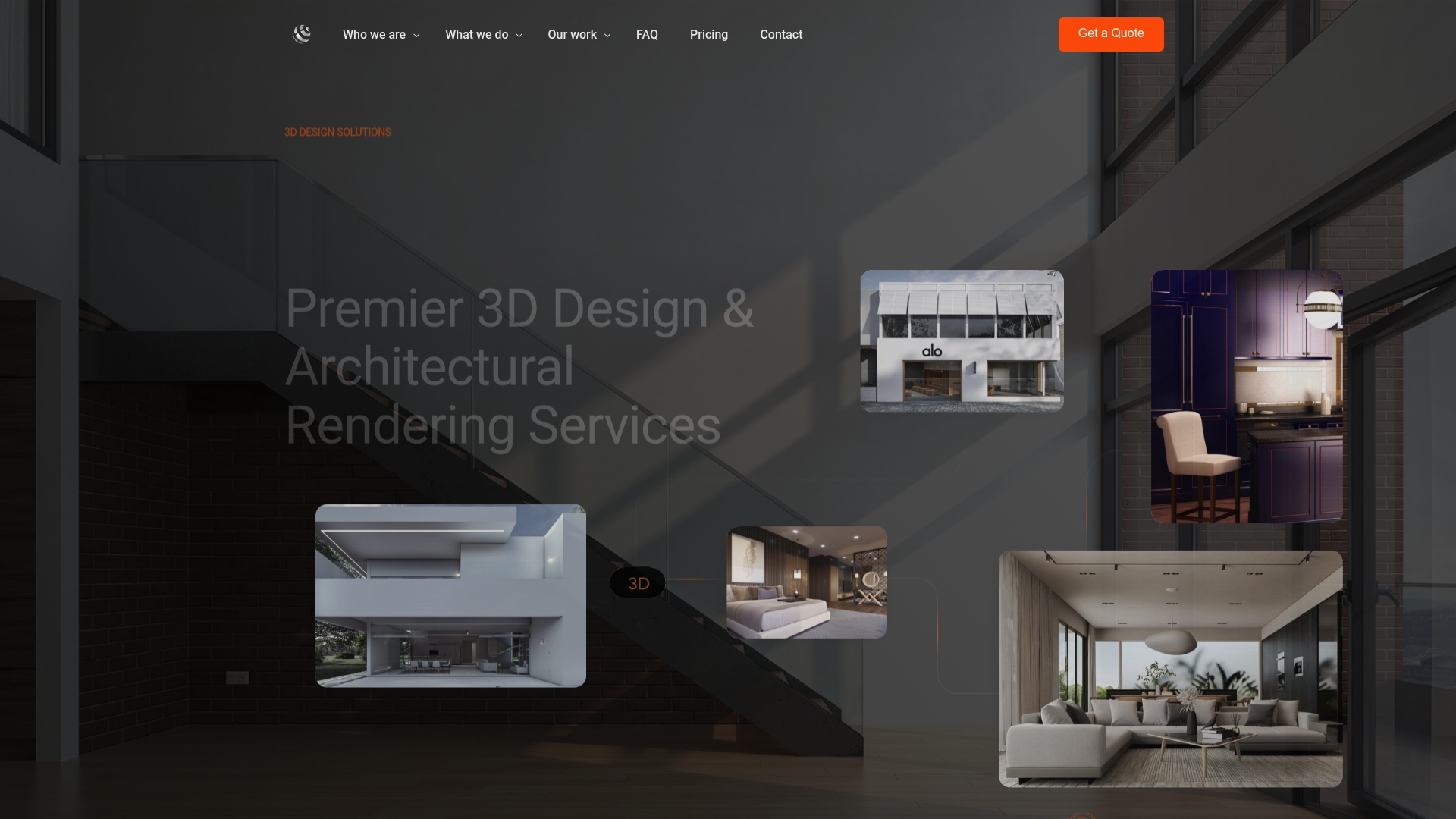
Rendimension specializes in transforming architectural concepts into compelling visual experiences through 3D rendering services that combine technical precision with artistic sophistication. With over 1,000 completed projects spanning residential developments, commercial buildings, and mixed-use complexes, the platform delivers visualization solutions tailored to your specific project goals and stakeholder audiences. Whether you need photorealistic exterior renderings for municipal approvals, immersive interior walkthroughs for client presentations, or animated sequences for marketing campaigns, professional architectural visualization services ensure your projects communicate effectively at every stage.
Pro Tip: Request visualization providers to deliver draft renderings early in the engagement, allowing you to verify that their artistic interpretation aligns with your design intent before full production begins. This checkpoint prevents misalignment and ensures final deliverables match your vision.
The collaborative process emphasizes client involvement from initial concept through final delivery, ensuring renderings accurately reflect design specifications while maintaining visual impact. Professional 3D walkthrough services transform static designs into dynamic experiences that engage stakeholders and accelerate project approvals, providing the competitive advantage that distinguishes successful practices in today’s visually driven market.
Frequently asked questions about 3D visualization benefits
What types of projects benefit most from 3D visualization?
All architectural projects gain value from 3D visualization, but complex commercial developments, high-end residential designs, and speculative real estate projects see the greatest return. Projects requiring extensive stakeholder coordination or pre-construction sales depend heavily on clear visual communication that only photorealistic renderings provide.
How does 3D visualization improve client communication?
Visualization eliminates the interpretation gap between technical drawings and client understanding. When clients see photorealistic representations of finished spaces, they grasp design intent immediately without requiring architectural literacy. This clarity reduces miscommunication and accelerates approval decisions.
Can 3D visualization reduce construction costs?
Yes, by identifying design conflicts and spatial issues during planning phases when corrections remain inexpensive. Early detection of problems like mechanical system conflicts or circulation inadequacies prevents costly field changes that typically cost 5 to 10 times more than design-phase modifications.
What is the difference between 3D rendering and 3D walkthroughs?
Renderings are static images showing specific views with photorealistic detail, ideal for marketing materials and presentation boards. Walkthroughs are animated sequences moving through spaces, providing spatial continuity and circulation understanding that static images cannot convey. Both serve distinct communication purposes.
How quickly can 3D visualization be integrated into existing workflows?
Integration timelines depend on project complexity and current documentation methods. Simple residential projects can incorporate visualization within days, while complex commercial developments may require weeks for detailed modeling. Most practices achieve smooth integration within 2 to 4 weeks of initial implementation.
Recommended
- 6 Key Benefits Of Architectural Visualization For Pros
- What Is 3D Rendering And Its Impact On Architects
- Transform Architecture With Advanced 3D Rendering : Rendimension
- 7 Essential Types Of 3D Visualization For Architects
