Top 3D Technology Uses in Construction for Smarter Builds
TL;DR:
- 3D modeling and BIM reduce construction timelines, costs, and errors through improved coordination.
- 4D BIM enhances site planning and sequencing by integrating schedule data with 3D models.
- 3D printing offers faster, cost-effective, and precise building methods for various construction components.
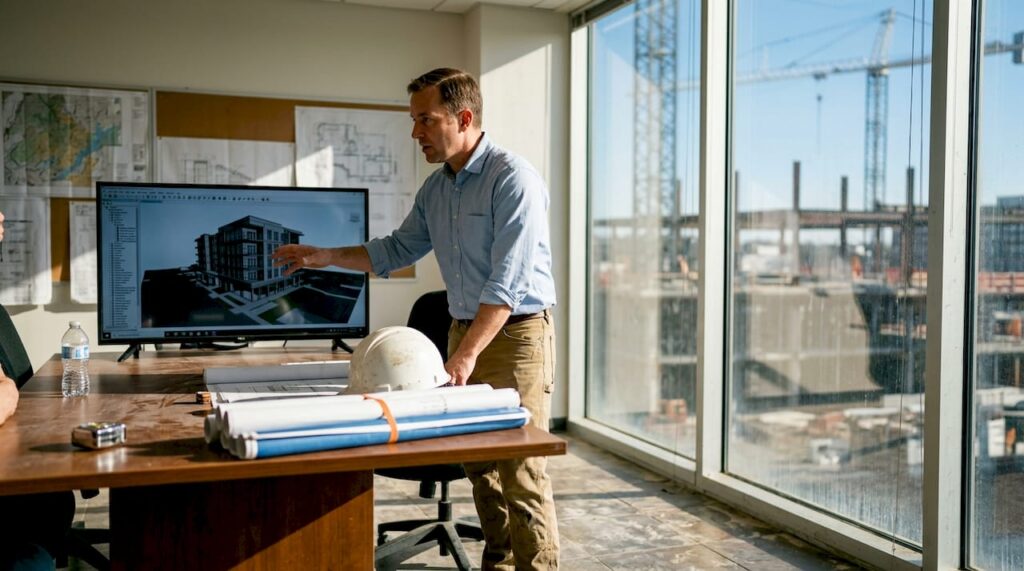
Construction project managers face relentless pressure to deliver on time, on budget, and with fewer surprises. Delays cost money. Misread drawings cost more. Full BIM projects can reduce project timelines by 35% and costs by 38%, yet most teams still rely heavily on 2D documents that leave too much to interpretation. The good news: 3D technologies have matured to a point where they solve real problems across every phase of construction, from early design through marketing and handover. This article breaks down the most impactful ways construction project managers and real estate developers are putting 3D to work right now.
Table of Contents
- Foundation: How 3D modeling and BIM revolutionize project planning
- Scheduling and logistics: 4D BIM for smarter sequencing
- Precision construction: 3D printing buildings and components
- Choosing the right 3D solution: From project marketing to on-site advantage
- Perspective: The real secret to 3D in construction (beyond technology)
- Level up your next project with expert 3D solutions
- Frequently asked questions
Key Takeaways
| Point | Details |
|---|---|
| 3D and BIM benefits | 3D modeling and BIM can cut construction time and costs significantly while reducing design errors. |
| 4D BIM optimization | Integrating time with 3D models streamlines schedules and improves results on complex sites. |
| Game-changing 3D printing | 3D printing slashes material waste and enables rapid, affordable construction. |
| Tailored tech selection | Choosing the right 3D solution depends on your project goals, phase, and need for client engagement. |
| Workflow integration is key | The biggest value comes when teams fully integrate 3D tools into every project stage. |
Foundation: How 3D modeling and BIM revolutionize project planning
Before a single shovel breaks ground, 3D modeling gives your team a shared visual language. Instead of stacking 2D floor plans and hoping everyone reads them the same way, you build a digital model that every stakeholder can walk through, question, and validate. That clarity alone eliminates a huge category of costly misunderstandings.
Building Information Modeling, or BIM, takes 3D further. BIM layers data on top of the 3D geometry, including material specifications, cost estimates, and mechanical systems routing. Think of it as a living database with a spatial interface. When your structural engineer changes a beam, the cost estimate and clash reports update automatically.
The performance numbers back this up. Research shows BIM and 3D use can reduce project timelines by 20 to 35%, costs by 15 to 38%, and design errors by up to 60%. Those are not marginal gains. Cutting design errors by 60% means fewer Requests for Information (RFIs), fewer change orders, and fewer arguments on site.
Here are the core benefits project managers report most often:
- Fewer coordination surprises: Mechanical, electrical, and plumbing systems are resolved in the model, not on the job site.
- Faster approvals: Photorealistic renders and clear models accelerate client and regulatory sign-off.
- Better subcontractor communication: Visual scope of work replaces confusing written specs.
- Real-time clash detection: Conflicts between systems are flagged before fabrication begins.
“The biggest ROI from BIM isn’t the software. It’s the conversations it forces teams to have before construction starts.” That shift from reactive to proactive problem-solving is where the real savings live.
Understanding why 3D models matter in your specific project context is the first step toward adopting these tools strategically rather than just checking a technology box.
Pro Tip: Use BIM’s clash detection feature during the design development phase, not just at the end of design. Catching a ductwork conflict at 30% design costs a fraction of what it costs to fix it during construction. Teams that run clash detection early consistently report minimizing construction mistakes and smoother site coordination.
With the foundation laid, let’s explore innovative tools that build on 3D modeling.
Scheduling and logistics: 4D BIM for smarter sequencing
4D BIM adds a dimension that project managers care deeply about: time. By linking your 3D model to your project schedule, 4D BIM lets you simulate the entire build sequence before mobilization. You can watch a crane arrive, see the steel erect floor by floor, and check whether your concrete pour conflicts with the glazing installation happening one level below.
That kind of visual simulation is transformative for tight urban sites. 4D BIM integrates 3D with scheduling to improve site planning and streamline project timelines, which is critical when you are coordinating multiple subcontractors in a constrained footprint.
Here is a practical workflow many project managers follow:
- Build or import your 3D BIM model with all major systems modeled.
- Link model elements to activities in your scheduling software.
- Run a phased simulation to identify sequencing conflicts.
- Adjust crane positions, staging areas, and delivery windows.
- Share the animated sequence with subcontractors in preconstruction meetings.
The table below illustrates how 4D BIM stacks up against traditional scheduling approaches:
| Feature | Traditional scheduling | 4D BIM scheduling |
|---|---|---|
| Conflict detection | Reactive, found on site | Proactive, found in model |
| Team communication | Text-based plans | Visual simulations |
| Schedule updates | Manual, time-consuming | Linked, near-automatic |
| Stakeholder clarity | Low for non-planners | High for all parties |
| Safety planning | Separate document | Integrated into model |
For developers working on complex urban projects, reviewing advanced project management practices alongside 4D BIM adoption gives you a well-rounded framework for handling site logistics.
Pro Tip: Use multi-angle laser scans of your job site before modeling. Single-angle scans create data gaps, especially in busy sites with equipment and material stacking. Full coverage scans feed into your step-by-step 3D modeling process with far fewer assumptions, which means your 4D simulations actually reflect real site conditions.
Beyond planning and scheduling, 3D technologies are even changing the way we physically build.
Precision construction: 3D printing buildings and components
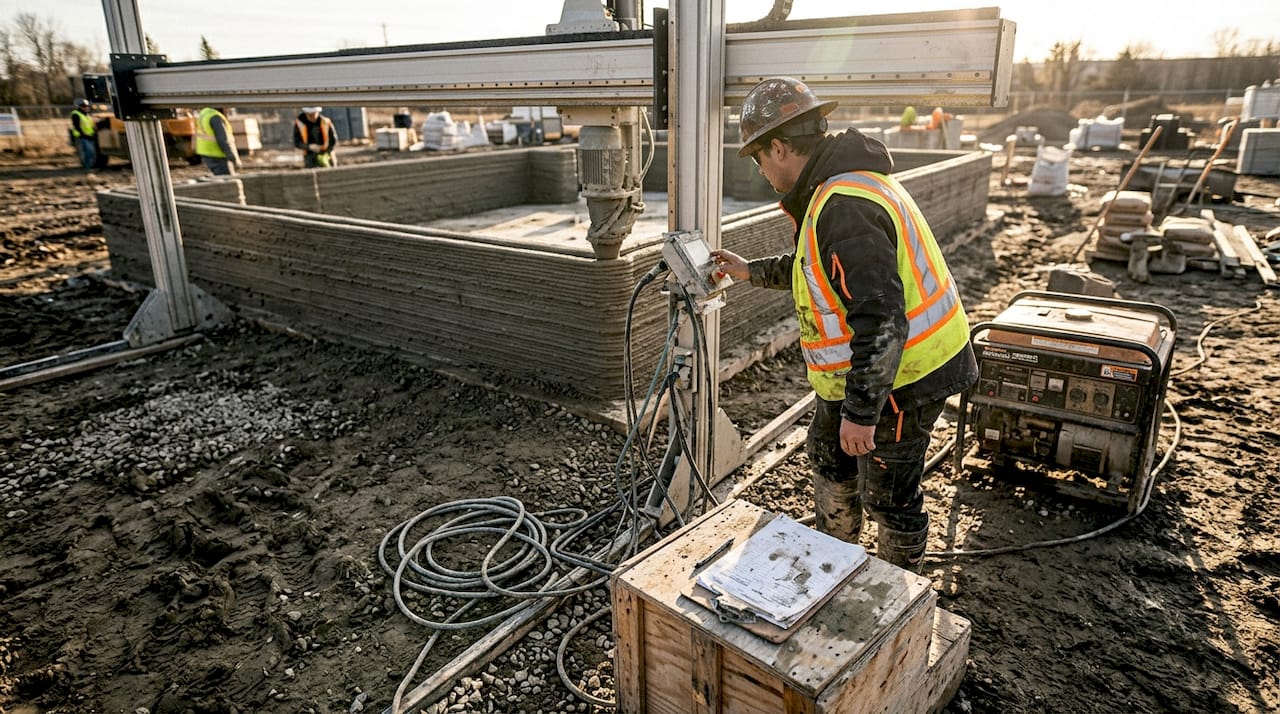
3D printing in construction, formally called additive manufacturing, moves the technology from the screen to the site. Gantry-style printers and robotic arm systems extrude concrete or other materials layer by layer, following a digital model. The result is a structure built with extraordinary geometric precision and minimal human error.
The applications are broader than most developers expect:
- Affordable housing: Single-family homes have been printed in under 24 hours at a fraction of traditional labor costs.
- Custom components: Intricate facades, unique column forms, and one-off architectural elements that would be prohibitively expensive with traditional formwork.
- Infrastructure: Pedestrian bridges and utility structures printed with complex geometries that improve strength-to-weight ratios.
- Disaster relief: Rapid deployment shelters built in days rather than months.
The efficiency data is striking. 3D printing in construction reduces material waste by up to 60%, shortens build time by 50%, and lowers costs by 25%. Waste reduction alone makes this technology compelling from both a financial and sustainability standpoint.
| Factor | Traditional construction | 3D printed construction |
|---|---|---|
| Material waste | High (15-30% typical) | Low (up to 60% reduction) |
| Labor intensity | Very high | Significantly reduced |
| Design complexity | Constrained by formwork | Near-unlimited geometry |
| Build speed | Standard timelines | Up to 50% faster |
| Cost profile | Higher for complex forms | Lower at scale |
If you want to see how photorealistic visualization connects with fabrication decisions, understanding what is 3D rendering helps bridge the gap between digital modeling and physical construction output.
With construction methods evolving, let’s compare the major ways 3D is delivering value and how to choose what’s right for your project.
Choosing the right 3D solution: From project marketing to on-site advantage
Not every tool fits every project phase. The construction managers who see the greatest returns from 3D technology are the ones who match the right tool to the right moment. Using BIM for a quick marketing render is overkill. Using a static rendering for complex site sequencing planning leaves too much on the table.
Here is how the major 3D applications compare across project stages:
| 3D tool | Best stage | Residential | Commercial | Infrastructure |
|---|---|---|---|---|
| 3D BIM | Design through construction | High value | Essential | High value |
| 4D BIM | Preconstruction and construction | Moderate | Essential | Essential |
| 3D printing | Construction and components | Emerging | Niche | Growing |
| 3D renderings | Concept through marketing | Essential | Essential | Moderate |
| VR walkthroughs | Client engagement and sales | High value | Essential | Low |
Industry is shifting from static 2D to dynamic 3D for coordination, marketing, and client communication, and developers who make that shift early gain a clear competitive edge in client confidence and project delivery speed.
For quick prioritization by project type:
- Residential builds: Lead with 3D renderings and VR for client buy-in, then use BIM for contractor coordination.
- Commercial developments: 4D BIM is non-negotiable for phasing complex tenant fit-outs and meeting investor timelines.
- Infrastructure projects: Combine 4D BIM for sequencing with 3D printing for custom components where geometry demands it.
Understanding why invest in 3D visuals at each project stage helps you build a business case internally and with your clients, not just a technology wish list. Keeping up with 3D visualization trends also ensures your choices stay competitive as client expectations continue to rise.
For residential developers specifically, reviewing project management for homeowners offers useful context on how end users think about timelines and decisions.
Pro Tip: Combine 3D renderings with VR walkthroughs for maximum client engagement. Renderings establish the vision; VR makes clients feel ownership before construction begins. That emotional connection dramatically reduces late-stage change requests.
Having reviewed all the main uses and options, what’s the real-world verdict and what do experts miss?
Perspective: The real secret to 3D in construction (beyond technology)
After seeing 3D technology applied across hundreds of projects, one pattern stands out: the tool rarely fails. The team fails to commit to it. Organizations that buy a BIM license, run one training session, and then revert to 2D markups when things get busy will never see the 35% timeline savings or the 60% error reduction. Those numbers require a full workflow shift, not a software purchase.
The teams that win with 3D share three habits. They treat the 3D model as the single source of truth, not one of many documents. They share data openly across disciplines instead of guarding it. And they iterate fast, updating the model as decisions change rather than waiting for a milestone to reconcile everything.
The biggest pitfall is treating 3D as a “nice-to-have” deliverable rather than the backbone of project communication. That thinking kills real ROI of 3D adoption before it starts. Start with one project, align your entire team around 3D deliverables from day one, and the results will make the case for every project that follows.
Level up your next project with expert 3D solutions
You now have a clear picture of how 3D tools transform construction planning, scheduling, fabrication, and marketing. The next step is putting that knowledge to work with a team that has delivered over 1,000 projects globally.
Rendimension offers professional 3D rendering services built specifically for construction and real estate professionals who need more than generic visuals. From preconstruction marketing assets that close investor deals to detailed architectural visualization services that guide your build team, Rendimension covers the full project lifecycle. Whether you need a single photorealistic rendering or an immersive VR walkthrough, reach out for a consultation and see what precision 3D can do for your next project.
Frequently asked questions
What is the difference between 3D modeling and BIM in construction?
3D modeling creates visual representations of a design, while BIM layers in data for scheduling, cost tracking, and clash detection. BIM integrates information with 3D visuals to support the full project lifecycle, making it a far more powerful decision-making tool.
How does 4D BIM improve construction schedules?
4D BIM links your 3D model to a project schedule so you can simulate the build sequence and catch conflicts before they happen on site. 4D BIM enhances visualization and scheduling clarity, which reduces costly delays and subcontractor coordination failures.
What are the cost-saving benefits of 3D printing in construction?
3D printing cuts material waste by up to 60% and reduces overall project costs by 25% through more efficient material use and reduced labor demand. 3D printing reduces waste while also shortening build timelines by as much as half.
Can 3D visualization help with client engagement?
Absolutely. Photorealistic renders and VR walkthroughs let clients experience a space before construction begins, which sharpens feedback and reduces expensive late changes. Dynamic 3D visuals significantly improve client communication and build confidence in the design from the very first presentation.
Recommended
- Why 3D Models Are Essential for Builders in 2026
- 3D Visualization Trends 2026: Transforming Architecture And Marketing
- Why Invest In 3D Visuals For Architecture And Real Estate In 2026
- Top residential construction trends in Greater Vancouver for 2026
- Smart Prefab Homes: Integrated Tech for a Greener Future