5 key benefits of photorealistic renders for architects

TL;DR:
- Photorealistic renders improve client understanding, reduce revisions, and speed project approvals.
- They enhance emotional engagement, increasing client buy-in and early sales.
- Using targeted, purpose-driven renders boosts marketing, stakeholder support, and project success.
Design presentations can make or break a project. Whether you’re pitching to a private client, presenting to a city planning board, or trying to pre-sell units before a single foundation is poured, the quality of your visuals directly affects the outcome. Traditional blueprints and schematic drawings demand a trained eye to interpret, and most clients simply don’t have that background. Photorealistic renders bridge that gap by showing exactly what a finished space will look, feel, and function like. In this article, we break down the core benefits of photorealistic rendering and why architects and real estate developers who use them consistently outperform those who don’t.
Table of Contents
- Why visual clarity matters in architecture and real estate
- The impact of photorealistic renders on client engagement
- Marketing benefits: Selling spaces before they’re built
- Streamlining approvals and reducing costly revisions
- Real-world examples: Success stories in architecture and development
- Our perspective: Why thoughtful use of photorealistic renders is a business advantage
- Ready to harness the power of photorealistic rendering?
- Frequently asked questions
Key Takeaways
| Point | Details |
|---|---|
| Visual clarity boosts trust | Photorealistic renders help clients understand and believe in your vision instantly. |
| Speeds up approvals | Projects using renders face fewer delays and less costly back-and-forth. |
| Drives sales and pre-leasing | Developers use renders to market and pre-sell spaces before breaking ground. |
| Reduces costly revisions | Issues are caught early when clients see lifelike visuals, saving time and budget. |
| Tailor render detail to project | Choose the right realism and features for each project’s scope, maximize impact, minimize waste. |
Why visual clarity matters in architecture and real estate
Most clients have never read a technical drawing in their lives. When you hand them a floor plan, they’re not seeing a living room with warm afternoon light and a view of the garden. They’re seeing lines, numbers, and symbols that mean nothing to them. That disconnect is where misunderstandings are born.
Misunderstandings don’t just create awkward meetings. They create costly revisions, project delays, and strained client relationships. A client who approves a design they didn’t fully understand will come back with change requests once construction starts. At that point, changes are expensive.
Photorealistic renders solve this at the source. Clear visuals improve client understanding of complex designs by showing the finished result before a single wall goes up. Clients see materials, lighting, spatial relationships, and atmosphere. There’s no room for misinterpretation.
Here’s what strong visual clarity delivers for your projects:
- Fewer revision cycles during the design phase
- Faster client sign-off on key decisions
- Reduced risk of scope creep from unclear expectations
- Stronger stakeholder confidence in your design intent
- Better alignment between your vision and the client’s expectations
“The single biggest source of project delays is a client who didn’t fully understand what they were approving. A render eliminates that problem before it starts.”, Architectural project manager, EZ-Cabin RenderLab
Pro Tip: Before your first client presentation, gather a small library of visual references in a style similar to your project. Use these alongside your renders to anchor the conversation and set realistic expectations from day one.
Visual clarity isn’t a luxury. For architects and developers managing complex, high-stakes projects, it’s a core professional tool.
The impact of photorealistic renders on client engagement
There’s a meaningful difference between a client who understands a design and a client who feels it. Photorealistic renders create that emotional connection. When someone sees a render of their future living room bathed in afternoon light, with their chosen finishes and furniture layout in place, they stop analyzing and start imagining. That shift changes everything.

Clients who are emotionally engaged with a design make faster decisions. They’re also more likely to spot preferences and concerns early, before those concerns become expensive late-stage revisions. A client who says “I don’t love that tile color” during a render review costs you almost nothing to accommodate. The same request during construction is a different story.
The numbers back this up. Photorealistic visualizations increase client buy-in by up to 35%, a significant advantage in competitive project environments where speed of approval matters.
| Metric | Without photorealistic renders | With photorealistic renders |
|---|---|---|
| Average approval timeline | 4 to 6 weeks | 1 to 2 weeks |
| Change requests post-approval | High (5 or more) | Low (1 to 2) |
| Client confidence score | Moderate | High |
| Stakeholder buy-in rate | ~60% | ~85% |
Beyond the numbers, photorealistic renders give clients a sense of ownership. They’re not just approving a concept. They’re seeing their project. That psychological shift is what drives faster decisions and fewer second-guessing moments down the line.
For a deeper look at how to structure your presentations around this, the client buy-in best practices guide offers a practical framework. And if you’re still weighing whether renders are worth the investment, why use 3D renderings lays out a clear case.
Marketing benefits: Selling spaces before they’re built
One of the most powerful and underused applications of photorealistic rendering is pre-construction marketing. Selling an unbuilt property using traditional photography is impossible. Selling it using architectural sketches is difficult. Selling it using photorealistic renders? That’s a proven strategy.
Developers who invest in high-quality renders for their marketing materials see measurable results. Photorealistic imagery helps developers sell properties before construction begins, turning concept-stage projects into active sales pipelines. Renders appear in online listings, investor decks, printed brochures, and social media campaigns, giving buyers and investors a credible, attractive preview of what they’re committing to.
| Feature | Traditional photography | Photorealistic renders |
|---|---|---|
| Available pre-construction | No | Yes |
| Customizable for marketing | Limited | Fully customizable |
| Emotional impact on buyers | Moderate | High |
| Useful for investor presentations | Low | High |
| Reusable across channels | Limited | Yes |
Here’s how developers are using renders across their marketing mix:
- Online listings: Renders replace placeholder images and attract serious inquiries earlier
- Social media ads: Striking visuals drive engagement and qualify buyers before a sales conversation
- Investor decks: Credible visuals signal professionalism and project readiness
- Brochures and signage: On-site and print materials feel polished and complete
For a full breakdown of how to apply this, the photorealistic rendering guide covers strategy and execution. If you’re deciding where to start, why use photorealistic renders is a practical entry point.
Pro Tip: Run your highest-quality renders as paid social media ads targeting your buyer demographic before the project breaks ground. This builds a qualified lead list before your sales office even opens.
Streamlining approvals and reducing costly revisions
Every architect and developer knows the pain of a drawn-out approval process. City planning boards, HOA committees, and institutional stakeholders often struggle to visualize what a project will actually look like from written descriptions and technical drawings alone. That confusion translates directly into delays, requests for additional documentation, and sometimes outright rejection.
Photorealistic renders change the dynamic. Visual clarity from renders speeds up client and city approvals by giving every stakeholder a clear, shared understanding of the project from the start. When board members can see exactly how a new building fits into its neighborhood context, objections based on uncertainty drop significantly.
Here’s how renders move a project through the approval process faster:
- Submit renders with your initial application to reduce back-and-forth requests for clarification
- Use context renders that show the building within its actual streetscape to address neighborhood impact concerns
- Prepare interior renders for residential projects to demonstrate livability and compliance with design standards
- Update renders quickly when minor design changes are requested, avoiding full drawing revisions
- Present renders at public hearings to build community support and reduce opposition
The downstream effect on how 3D rendering transforms architecture is significant. Projects that enter the approval process with strong visual documentation consistently move faster and encounter fewer costly revision cycles.
“Firms that present photorealistic renders at planning hearings report dramatically shorter approval timelines and a measurably higher rate of first-submission approvals compared to those relying on traditional drawings.”
Real-world examples: Success stories in architecture and development
The benefits of photorealistic rendering become most convincing when you see them play out in real projects. Here are three scenarios that reflect what architects and developers consistently experience when they invest in quality visualization.
Boutique architect wins public approval at city hearing. A small architecture firm presented a mixed-use infill project to a city planning board using immersive photorealistic renders that showed the building from street level, integrated into the existing neighborhood. Board members who had expressed concerns about scale and aesthetics reversed their position after seeing the renders. The project was approved on the first submission.
Developer pre-sells 40% of units before groundbreaking. A residential developer launched a pre-sales campaign using photorealistic renders of unit interiors and building amenities. Buyers who had never visited the site signed purchase agreements based entirely on the visual materials. By the time construction began, nearly half the building was sold.
Major remodel stays on schedule with zero revision cycles. A commercial renovation project used detailed renders to lock in every finish and layout decision before work began. The client had no revision requests during construction because every choice had already been visualized and approved. The project finished on time and under budget.
Developers report higher sales conversion and fewer project delays when photorealistic renders are part of the process. These aren’t isolated wins. They reflect a consistent pattern across project types and scales.
Key outcomes architects and developers report:
- Faster project approvals with fewer resubmissions
- Reduced revision costs during design and construction phases
- Higher buyer confidence and earlier sales commitments
- Stronger investor presentations with measurable funding success
Our perspective: Why thoughtful use of photorealistic renders is a business advantage
Here’s something most articles won’t tell you: more realism isn’t always better. We’ve seen projects where architects pushed for the highest possible render quality on every single deliverable, and the result was a presentation so polished it actually distracted from the functional conversation. Clients got lost in the aesthetics and stopped engaging with the layout, the budget, and the practical decisions that actually drive a project forward.
The real advantage comes from using photorealistic rendering intentionally. Match the level of detail and realism to what the specific audience needs at that specific stage. A city planning board needs context and scale. An investor needs credibility and atmosphere. A private client needs to feel the space. Those are three different briefs, and they don’t all require the same render.
Over-rendering early in the process can also lock clients into visual expectations before the design is fully resolved. That creates its own revision problems.
Our strongest advice: collaborate closely with your rendering specialist from the start. Align on what each render needs to communicate, who the audience is, and what decision it needs to support. Pair every render with a clear narrative that explains function, not just form. Following visualization best practices in this way consistently produces better client relationships and better project outcomes than chasing maximum realism for its own sake.
Ready to harness the power of photorealistic rendering?
Photorealistic renders are one of the most direct investments you can make in your project’s success. They improve client understanding, accelerate approvals, strengthen marketing, and reduce the revision cycles that eat into your margins and your timeline.
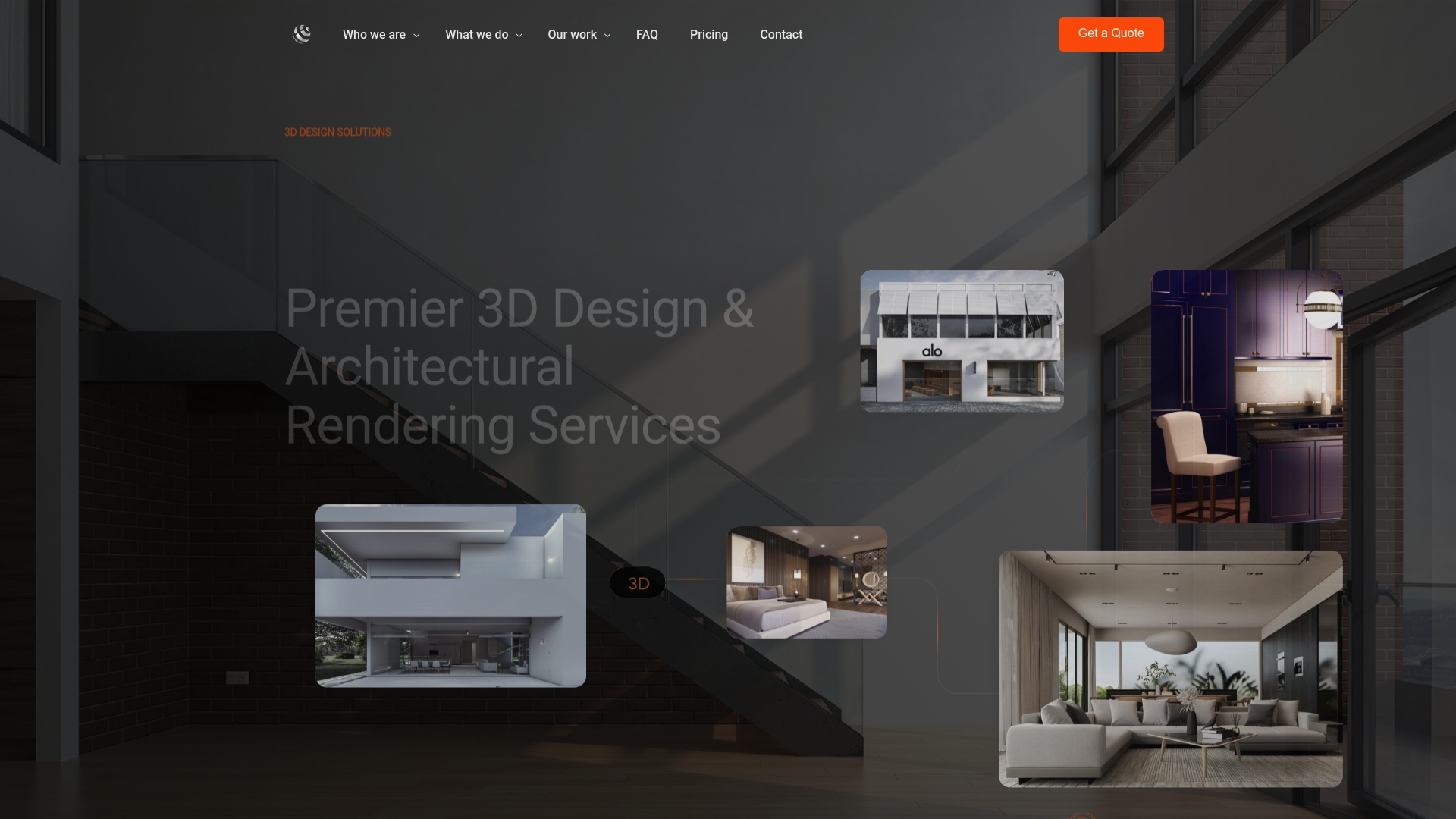
At Rendimension, we’ve delivered over 1,000 projects globally across residential, commercial, and mixed-use developments. Our 3D rendering services are built around your specific presentation goals, whether that’s winning a planning approval, closing a pre-sale, or impressing an investor. Explore our architectural visualization services to see how we can support your next project. Reach out for a free consultation and let’s talk about what your project needs.
Frequently asked questions
What makes a render ‘photorealistic’?
A photorealistic render closely mimics real-life photography, capturing lighting, texture, and scale for maximum visual accuracy. Photorealism is defined by attention to detail in perspective, materials, and lighting.
How do photorealistic renders improve client presentations?
These renders help clients visualize the final design clearly, reducing confusion and expediting approval decisions. Photorealistic renders enhance clarity and decision-making in presentations.
Are photorealistic renders expensive to produce?
Costs vary by project scope, but the efficiency and sales benefits often outweigh the initial investment. Fewer revision cycles and faster approvals typically recover the cost many times over.
Can photorealistic renders help with city or stakeholder approvals?
Yes, they create clear, persuasive visuals that simplify complex projects and speed up approval processes. Visual clarity from renders helps facilitate approvals at both client and municipal levels.
Is there a difference between photorealistic and artistic renders?
Yes, photorealistic renders focus on lifelike accuracy, while artistic renders prioritize style and emotion over realism. Artistic renders differ from photorealistic ones by emphasizing mood instead of precise detail.