VR for design professionals: immersive visualization guide
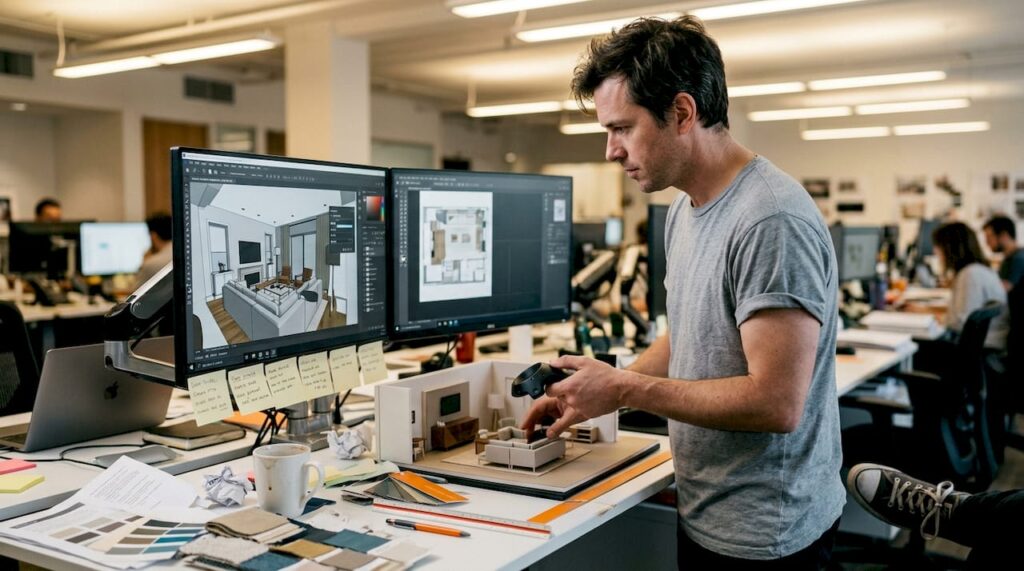
Many design professionals assume virtual reality is prohibitively expensive or technically complex to integrate into their workflows. This misconception prevents teams from accessing VR’s transformative potential for project visualization and client engagement. VR integrates with BIM via plugins like Unreal Engine to enable immersive 3D visualization of architectural models, transforming static renders into interactive walkthroughs for better client engagement. This guide clarifies VR’s practical applications in design visualization, covering workflows, benefits, limitations, and implementation best practices that make immersive technology accessible and valuable.
Table of Contents
- Key takeaways
- Understanding VR integration with BIM for design professionals
- Core methodologies and technical considerations for VR in design
- Benefits and impact of VR on design efficiency and real estate sales
- Nuances, challenges, and expert strategies for successful VR implementation
- Discover professional VR and 3D rendering services
- Frequently asked questions
Key Takeaways
| Point | Details |
|---|---|
| Client engagement gains | VR integrated with BIM enables stakeholders to explore designs at full scale, improving engagement and spatial understanding. |
| Immersive visualization with Unreal | Unreal Engine and other game engines preserve geometry and enable interactive walkthroughs for immersive visualization. |
| Faster design and sales | VR reduces design time and accelerates the sales cycle while boosting conversions. |
| Implementation challenges | Hardware costs and distance perception accuracy are challenges that hybrid approaches can mitigate. |
| Start with low cost plugins | Beginning with affordable plugins and tailored VR experiences helps teams realize value quickly. |
Understanding VR integration with BIM for design professionals
VR integration with Building Information Modeling creates immersive 3D environments where architectural models become explorable spaces rather than static images. This technology maps detailed BIM data into virtual worlds where clients and stakeholders can walk through designs at full scale before construction begins. The virtual reality workflow for architects transforms how teams present and refine projects.
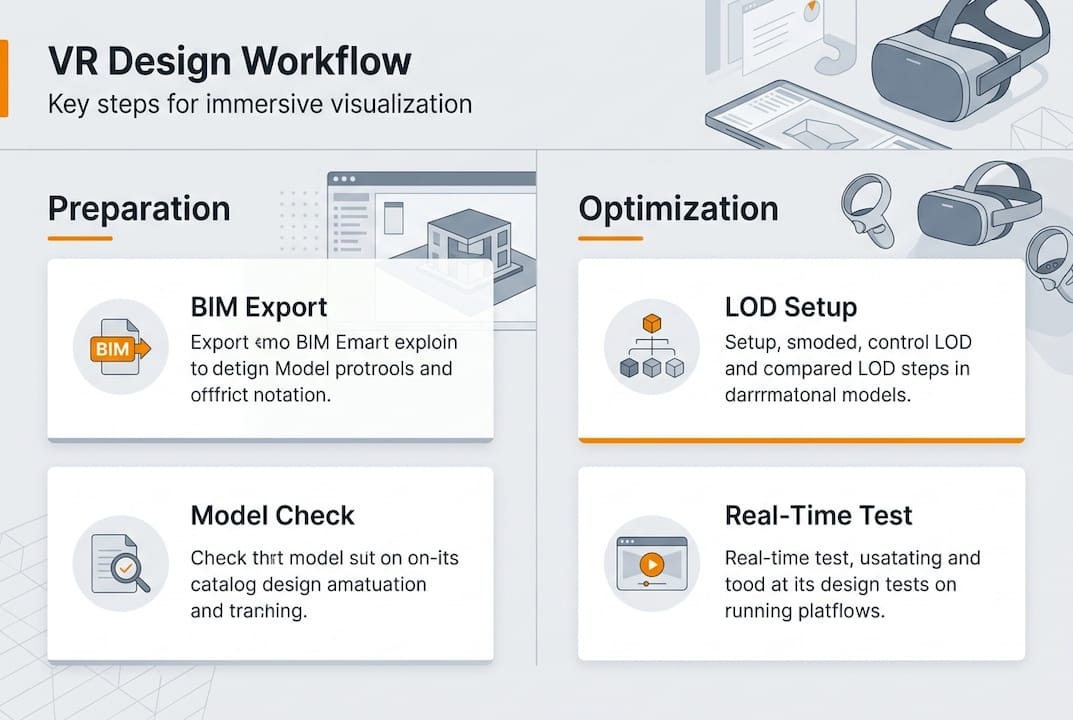
The typical workflow follows these stages:
- Planning phase where project scope and VR objectives are defined
- BIM modeling using software like Revit or ArchiCAD
- Model export to game engines via specialized plugins
- VR environment optimization for performance and realism
- Client presentation using headsets or immersive displays
- Collaborative review and design iteration based on feedback
Game engine plugins serve as the bridge between architectural modeling and virtual reality. Unreal Engine and Unity offer BIM import tools that preserve geometric accuracy while adding interactive capabilities. These platforms handle real-time rendering, physics simulation, and user navigation that make virtual walkthroughs possible.
Key technologies enabling VR-BIM integration include:
- Datasmith plugin for Unreal Engine enabling direct Revit imports
- Unity Reflect for real-time BIM synchronization
- IrisVR Prospect for rapid VR prototyping from multiple CAD formats
- Enscape for live-linked rendering during design development
- Twinmotion for quick architectural visualization exports
The transformation from static renders to interactive experiences fundamentally changes client relationships. Instead of interpreting 2D drawings or viewing predetermined camera angles, stakeholders explore spaces naturally. They discover sightlines, evaluate proportions, and understand spatial relationships through direct experience. This immersive quality improves spatial comprehension dramatically compared to traditional presentation methods.
Virtual reality design applications extend beyond client presentations into design development itself. Architects can evaluate their work at human scale during creation, catching proportion issues or circulation problems that 2D workflows miss. The ability to iterate within VR creates tighter feedback loops between design intent and experiential reality.
Core methodologies and technical considerations for VR in design
Exporting BIM models to game engines requires careful attention to geometry, materials, and file structure. The process begins with cleaning your BIM model to remove unnecessary detail that would burden VR performance. Unreal Engine and Unity handle architectural data differently than native BIM software, requiring translation of materials, lighting, and object hierarchies.
Performance optimization becomes critical when rendering complex buildings in real-time. Level of detail (LOD) systems automatically reduce polygon counts for distant objects, maintaining visual quality while preserving frame rates. Occlusion culling prevents the engine from rendering geometry hidden behind walls or other obstacles, significantly reducing computational load.
Iterative design-play loops enable refinement directly within virtual environments. Designers can modify spaces, immediately experience changes at full scale, and evaluate results before committing to construction documentation. This rapid prototyping accelerates decision-making while reducing costly late-stage revisions.
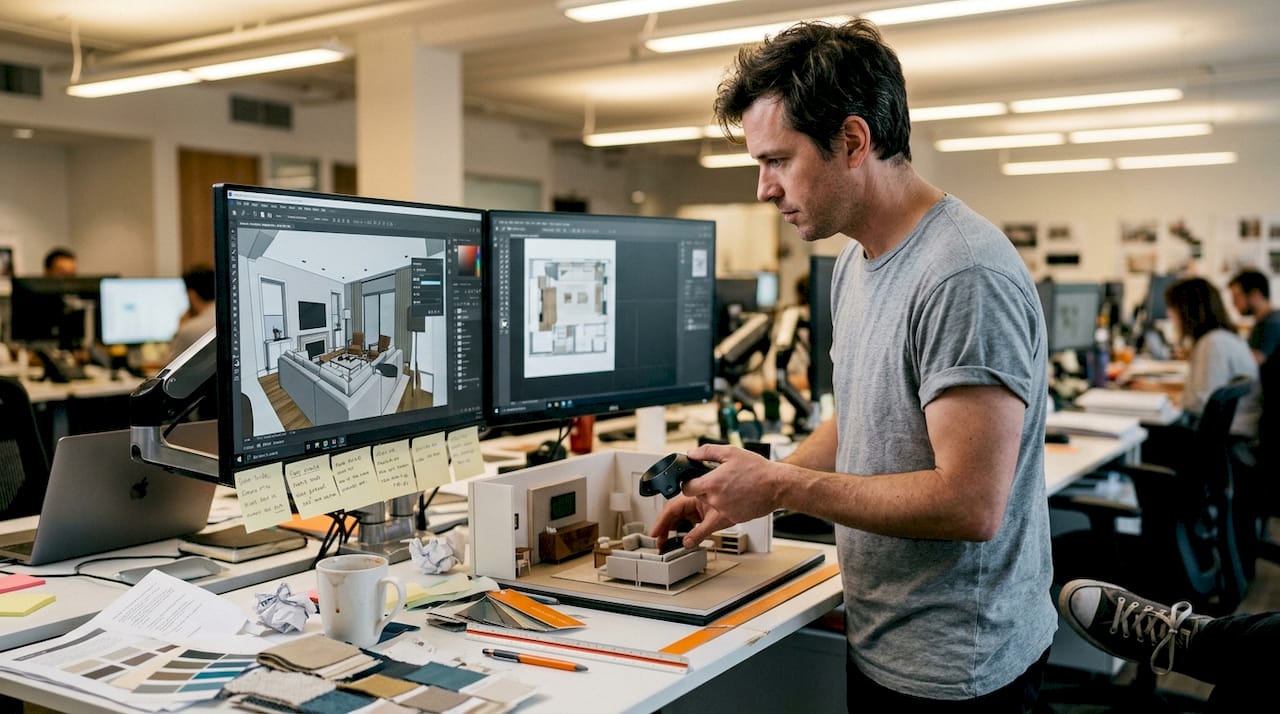
Pro Tip: Start with smaller, optimized models to prevent performance bottlenecks and improve user experience. Test VR performance with simplified geometry before adding high-resolution textures and complex lighting.
VR hardware presents several technical challenges that impact user experience. Latency between head movement and display updates can cause motion sickness if frame rates drop below 90 fps. Tracking systems require clear sightlines and calibrated spaces to maintain positional accuracy. Distance perception compressed in VR affects how users judge room dimensions, requiring careful scale calibration.
| Optimization Technique | Performance Impact | Best Use Case | Implementation Complexity |
|---|---|---|---|
| Level of Detail (LOD) | 40-60% frame rate improvement | Large buildings with many rooms | Medium |
| Occlusion Culling | 30-50% reduction in draw calls | Dense urban environments | Low |
| Texture Compression | 50-70% memory savings | Projects with many materials | Low |
| Lightmap Baking | 80-90% lighting performance gain | Static architectural scenes | High |
| Mesh Simplification | 20-40% polygon reduction | Organic or decorative elements | Medium |
Hardware limits cause lag and motion sickness when models exceed GPU capabilities. Large file sizes bottleneck loading times and strain system memory, particularly problematic for virtual reality for interior designers working with detailed furnishing libraries. Compression strategies and selective asset loading help manage these constraints.
The technical workflow requires balancing visual fidelity against performance requirements. Photorealistic materials and complex lighting enhance immersion but demand significant processing power. Strategic decisions about where to invest rendering resources ensure critical spaces receive maximum detail while secondary areas remain simplified.
Benefits and impact of VR on design efficiency and real estate sales
Virtual reality integration delivers measurable improvements across design timelines, error reduction, and sales performance. BIM-VR reduces design time by 30% by enabling faster design validation and reducing revision cycles. Teams identify spatial conflicts and design flaws during virtual walkthroughs rather than discovering them during construction.
BIM-VR integration cuts design errors by 15-20% through immersive spatial validation, while luxury real estate projects command 3-7% price premiums and close 20% faster with 35% higher conversion rates.
The error reduction impact extends beyond time savings into cost avoidance. Design mistakes caught in VR cost a fraction of field corrections, with errors reduced by 15-20% when teams review projects immersively before construction. Safety issues become apparent when stakeholders walk through spaces virtually, preventing hazardous conditions from reaching the job site.
Real estate sales metrics show dramatic improvements when VR enters the marketing process. Luxury developments see price premiums from 3-7% when buyers experience properties through immersive visualization before completion. The emotional connection formed during virtual tours translates directly into willingness to pay premium prices.
Sales cycle acceleration represents another significant benefit. Properties marketed with VR close 20% faster than traditional listings, reducing carrying costs and improving cash flow for developers. Conversion rates jump over 35% when prospects can explore spaces virtually, dramatically improving marketing ROI.
Key benefit categories include:
- Time efficiency through rapid design validation and reduced revision cycles
- Cost savings from early error detection and optimized construction coordination
- Sales acceleration via emotional engagement and pre-construction marketing
- Enhanced collaboration enabling stakeholders to participate meaningfully in design decisions
- Competitive differentiation for firms offering immersive client experiences
Client engagement quality improves substantially when presentations move from passive viewing to active exploration. Stakeholders ask better questions, provide more specific feedback, and develop stronger confidence in design decisions. This collaborative dynamic strengthens professional relationships while producing better outcomes.
3D walkthroughs in design combined with virtual reality create presentation experiences that traditional methods cannot match. The ability to modify designs during client meetings based on immediate feedback compresses decision timelines dramatically. Projects move from concept to approval faster when all parties share a common experiential understanding.
For real estate professionals seeking to maximize property value, VR provides quantifiable advantages. Buyers make faster, more confident decisions when they can explore properties immersively. The best place to buy real estate becomes easier to identify when virtual tours eliminate geographic barriers to property viewing.
Nuances, challenges, and expert strategies for successful VR implementation
High initial investment requirements and staff training needs create adoption barriers for many firms. VR headsets, workstations capable of real-time rendering, and software licenses represent substantial upfront costs. Team members need time to develop proficiency with new tools and workflows, temporarily reducing productivity during transition periods.
User disorientation in radical virtual forms presents a psychological challenge. 68% of experts prefer hybrid VR-physical designs that balance innovation with familiar spatial principles. Designs that deviate too far from physical reality can confuse users, reducing VR’s effectiveness for client communication.
| Approach | Initial Cost | User Comfort | Spatial Accuracy | Training Required |
|---|---|---|---|---|
| Traditional VR | High ($15,000-30,000) | Moderate (motion sickness risk) | High (1:1 scale) | Extensive (2-3 months) |
| Hybrid VR-Physical | Medium ($8,000-15,000) | High (familiar references) | Very High (grounded) | Moderate (1-2 months) |
| Desktop VR | Low ($2,000-5,000) | Very High (no motion issues) | Moderate (screen limits depth) | Minimal (1-2 weeks) |
| Mobile VR | Very Low ($500-2,000) | High (casual use) | Low (limited tracking) | Minimal (days) |
Hybrid design strategies balance innovation with usability by maintaining physical design principles within virtual environments. Layered environment design techniques create spaces that feel simultaneously novel and grounded, preventing the disorientation that purely abstract VR spaces can cause.
Expert implementation strategies include multiplatform workflows that deploy the same content across VR headsets, desktop viewers, and mobile devices. This flexibility maximizes audience reach while accommodating varying comfort levels with immersive technology. Teams can present the same project through different media based on stakeholder preferences.
Pro Tip: Avoid scope creep by defining clear deliverables and realistic VR goals early in projects. Specify which spaces require full VR treatment versus standard visualization to control costs and timelines.
Interoperability issues between BIM software and game engines require careful file management. Material assignments, lighting setups, and object hierarchies often need manual adjustment after export. Establishing standardized workflows and naming conventions reduces friction in the translation process.
Best practices for managing technical challenges include compressing models strategically to balance quality and performance. Remove non-visible geometry, simplify distant objects, and use texture atlases to reduce draw calls. Design tracking-friendly environments by avoiding reflective surfaces that confuse sensor systems and ensuring adequate lighting for inside-out tracking.
Virtual reality interior design benefits particularly from attention to scale calibration. Furniture proportions and ceiling heights must match real-world dimensions precisely or users will unconsciously reject the space as wrong. Regular testing with diverse users helps identify perception issues before client presentations.
Successful VR implementation requires matching technology choices to project goals. High-end developments justify premium VR experiences with photorealistic rendering and room-scale tracking. Smaller projects achieve strong results with desktop VR or 360-degree panoramas that cost far less to produce.
Discover professional VR and 3D rendering services
Integrating VR into your design workflow requires expertise in both architectural visualization and immersive technology. Rendimension specializes in 3D rendering services that bridge traditional visualization and cutting-edge VR experiences. Our team transforms BIM models into photorealistic environments optimized for both static presentation and interactive exploration.
Our virtual reality services help architecture and real estate professionals create immersive experiences that accelerate sales and improve client communication. We handle the technical complexity of VR optimization while you focus on design excellence. From initial concept through final delivery, our collaborative process ensures your vision translates perfectly into virtual reality.
Explore our 3D walkthroughs services to see how immersive visualization elevates project presentations and stakeholder engagement. With over 1,000 completed projects globally, we bring the technical expertise and creative vision needed to make your designs come alive in virtual reality.
Frequently asked questions
What is virtual reality (VR) integration in design?
VR integration embeds immersive 3D visualization into design workflows by exporting BIM models into VR platforms that create interactive presentations. This technology enables clients and stakeholders to experience spaces at full scale before construction begins. It enhances spatial understanding far beyond what traditional 2D renderings or even static 3D images can achieve.
How does VR reduce design errors and improve client communication?
VR offers immersive walkthroughs that reveal design flaws before construction, reducing errors by 15-20% through better spatial understanding. Clients grasp spatial layouts intuitively when they can walk through designs virtually, leading to more precise feedback. This clarity reduces revision requests and change orders that typically emerge during construction when misunderstandings surface.
What are common challenges when implementing VR in design projects?
High costs and required staff training slow adoption, with initial investments ranging from $15,000 to $30,000 for professional setups. Distance perception compression and tracking issues affect VR usability, requiring careful calibration and environment design. Managing large model files is necessary to prevent lag and maintain smooth frame rates that prevent motion sickness.
How can design professionals start integrating VR affordably?
Start with free Unreal Engine plugins that export BIM models to VR without expensive software licenses. Adopt VR collaboration gradually, focusing on high-value projects where client experience justifies the effort. Tailor VR settings to client psychology through strategic lighting, textures, and spatial sequences that maximize emotional impact and decision confidence.
Recommended
- VR Real Estate And Augmented Reality Benefits By Rendimension
- Virtual Reality In Interior Design: Enhancing Client Engagement
- Virtual Reality In Design: Transforming Client Engagement
- Virtual Reality For Interior Designers: Complete Guide
- Why Tour Apartments Virtually: Ease, Speed, Confidence
More on this: architectural visualization services and the companies we rank in this category.