TL;DR:
- Photorealistic visualization enhances client understanding and accelerates decision-making.
- Interactive and real-time tools improve design accuracy, collaboration, and workflow efficiency.
- High-quality visuals strengthen brand positioning and differentiate projects in competitive markets.
Communicating a complex architectural concept or product design to a client, investor, or marketing team is genuinely hard. Words and flat drawings rarely capture spatial relationships, material finishes, or lighting the way a photorealistic 3D render does. Product visualization has become one of the most powerful tools available to architecture, real estate, and design teams, closing the gap between abstract ideas and compelling reality. This article breaks down the key advantages, compares methodologies, and gives you a practical framework for making visualization work as a strategic asset in your marketing and project workflows.
Table of Contents
- Enhanced client engagement and decision-making
- Improved accuracy and clarity in presentations
- Faster project iterations and workflow efficiency
- Market differentiation and brand impact
- Why product visualization is more than eye candy
- Elevate your marketing with advanced visualization
- Frequently asked questions
Key Takeaways
| Point | Details |
|---|---|
| Client engagement boost | Immersive 3D and VR/AR visualization increases client interaction and speeds up decision-making. |
| Accuracy & clarity | Photorealistic rendering reduces errors and ensures stakeholders understand design intent. |
| Rapid iterations | Real-time tools and interactive modeling enable quick changes and streamlined workflows. |
| Brand differentiation | High-quality visuals help teams stand out and attract more desirable clients in competitive markets. |
Enhanced client engagement and decision-making
The moment a client can see a space rather than imagine it, the conversation changes entirely. Traditional presentations using blueprints, mood boards, or physical scale models require a trained eye to interpret. Most clients do not have that eye. Product visualization removes that barrier and replaces guesswork with genuine understanding.
Modern visualization tools go well beyond static images. Key methodologies include detailed 3D modeling from CAD/BIM, photorealistic rendering with realistic lighting and textures, real-time rendering for rapid iterations, VR/AR walkthroughs, 360-degree views, and interactive floor plans. Each tool serves a different stage of the client journey, from early concept approval to final marketing campaigns.
Here is what these tools do for your client engagement:
- 3D modeling and photorealistic renders give clients an emotionally resonant first impression of a space or product
- VR/AR walkthroughs let clients virtually walk through a building before a single brick is laid, creating a sense of ownership early in the process
- Interactive floor plans allow clients to toggle between room configurations or material options in real time, generating instant feedback
- 360-degree views support remote stakeholder reviews without requiring travel or physical prototypes
- Real-time rendering enables design teams to make live adjustments during presentations, turning passive reviews into collaborative sessions
The benefits of 3D visualization extend beyond aesthetics. Clients who engage with interactive visuals make decisions faster because they feel confident about what they are approving. Fewer revision cycles, shorter approval timelines, and reduced scope creep are direct outcomes.
“The best visualization tool is the one your client can actually use without a tutorial.”
Pro Tip: Start your visualization workflow with BIM or CAD modeling to lock in accurate geometry, then layer in real-time rendering tools for client-facing iterations. This sequence keeps your technical accuracy intact while maximizing presentation flexibility.
Improved accuracy and clarity in presentations
Client engagement improves, but accuracy and clarity are equally essential for stakeholder trust and project success. Miscommunication during the design and sales process is expensive. A misunderstood material choice, an ambiguous spatial layout, or a lighting condition that looks different in person than on a flat drawing can trigger costly change orders and erode client confidence.

Photorealistic rendering solves this by making design intent explicit. When a client sees a render that accurately depicts how natural light enters a living room at 4 PM in December, or how a brushed brass fixture contrasts against a matte concrete wall, there is no room for misinterpretation. The visual does the explaining.
Here is how accuracy improves across the presentation process:
- Material and finish clarity: Renders show exact textures, reflectivity, and color under specified lighting conditions, eliminating the ambiguity of physical samples viewed in different environments
- Spatial comprehension: Clients understand scale and proportion intuitively when viewing a photorealistic interior rather than reading dimensions on a plan
- Lighting simulation: Accurate sun studies and artificial lighting renders help clients understand how a space will feel at different times of day
- Design iteration records: Each render version becomes a visual record of decisions made, reducing disputes later in the project
Photorealism in architecture is not just about making things look beautiful. It is about making them look correct, so that what gets built matches what was approved.
Key insight: An HBS study on 3D tours found that while virtual tours increase time-on-market engagement, they do not automatically raise sale prices after controlling for quality photography and detailed descriptions. This is a critical nuance. Visualization improves understanding and engagement, but it works best when paired with strong supporting content, not as a standalone tactic.
Stat to know: Properties with 3D tours generate significantly higher online engagement, yet the price premium depends on market conditions and how the visualization is integrated into the broader marketing strategy.
Faster project iterations and workflow efficiency
With accuracy ensured, efficiency in adapting and iterating designs becomes a major competitive advantage. Architecture and design projects rarely move in a straight line. Clients change their minds, market conditions shift, and stakeholder feedback requires rapid design responses. Teams that rely on static presentations struggle to keep pace.
Real-time rendering changes this dynamic. Design changes that once required days of redrawing and re-rendering can now be executed in hours or even minutes. This speed directly compresses approval cycles and keeps projects on schedule.
| Methodology | Speed of iteration | Best use case | Interaction level |
|---|---|---|---|
| CAD/BIM modeling | Moderate | Technical accuracy, construction docs | Low |
| Photorealistic rendering | Moderate to slow | Marketing assets, final approvals | Low |
| Real-time rendering | Fast | Client reviews, live presentations | Medium |
| VR/AR walkthroughs | Fast (once built) | Immersive client experiences | High |
| Interactive floor plans | Very fast | Configuration and layout decisions | High |
As the visualization strategies framework recommends, the smartest workflow starts with BIM/CAD for structural accuracy and then layers real-time tools for client-facing presentations. This hybrid approach avoids the trap of building beautiful visuals on inaccurate geometry.
For marketing teams, rapid iteration means you can respond to campaign feedback quickly. If a product launch visual is not resonating with your audience, you can update the render, swap materials, or reframe the composition without starting from scratch. That agility is a real competitive edge.
- Shorter feedback loops between design and marketing teams
- Faster stakeholder sign-off on visual assets
- Reduced cost of late-stage design changes
- More visual variants tested before committing to production
Market differentiation and brand impact
Efficiency and clarity are valuable, but product visualization’s role in differentiation and branding deserves separate focus. In a crowded market, the quality of your visuals signals the quality of your work before a client ever speaks to your team.
Premium renders communicate premium positioning. A developer presenting a luxury residential project with high-quality photorealistic imagery and immersive walkthroughs immediately separates themselves from competitors using basic floor plan images. The visual quality becomes a proxy for the project quality itself.
| Visual quality level | Client perception | Typical use case |
|---|---|---|
| Basic floor plans | Functional, low trust | Early-stage internal reviews |
| Standard 3D renders | Professional, credible | Mid-market projects |
| Photorealistic renders | Premium, high trust | Luxury residential, commercial |
| VR/AR experiences | Innovative, immersive | High-value launches, flagship projects |
The role of photorealism in brand building is significant. Memorable visuals drive brand recall. When your renders consistently reflect a distinct visual style, lighting approach, or material palette, they become recognizable. That recognition builds market reputation over time.
However, there is a real risk worth acknowledging. An HBS study found that 3D tours show marginal benefits when treated as static replacements for photos and descriptions, with no guaranteed price increase. Visualization loses its impact when it is used as a passive marketing layer rather than an interactive, data-informed experience. Teams that treat renders as living assets, updating them with real client feedback and integrating them into broader marketing funnels, see far stronger results.
Pro Tip: Use your visualization assets consistently across all marketing channels, from your website to pitch decks to social media. Consistency in visual quality reinforces brand identity and builds the kind of recognition that attracts premium clients.
- Consistent visual quality builds brand credibility
- High-resolution renders perform better in digital advertising
- Immersive experiences create emotional connections that static images cannot
- Visualization supports competitive positioning in crowded markets
Why product visualization is more than eye candy
Here is the perspective most teams miss: product visualization is not a finishing touch you apply to a project before it goes to market. It is a strategic communication tool that should be embedded in your workflow from the earliest concept stage.
The uncomfortable truth is that many architecture and design teams still treat visualization as a static deliverable, something you produce at the end and hand to the marketing team. That approach wastes the tool’s real potential. When visualization is used iteratively, with real client feedback shaping each version, it becomes a collaborative decision-making engine, not just a pretty picture.
Teams that leverage product visualization tips for iterative feedback consistently report shorter project timelines, fewer late-stage revisions, and stronger client relationships. The visual becomes the conversation, not just the conclusion. If your team is still treating renders as the final output rather than the ongoing dialog, you are leaving both efficiency and client trust on the table.
Elevate your marketing with advanced visualization
If you are ready to make visualization a strategic advantage, here is how Rendimension can help. With over 1,000 projects completed globally, Rendimension specializes in turning complex design concepts into photorealistic, market-ready visuals that do real work for your team.
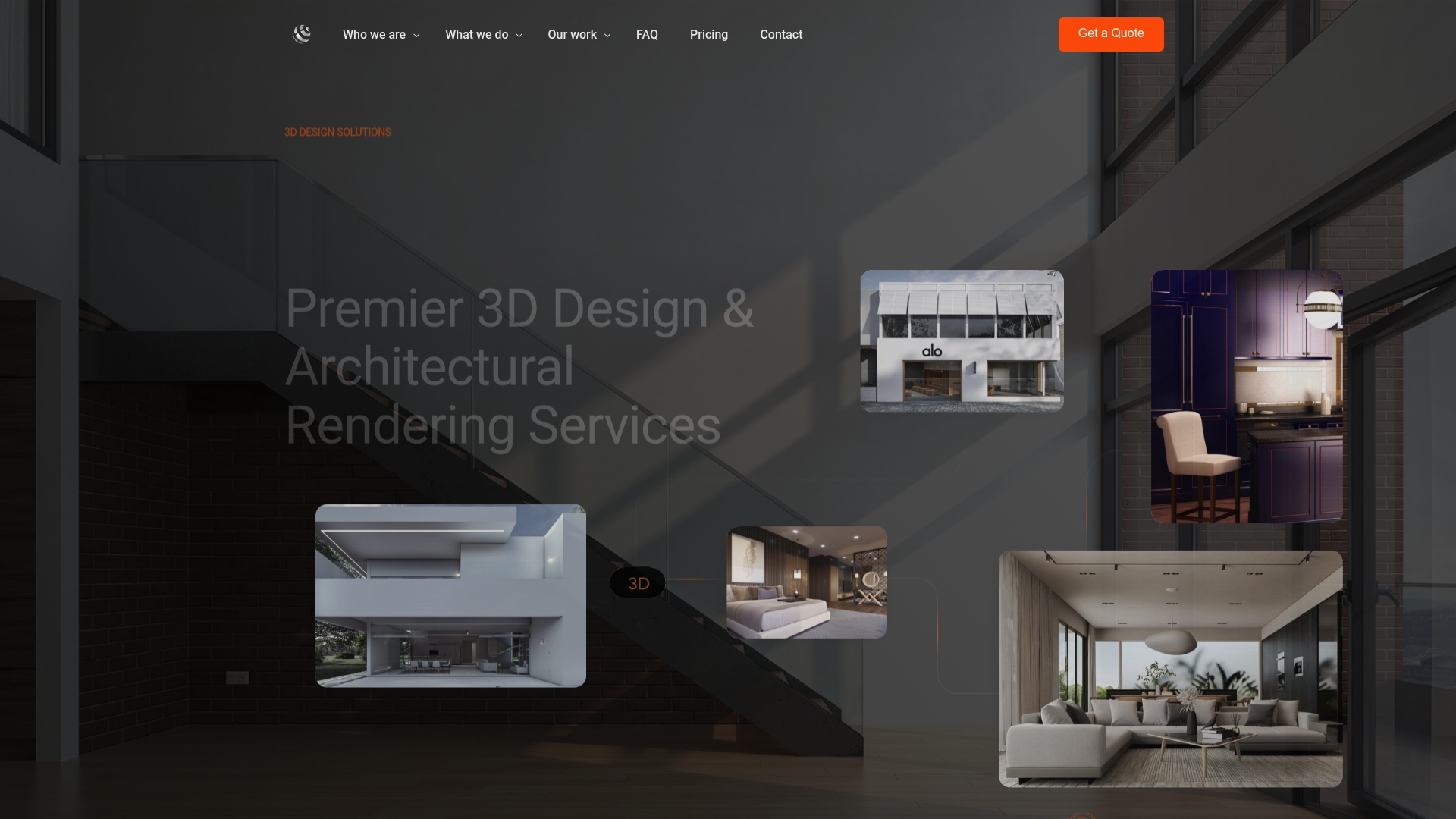
From professional 3D rendering to fully immersive architectural visualization services, the team works collaboratively with you from concept to final delivery. Whether you need a single hero render for a product launch or a complete 3D design workflow for a large-scale development, Rendimension brings the precision and creative depth your marketing demands. Reach out to explore how the right visualization strategy can accelerate your approvals, sharpen your brand, and win more clients.
Frequently asked questions
How does product visualization speed up project approvals?
Real-time rendering for iterations allows teams to make live design changes during client reviews, so feedback is addressed immediately and approvals happen in fewer rounds.
Do 3D visualizations always increase property sale prices?
Not always. An HBS study found that 3D tours can increase time-on-market engagement but do not guarantee higher sale prices once quality photos and descriptions are already in place.
What’s the best starting point for visualization workflows in architecture?
Begin with BIM/CAD modeling to establish accurate geometry, then build real-time visualization layers on top for faster client-facing presentations and stakeholder engagement.
How does product visualization support brand differentiation?
Consistent, high-quality visuals signal premium positioning and build market recognition over time, helping teams attract better clients and stand out in competitive pitches.