The architectural industry has undergone a dramatic transformation over the past decade, with 3d architectural modeling emerging as the cornerstone of modern design and visualization workflows. What was once a time-intensive process requiring manual drafting and physical scale models has evolved into a sophisticated digital practice that enables architects, designers, and clients to explore spaces before a single foundation is poured. This technology has revolutionized how professionals communicate design intent, collaborate across disciplines, and deliver projects with unprecedented accuracy and efficiency.
Understanding the Fundamentals of 3D Architectural Modeling
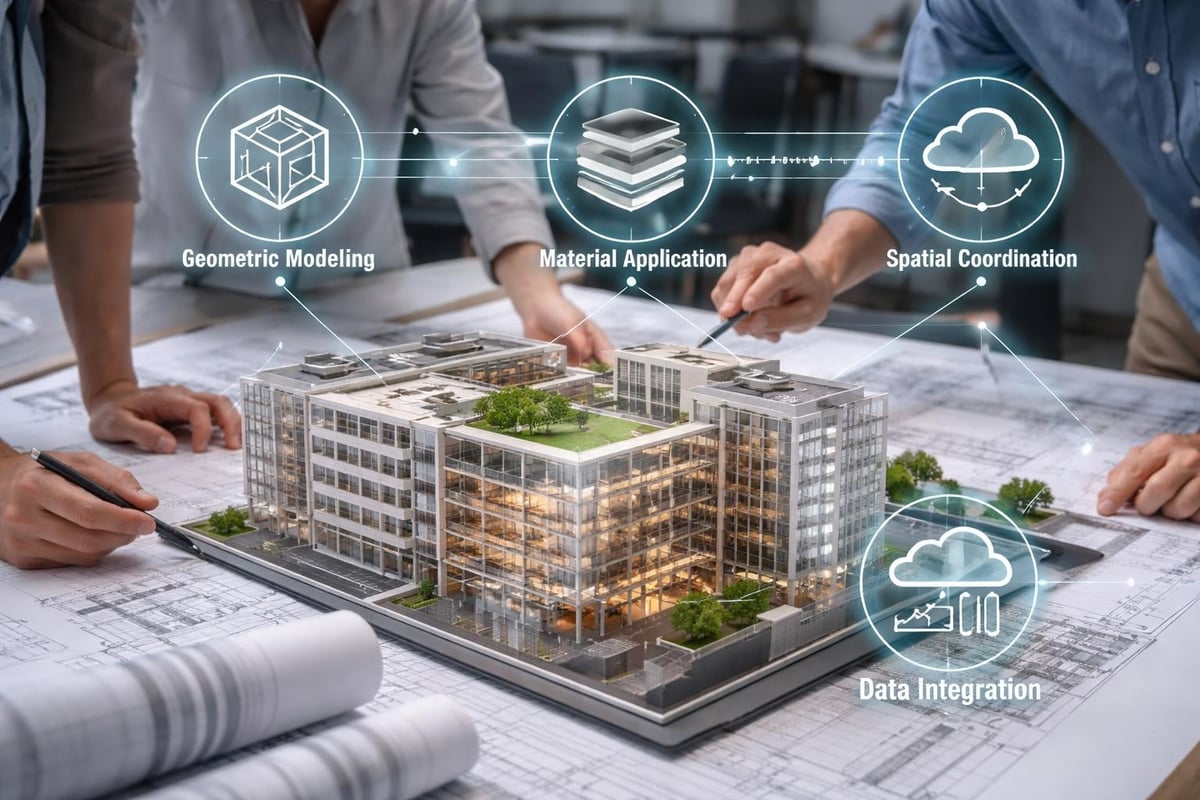
3d architectural modeling represents the digital process of creating three-dimensional representations of buildings, structures, and spaces using specialized software platforms. Unlike traditional two-dimensional drawings, these models capture height, width, and depth, allowing stakeholders to visualize projects from every conceivable angle.
The core principle behind this technology involves constructing virtual geometry that accurately represents real-world architectural elements. Walls, windows, doors, roofs, and interior features are created with precise dimensions and spatial relationships. These digital constructs serve multiple purposes throughout the project lifecycle.
Key Components of Architectural Models
Successful 3d architectural modeling requires several interconnected elements:
- Geometric accuracy: Precise measurements and proportions that match design specifications
- Material properties: Textures, colors, and surface characteristics that represent real-world finishes
- Spatial relationships: Accurate positioning of elements within the three-dimensional environment
- Parametric data: Information embedded within objects that defines their behavior and properties
- Hierarchical organization: Logical grouping of elements for efficient management and modification
Modern modeling workflows incorporate Building Information Modeling (BIM) methodologies, which extend beyond visual representation to include data-rich components. Each element in a BIM-enabled model contains information about specifications, costs, performance characteristics, and lifecycle management details.
Software Platforms Driving Architectural Visualization
The 3d architectural modeling landscape features diverse software solutions, each offering unique capabilities tailored to specific workflow requirements. Professional firms typically employ multiple platforms depending on project scope and deliverable requirements.
Industry-standard applications have evolved significantly since 2020, incorporating artificial intelligence, real-time rendering, and cloud collaboration features. Lumion has become a preferred choice for architects seeking to create stunning visualizations quickly, offering real-time rendering capabilities that transform models into photorealistic presentations. Meanwhile, Tekla Structures provides comprehensive BIM functionality for complex structural modeling across various building materials.
| Software Type | Primary Use Case | Key Strength | Typical Users |
|---|---|---|---|
| Design Modeling | Conceptual development | Flexibility and creativity | Architects, designers |
| BIM Platforms | Documentation and coordination | Data integration | Project teams |
| Visualization Tools | Client presentation | Photorealism | Marketing, sales |
| Urban Modeling | Large-scale environments | Procedural generation | Urban planners |
Specialized Applications for Specific Needs
Beyond general-purpose modeling tools, specialized applications address particular architectural challenges. CityEngine excels at generating large-scale urban environments through procedural modeling techniques, enabling planners to visualize entire districts efficiently. For mechanical, electrical, and plumbing coordination, Graphisoft MEP Modeler provides detailed system modeling capabilities that integrate seamlessly with architectural designs.
The selection of appropriate software depends on multiple factors including project complexity, team expertise, client requirements, and budget constraints. Many firms maintain licenses for complementary applications, leveraging each platform's strengths at different project phases.
The Design Process: From Concept to Completion
Implementing 3d architectural modeling effectively requires a structured approach that balances creativity with technical precision. The typical workflow progresses through distinct phases, each building upon the previous stage to refine the design.
Initial conceptualization begins with gathering project requirements, site analysis data, and client aspirations. Designers create preliminary massing studies to explore form, scale, and spatial organization. These early models remain intentionally simple, focusing on overall composition rather than detailed resolution.
As concepts solidify, the modeling process advances to schematic design, where architectural elements receive greater definition. Floor plans, elevations, and section views emerge from the three-dimensional model, ensuring consistency across all documentation. This phase establishes the fundamental design language that will guide subsequent development.
Design Development and Refinement
The design development phase represents the most intensive period of 3d architectural modeling activity. Teams elaborate every aspect of the building, from structural systems to interior finishes:
- Structural integration: Coordination with engineering consultants to incorporate load-bearing systems
- Material specification: Application of accurate finishes, textures, and colors
- Detail resolution: Development of custom elements, millwork, and architectural features
- Systems coordination: Integration of MEP components and spatial requirements
- Code compliance: Verification of regulations regarding egress, accessibility, and safety
Recent advances in generative AI have begun influencing this process. Research on integrating generative AI in architectural design demonstrates how AI models can generate conceptual floorplans and 3D models from simple sketches, potentially accelerating early design exploration while maintaining human oversight for critical decisions.
Technical Considerations for Professional Quality
Achieving professional-grade results with 3d architectural modeling requires attention to technical details that separate adequate visualizations from exceptional ones. Model organization, geometric precision, and rendering optimization all contribute to final output quality.
Geometric cleanliness forms the foundation of successful modeling. Models constructed with proper topology-avoiding overlapping faces, gaps, or non-manifold geometry-render more reliably and process more efficiently. Professional modelers maintain disciplined modeling habits, creating clean geometry that withstands scrutiny at any scale or viewing angle.
Layer management and object naming conventions become increasingly critical as project complexity grows. Well-organized models enable team members to locate elements quickly, isolate specific components for editing, and manage visibility efficiently during different workflow stages.
Optimization Strategies for Performance
Large architectural models can strain computational resources, particularly when incorporating detailed furnishings, landscaping, and contextual surroundings. Strategic optimization maintains acceptable performance without compromising visual quality:
- Level-of-detail management: Creating simplified geometry for distant objects
- Instancing techniques: Reusing identical elements efficiently
- Texture optimization: Balancing resolution against memory consumption
- Polygon budgets: Establishing complexity limits for different element categories
- Strategic culling: Removing invisible geometry from rendering calculations
Studies like BuildingWorld, a comprehensive 3D building dataset, provide valuable insights into large-scale architectural modeling practices, demonstrating approaches for managing complex urban environments while maintaining computational efficiency.

Material Definition and Photorealistic Rendering
The application of materials transforms geometric models into convincing architectural visualizations. Material definition in 3d architectural modeling extends beyond simple color assignment to encompass physical properties that govern light interaction, reflection characteristics, and surface detail.
Physically-based rendering (PBR) workflows have become industry standard since 2022, replacing older shading models with scientifically accurate material systems. PBR materials define base color, metalness, roughness, and normal mapping to simulate real-world surfaces authentically under various lighting conditions.
| Material Property | Function | Impact on Realism |
|---|---|---|
| Albedo/Base Color | Surface color without lighting | Foundation of appearance |
| Roughness | Microscopic surface irregularity | Controls reflection sharpness |
| Metalness | Metallic versus dielectric behavior | Defines reflection characteristics |
| Normal Mapping | Surface detail simulation | Adds depth without geometry |
| Displacement | Actual geometric deformation | Creates true dimensional variation |
Creating convincing material libraries requires both technical knowledge and artistic sensibility. Professional visualization studios maintain extensive collections of calibrated materials, organized by category and application, ensuring consistency across projects.
Lighting Strategies for Architectural Presentation
Lighting design represents perhaps the most critical factor in photorealistic architectural rendering. The interplay between natural daylight, artificial illumination, and environmental ambient light creates the atmospheric qualities that make visualizations compelling.
Daylight simulation accurately models sun position based on geographic location, date, and time. This precision enables architects to study daylighting performance, shadow patterns, and seasonal variations. Contemporary rendering engines calculate physically accurate light transport, simulating how photons bounce between surfaces to create subtle indirect illumination.
Artificial lighting requires careful placement and configuration of light fixtures within the model. Each luminaire type-recessed cans, pendants, wall sconces-possesses unique distribution patterns and color temperatures that influence spatial perception and material appearance.
Presentation Techniques and Client Communication
The ultimate purpose of 3d architectural modeling extends beyond internal design development to effective client communication and project marketing. Transforming technical models into compelling presentations requires understanding visual storytelling principles and audience expectations.
Still renderings remain the most common deliverable format, offering complete control over composition, lighting, and camera positioning. Professional visualizations typically present multiple views showcasing different aspects of the design:
- Exterior approach views establishing contextual relationships
- Focal elevations highlighting architectural character
- Interior perspectives demonstrating spatial qualities and materiality
- Detail vignettes emphasizing custom elements or design features
- Aerial views providing comprehensive project understanding
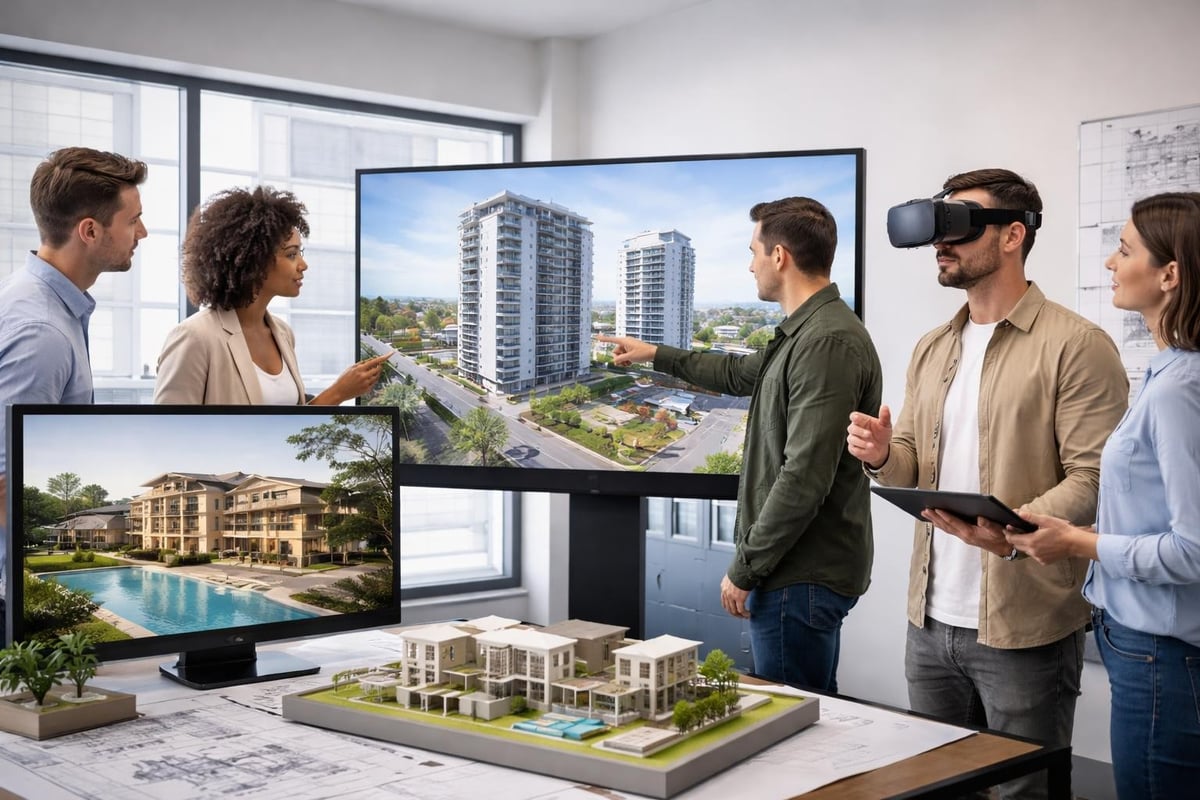
Interactive presentations using BIMx enable clients to explore 3D models and 2D documentation seamlessly, providing intuitive navigation through spaces while maintaining access to technical information. This approach proves particularly valuable for complex projects where static images cannot fully convey spatial relationships.
Animation and Virtual Reality Experiences
Animated walkthroughs guide viewers through designed spaces along predetermined paths, revealing how spaces unfold and connect. These sequences require careful choreography, balancing movement speed with adequate time for visual absorption at significant moments.
Virtual reality represents the cutting edge of architectural presentation, offering unprecedented immersion. Clients wearing VR headsets experience spaces at true scale, developing intuitive understanding of proportions, sightlines, and spatial flow. According to a primer on 3D modeling for architecture, virtual reality's role in design continues expanding as hardware becomes more accessible and software integration improves.
Analytical Applications Beyond Visualization
While aesthetic presentation drives much 3d architectural modeling activity, analytical applications provide substantial value throughout project development. Models serve as platforms for performance simulation, clash detection, and quantity extraction.
Energy analysis leverages geometric and material data to simulate building thermal performance. Solar studies evaluate glazing strategies, shading devices, and passive heating opportunities. Computational fluid dynamics (CFD) analysis examines natural ventilation patterns and thermal comfort conditions within modeled spaces.
Structural analysis integration enables early feasibility assessment of architectural forms. Engineers apply loads to model geometry, identifying potential issues before detailed design investment. This collaborative approach reduces redesign cycles and supports more ambitious architectural expressions.
Data-Driven Design Decisions
The ArchShapeNet interpretable 3D-CNN framework represents emerging artificial intelligence applications in architectural analysis, offering novel approaches for evaluating and classifying 3D architectural forms based on shape characteristics. Such tools promise to augment human expertise with computational insights drawn from vast datasets of existing buildings.
Quantity takeoffs extracted from accurate 3d architectural modeling inform cost estimation and procurement planning. Material volumes, surface areas, and component counts flow directly from model data, reducing manual calculation errors and accelerating pre-construction processes.
Collaboration and Coordination Workflows
Modern architectural practice requires seamless collaboration among diverse stakeholders including architects, engineers, contractors, and consultants. 3d architectural modeling facilitates coordination through shared digital environments and standardized data exchange protocols.
Cloud-based collaboration platforms enable real-time model access from any location, supporting distributed teams and remote client reviews. Version control systems track modifications, maintain change histories, and prevent conflicting edits when multiple team members work simultaneously.
Interoperability between software platforms remains an ongoing challenge despite industry standardization efforts. IFC (Industry Foundation Classes) format provides vendor-neutral data exchange, though translation processes sometimes introduce errors or omit proprietary information. Successful coordination workflows often involve direct software links or API-based integrations between complementary applications.
Clash Detection and Issue Resolution
Coordination modeling identifies spatial conflicts before construction, when resolution costs remain minimal. Mechanical ductwork intersecting structural beams, plumbing chases occupying architectural features, and electrical conduits lacking adequate clearances all surface during systematic clash detection reviews.
Weekly coordination meetings utilize federated models combining architectural, structural, and MEP disciplines. Teams review flagged conflicts, assign responsibility for resolution, and track issue status through documentation systems integrated with the modeling environment.
Emerging Trends Shaping the Future
The 3d architectural modeling landscape continues evolving rapidly as technology advances and professional practices adapt. Several trends promise significant impact on workflows and capabilities in coming years.
Artificial intelligence integration extends beyond analysis into generative design applications. AI systems propose design alternatives optimizing multiple performance criteria simultaneously, exploring solution spaces far larger than human designers could manually investigate. This augmentation supports more informed decision-making rather than replacing human creativity and judgment.
Real-time rendering engines eliminate traditional rendering wait times, enabling interactive design reviews with photorealistic quality. Designers adjust materials, lighting, and geometry while receiving immediate visual feedback, compressing iteration cycles that previously consumed hours or days.
Sustainability and Performance-Driven Modeling
Environmental concerns drive increasing emphasis on performance simulation integrated with 3d architectural modeling workflows. Carbon footprint analysis, embodied energy calculations, and lifecycle assessment tools help designers make informed material selections and system choices aligned with sustainability goals.
Parametric modeling approaches link design geometry to performance metrics, enabling rapid exploration of form variations and their environmental implications. This methodology supports evidence-based design decisions grounded in quantitative analysis rather than intuition alone.
Industry Standards and Best Practices
Professional 3d architectural modeling adheres to established standards ensuring quality, consistency, and usability across project lifecycles. Industry organizations publish guidelines covering naming conventions, organizational structures, and deliverable formats.
Level of Development (LOD) specifications define geometric detail, attached information, and intended use for model elements at different project stages. LOD 100 represents conceptual massing, while LOD 500 encompasses as-built verification documentation. Clear LOD definitions align stakeholder expectations and prevent premature detail investment.
Quality assurance processes verify model accuracy before milestone deliveries. Automated checking scripts identify common errors including duplicate objects, inconsistent naming, and specification conflicts. Manual reviews supplement automated validation, ensuring models meet project-specific requirements beyond standard checks.
Documentation and Model Management
Comprehensive documentation practices maintain model utility as projects advance and team members change. Model setup instructions, custom family libraries, and material specifications require systematic organization and version control.
Archival strategies preserve completed project models for future reference, renovation planning, or portfolio documentation. File formats selected for long-term storage balance accessibility against technological obsolescence, often requiring multiple format exports to ensure future recoverability.
Mastering 3d architectural modeling requires balancing technical proficiency with creative vision, transforming abstract concepts into tangible visualizations that communicate design intent effectively. The techniques, tools, and workflows discussed throughout this guide provide the foundation for professional-quality results that serve projects from initial conception through construction and beyond. If you're ready to elevate your architectural presentations with stunning, photorealistic visualizations that captivate clients and stakeholders, Rendimension delivers award-winning 3D rendering services tailored to bring your vision to life with exceptional clarity and realism.