Choosing between a simple blueprint and a 3D floor plan can shape how clients perceive your projects. For real estate developers across North America, presenting properties with photorealistic detail makes designs stand out and easier for buyers to understand. These immersive visualizations offer a clear view of spatial relationships, style options, and potential layouts long before construction begins, helping you market properties more effectively and build stronger buyer confidence.
Table of Contents
- What Are 3D Floor Plans And How Do They Work
- Core Types And Customization Options
- Enhanced Property Visualization For Buyers
- Boosting Real Estate Marketing And Sales
- Comparing 3D Floor Plans To 2D Alternatives
Key Takeaways
| Point | Details |
|---|---|
| 3D Floor Plans Enhance Visualization | They provide immersive, photorealistic views, allowing buyers to experience layouts and spatial relationships effectively. |
| Customization is Key | Advanced tools enable extensive personalization of floor plans, enhancing their relevance to buyer preferences. |
| Increased Marketing Effectiveness | 3D floor plans engage potential buyers more deeply than 2D alternatives, streamlining the sales process and reducing time on the market. |
| Immersive Buyer Experiences Drive Decisions | Interactive capabilities like virtual walkthroughs foster emotional connections, enabling faster, more confident purchasing decisions. |
What Are 3D Floor Plans and How Do They Work
A 3D floor plan transforms traditional architectural drawings into an immersive, photorealistic visualization of interior spaces. Unlike flat 2D blueprints, these digital renderings provide a comprehensive bird’s-eye view that reveals intricate spatial relationships, design elements, and room configurations with remarkable clarity.
At its core, a 3D floor plan is a three-dimensional digital representation created using advanced rendering software. These sophisticated visual tools allow real estate professionals and potential buyers to explore properties virtually, experiencing the layout and feel of a space before physical construction begins.
Key characteristics of 3D floor plans include:
- Detailed architectural elements including walls, windows, and doors
- Precise scale and proportional measurements
- Optional furniture placement to demonstrate room functionality
- Ability to view spaces from multiple angles and perspectives
- High level of photorealistic detail and texture rendering
The technical process involves specialized 3D modeling software that converts architectural blueprints into interactive, visually compelling representations. Designers use complex rendering techniques to generate realistic textures, lighting, and spatial dimensions that make these digital models incredibly lifelike.
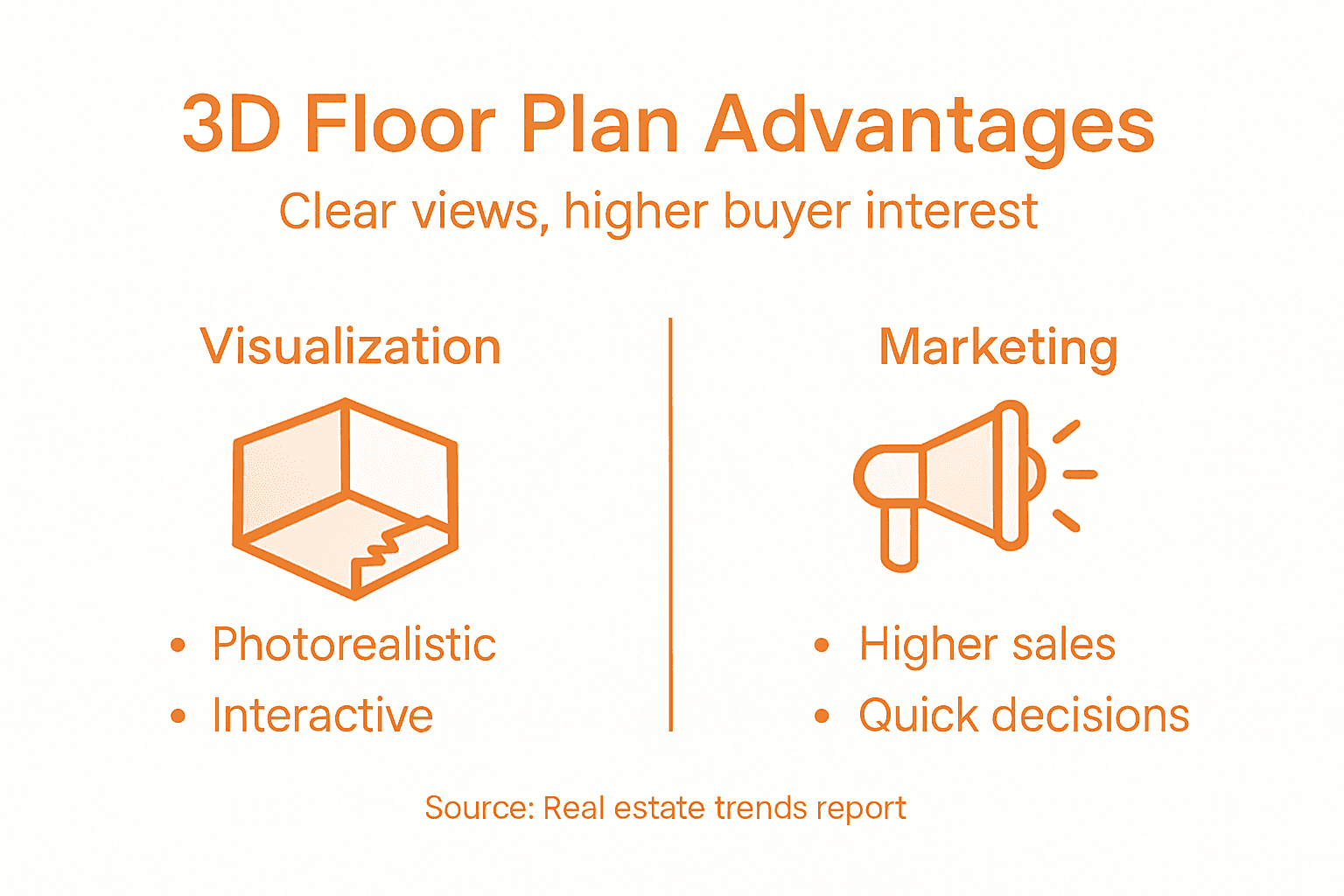
Modern 3D floor plans go beyond static images. With technologies like WebGL and virtual reality, clients can now virtually walk through spaces, examining every detail as if they were physically present. This immersive experience dramatically enhances marketing potential and helps clients make more informed decisions.
Pro tip: Work with visualization experts who understand architectural nuances to ensure your 3D floor plans accurately represent your design intent and showcase the most compelling aspects of the space.
Core Types and Customization Options
3D floor plans have evolved into sophisticated design tools with multiple configuration approaches, enabling real estate professionals to create highly personalized visual representations. Modern computational methods now allow for incredibly flexible and adaptive floor plan generation that goes far beyond traditional architectural drawings.
The primary types of 3D floor plans can be categorized into several distinct styles:
- Top-Down View: Classic overhead perspective showing complete spatial layout
- Isometric View: Angled perspective providing depth and dimensional understanding
- Immersive 3D View: Realistic walkthrough experience simulating physical space navigation
- Hybrid Visualization: Combining multiple rendering techniques for comprehensive representation
Customization options have dramatically expanded with technological advancements. Intuitive design tools now offer drag-and-drop functionality that allows unprecedented personalization of architectural elements.
Advanced 3D floor plan creators provide granular customization across multiple dimensions:
- Structural element placement and manipulation
- Furniture positioning and styling
- Color and texture selection
- Lighting configuration
- Material and finish options
- Branding element integration
These sophisticated platforms leverage deep learning algorithms and procedural generation techniques to rapidly produce layouts that balance functional requirements with aesthetic preferences. Designers can now input specific parameters reflecting architectural constraints, user preferences, and design philosophies to generate tailored floor plans.
Here’s how different 3D floor plan views support various real estate needs:
| 3D View Style | Best Use Case | Key Business Impact |
|---|---|---|
| Top-Down View | Space planning | Quick overview for buyers |
| Isometric View | Design evaluation | Enhances spatial understanding |
| Immersive 3D Walkthrough | Remote property tours | Boosts emotional engagement |
| Hybrid Visualization | Custom marketing content | Showcases unique property details |
The future of 3D floor plan design lies in increasingly intelligent, responsive visualization technologies that adapt seamlessly to user requirements.
Pro tip: Select a 3D floor plan creation tool that offers both preset templates and extensive customization options to maximize design flexibility and efficiency.
Enhanced Property Visualization for Buyers
3D floor plans have revolutionized the real estate buying experience by providing potential buyers with unprecedented insights into property layouts and spatial relationships. Augmented reality technologies now enable immersive property exploration that goes far beyond traditional marketing materials, transforming how buyers interact with potential homes.
The key advantages of enhanced property visualization include:
- Comprehensive understanding of spatial configurations
- Ability to preview furniture placement and room functionality
- Reduced uncertainty about property layout and design
- Emotional connection to potential living spaces
- Faster decision-making process
Virtual reality platforms have dramatically improved the property evaluation process by creating interactive 3D environments that allow buyers to conduct remote property tours with remarkable detail and precision. These advanced visualization tools compensate for limitations in traditional property marketing by providing rich, immersive experiences that bridge the gap between digital representation and physical reality.
Buyers now benefit from multiple visualization capabilities:
- Detailed room measurements and proportions
- Realistic texture and material representations
- Interactive walkthrough experiences
- Lighting and shadow simulations
- Customizable design scenario exploration
Visualization technologies are transforming real estate from a transactional experience into an immersive, informative journey of discovery.
Pro tip: Leverage multiple visualization perspectives to provide potential buyers with a comprehensive and compelling property preview that addresses their specific needs and preferences.
Boosting Real Estate Marketing and Sales
3D floor plans have emerged as a game-changing tool for real estate professionals seeking to transform their marketing strategies and accelerate sales cycles. Augmented reality technologies are revolutionizing property presentations by creating interactive experiences that captivate potential buyers and streamline the sales process.
Key marketing advantages of 3D floor plans include:
- Increased buyer engagement
- More compelling property showcases
- Reduced time on market
- Enhanced competitive differentiation
- Cost-effective marketing solution
Digital marketing strategies now emphasize visual content that resonates with tech-savvy millennial buyers. These advanced visualization techniques allow real estate professionals to create immersive property experiences that go beyond traditional marketing approaches.
Specific sales and marketing benefits include:
- Attracting wider audience demographics
- Providing 24/7 property accessibility
- Enabling remote property exploration
- Reducing physical showing expenses
- Supporting multi-channel marketing efforts
Advanced visualization transforms real estate marketing from passive presentation to active buyer engagement.
Pro tip: Integrate 3D floor plans across multiple digital platforms to maximize visibility and create a cohesive, compelling property marketing narrative.
Comparing 3D Floor Plans to 2D Alternatives
Traditional 2D floor plans represent architectural spaces through basic, flat representations that provide minimal spatial context. Comparison between 2D and 3D floor plans reveals significant limitations in traditional visualization techniques that modern real estate marketing has rapidly outgrown.
Key differences between 2D and 3D floor plans include:
- Visual complexity and detail
- Depth of spatial understanding
- Emotional engagement potential
- Marketing effectiveness
- Client comprehension levels
Traditional 2D floor plans offer fundamental advantages such as simplicity and cost-effectiveness, but they fundamentally lack the immersive qualities that contemporary buyers demand. These flat diagrams provide basic room measurements and structural outlines but fail to communicate the genuine feel and potential of a living space.
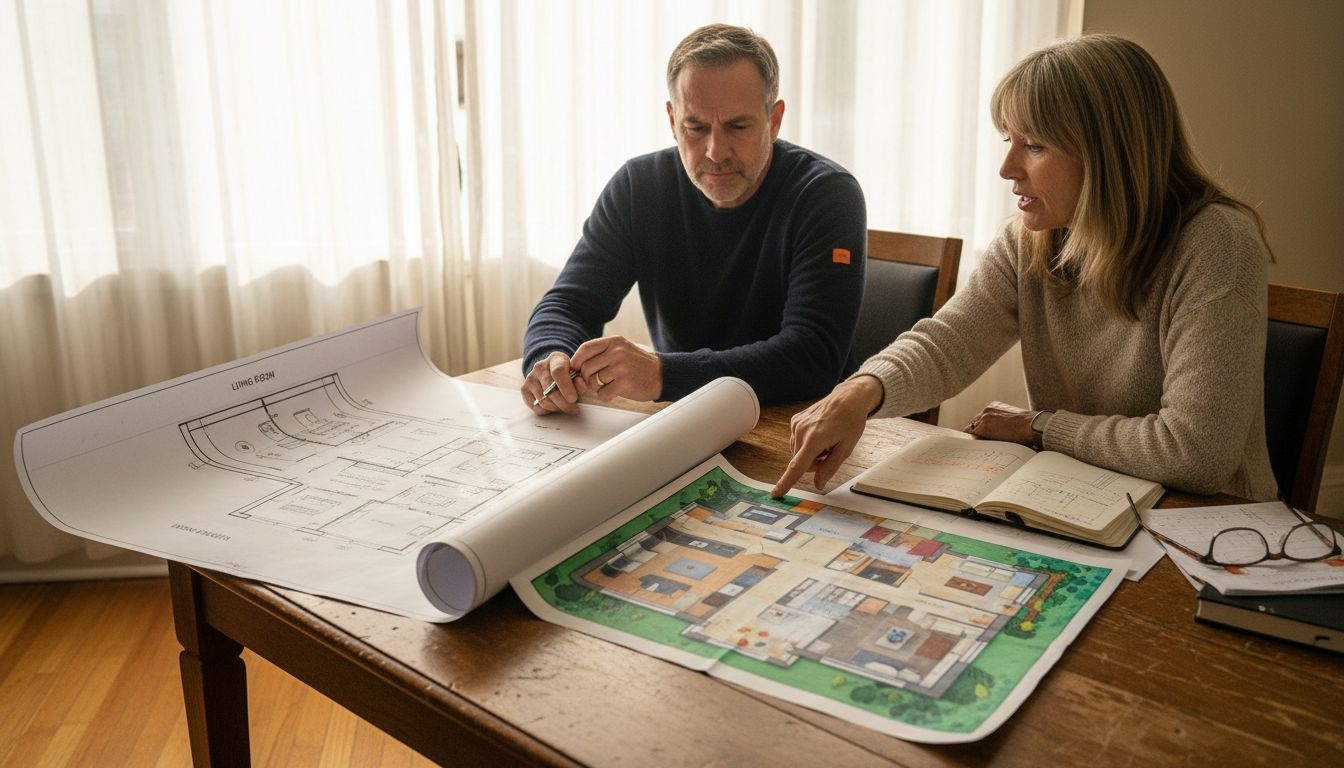
Comparative characteristics of 2D versus 3D floor plans:
Below is a quick comparison of how 3D and 2D floor plans influence buyer decisions:
| Factor | 2D Floor Plan | 3D Floor Plan |
|---|---|---|
| Visualization detail | Simple and untextured | Photorealistic and lifelike |
| Buyer engagement | Minimal impact | High emotional connection |
| Decision speed | Slower, more uncertain | Faster and confident |
| Marketing effectiveness | Limited | Highly persuasive |
-
2D Floor Plans:
- Simple bird’s-eye view
- Limited spatial perception
- Basic architectural representation
- Lower production costs
- Quick to generate
-
3D Floor Plans:
- Realistic, textured representations
- Multiple viewing angles
- Furniture and decor integration
- Enhanced emotional connection
- Interactive exploration capabilities
3D visualization transforms architectural representation from a technical diagram to an immersive storytelling experience.
Pro tip: Leverage 3D floor plans strategically by highlighting unique property features that traditional 2D drawings cannot effectively communicate.
Elevate Your Real Estate Marketing with Photorealistic 3D Floor Plans
The article highlights how 3D floor plans solve critical challenges faced by real estate marketers such as limited buyer engagement, unclear spatial understanding, and slow decision-making. Buyers want immersive, detailed visual experiences that go beyond simple 2D blueprints. At Rendimension, we specialize in delivering high-quality, photorealistic 3D renderings and virtual walkthroughs that transform your property listings into captivating presentations. Our expert visualization solutions bring your architectural concepts to life, helping you showcase every detail with precision and evoke strong emotional connections to your properties.
Ready to accelerate sales and stand out in a competitive market Use our professional 3D design services to create immersive floor plans that engage buyers and highlight your property’s unique features Visit Rendimension today to explore how our architectural visualization expertise can elevate your marketing strategy. See the difference that detailed, custom 3D renderings and interactive walkthroughs make for your listings and client satisfaction. Start transforming your real estate marketing now at Rendimension.
Frequently Asked Questions
What are the main advantages of using 3D floor plans in real estate marketing?
3D floor plans offer increased buyer engagement, provide a compelling showcase of properties, reduce time on the market, enhance competitive differentiation, and serve as a cost-effective marketing solution.
How do 3D floor plans improve the buyer’s understanding of property layouts?
3D floor plans provide a comprehensive understanding of spatial configurations, allowing buyers to visualize furniture placement, room functionality, and create emotional connections with potential living spaces, leading to faster decision-making.
In what ways do 3D floor plans differ from traditional 2D floor plans?
3D floor plans are photorealistic and provide depth and spatial understanding, whereas 2D floor plans offer basic, flat representations that lack immersive qualities. 3D plans enhance buyer engagement significantly compared to their 2D counterparts.
Can 3D floor plans be customized to meet specific buyer preferences?
Yes, advanced 3D floor plan creators allow for granular customization, including structural element placement, furniture positioning, color selection, and more, enabling personalized visual representations that align with buyer preferences.
Recommended
- Why Architectural Visualization Drives Real Estate Sales
- 3D Walkthroughs Real Estate Agents – Rendimension
- Explore 3D Floor Plans For Open Floor Plan Designs
- 3D Walkthroughs: Transforming Design Presentations