Turning design ideas into clear, convincing product visuals can feel overwhelming. Accurate presentation is not just about making things look good. It’s about ensuring your concepts are understood and trusted by clients and teams. Whether you’re working on a new building or developing a physical product, small mistakes in your visual approach can lead to costly misunderstandings later.
The right techniques in architectural and product design visualization go far beyond simple sketches. By using proven methods like detailed 3D modeling, realistic lighting, and interactive previews, you can transform abstract concepts into visuals that speak for themselves. Get ready to discover actionable ways to make your designs easier to communicate, quicker to improve, and far more believable from the very first draft.
Table of Contents
- 1. Start With Detailed 3D Modeling For Accuracy
- 2. Incorporate Photorealistic Rendering Techniques
- 3. Use Real-Time Rendering For Instant Feedback
- 4. Leverage Virtual Reality For Immersive Previews
- 5. Integrate 360-Degree Product Views
- 6. Apply Lighting And Material Simulation
- 7. Personalize Visuals Based On Client Needs
Quick Summary
| Takeaway | Explanation |
|---|---|
| 1. Utilize Detailed 3D Modeling | Accurate 3D models aid in visualizing design intent and reducing errors while improving communication among stakeholders. |
| 2. Master Photorealistic Rendering | Applying advanced rendering techniques creates lifelike visuals, enhancing client communication and reducing prototype costs. |
| 3. Implement Real-Time Rendering | Instant design feedback with real-time rendering allows for quick modifications and improved decision-making throughout the design process. |
| 4. Embrace Virtual Reality | Virtual Reality provides immersive previews, enhancing client understanding and interaction with design projects. |
| 5. Personalize Visual Presentations | Tailoring visualizations to client preferences improves engagement and ensures that designs resonate with specific expectations. |
1. Start With Detailed 3D Modeling for Accuracy
Detailed 3D modeling is the cornerstone of exceptional architectural and product design visualization. By creating precise digital representations, architects and designers can transform abstract concepts into tangible visual experiences that communicate design intent with extraordinary clarity.
Building Information Modeling (BIM) provides architects a powerful approach to achieving unparalleled accuracy. Comprehensive 3D modeling techniques enable designers to represent complex building information through intricate geometric details, material specifications, and lifecycle characteristics.
The benefits of detailed 3D modeling include:
- Precise dimensional representation
- Enhanced visual communication
- Improved design decision making
- Reduced errors in final production
- Seamless stakeholder understanding
Accurate 3D models serve multiple critical functions. They allow designers to:
- Verify spatial relationships
- Simulate real-world performance
- Detect potential design conflicts early
- Generate photorealistic renderings
By integrating traditional 2D sketching with advanced 3D modeling techniques, designers can develop more nuanced and sophisticated representations. This approach transforms conceptual thinking into precise digital blueprints that capture every intricate detail.
Detailed 3D modeling bridges imagination and reality, converting abstract design concepts into precise visual narratives.
Pro tip: Invest in high-quality modeling software and dedicate time to mastering technical precision in your initial model creation process.
2. Incorporate Photorealistic Rendering Techniques
Photorealistic rendering transforms architectural and product design visualization by creating incredibly lifelike digital representations that blur the line between imagination and reality. These advanced techniques allow designers to present concepts with extraordinary visual precision and emotional impact.
Physically Based Rendering techniques provide architects and designers a sophisticated approach to creating ultra-realistic visual experiences. By meticulously simulating light behavior and material interactions, designers can generate images that are almost indistinguishable from actual photographs.
Key advantages of photorealistic rendering include:
- Precise material representation
- Accurate light and shadow simulation
- Enhanced client communication
- Reduced physical prototype costs
- Improved design validation
Successful photorealistic rendering relies on several critical strategies:
- Select high-quality rendering software
- Master material property settings
- Understand lighting techniques
- Develop realistic texture mapping
Advanced rendering requires deep technical understanding. Designers must comprehend complex interactions between light surfaces textures and camera perspectives to achieve truly convincing results.
Photorealistic rendering bridges the gap between conceptual design and tangible visualization.
Pro tip: Invest time in studying real-world material properties and experiment with different lighting scenarios to develop your rendering skills.
3. Use Real-Time Rendering for Instant Feedback
Real-time rendering represents a transformative technology that empowers architects and designers to experience immediate visual feedback during the design process. This dynamic approach allows professionals to make instant modifications and see precise results without time-consuming traditional rendering workflows.
Interactive rendering techniques revolutionize design exploration by enabling rapid visualization of changes. Designers can now manipulate geometry appearance and lighting conditions with unprecedented speed and flexibility.
Key advantages of real-time rendering include:
- Instant design iteration
- Reduced production time
- Enhanced client communication
- Improved design decision making
- Interactive presentation capabilities
Successful real-time rendering implementation requires:
- Selecting powerful graphics hardware
- Using advanced rendering software
- Optimizing 3D model complexity
- Understanding rendering engine capabilities
Advanced rendering demands technical expertise. Professionals must develop skills in geometry modeling material settings and interactive visualization technologies.
Real-time rendering transforms design from a linear process to an interactive experience.
Pro tip: Invest in high-performance graphics hardware and practice creating lightweight 3D models that maintain visual fidelity while enabling smooth real-time interactions.
4. Leverage Virtual Reality for Immersive Previews
Virtual Reality has transformed product visualization from passive observation to active exploration. By creating fully immersive digital environments architects and designers can now transport clients into incredibly realistic representations of proposed projects.
Immersive virtual reality experiences enable unprecedented interaction with complex design concepts. This technology allows professionals to simulate spatial relationships materials and lighting conditions with extraordinary precision.
Key advantages of VR product visualization include:
- Complete spatial understanding
- Interactive design exploration
- Reduced design iteration costs
- Enhanced client communication
- Immediate design feedback
Successful VR implementation requires:
- High-quality 3D modeling
- Sophisticated VR hardware
- User-friendly interaction design
- Realistic rendering techniques
Advanced VR demands technical and creative skills. Designers must balance technical precision with compelling visual storytelling to create truly engaging experiences.
Virtual Reality transforms design presentations from static displays into dynamic interactive journeys.
Pro tip: Invest in comprehensive VR training and experiment with multiple interaction models to develop intuitive and compelling virtual design experiences.
5. Integrate 360-Degree Product Views
Modern product visualization transcends static images by offering immersive interactive experiences that allow clients to explore designs from every conceivable angle. 360-degree product views represent a revolutionary approach to presenting architectural and design concepts with unprecedented depth and engagement.
Interactive 360-degree product viewers enable designers to showcase their work with remarkable precision and dynamism. These advanced visualization tools transform traditional presentations into engaging digital experiences that provide comprehensive product understanding.
Key advantages of 360-degree product views include:
- Complete product perspective
- Enhanced client interaction
- Increased design transparency
- Reduced misunderstandings
- Improved presentation impact
Successful 360-degree view implementation requires:
- High-resolution product imaging
- Smooth rotation mechanics
- Intuitive user controls
- Optimized digital performance
Advanced visualization demands technical mastery. Designers must balance technical precision with compelling visual storytelling to create truly engaging interactive experiences.
360-degree views transform product presentations from passive observations into dynamic explorations.
Pro tip: Invest in professional photography and advanced rendering techniques to ensure your 360-degree product views capture every nuanced detail with exceptional clarity and realism.
6. Apply Lighting and Material Simulation
Lighting and material simulation represent the subtle art of transforming digital designs from flat representations to living experiences that capture the nuanced interaction between light surfaces and architectural elements. By mastering these techniques architects and designers can create visualizations that breathe with realistic complexity.
Neural lighting simulation techniques revolutionize how professionals understand and represent environmental interactions. These advanced approaches allow designers to model intricate light behaviors that respond dynamically to changing environmental conditions.
Key advantages of advanced lighting simulation include:
- Hyper-realistic visual representations
- Dynamic environmental modeling
- Enhanced design decision making
- Improved client communication
- Precise material property understanding
Successful lighting and material simulation requires:
- Understanding physical light properties
- Selecting sophisticated rendering software
- Capturing material reflectivity
- Simulating contextual lighting conditions
Realistic visualization demands technical artistry. Designers must blend scientific precision with creative interpretation to produce compelling visual narratives.
Lighting simulation transforms digital designs from static images into living visual experiences.
Pro tip: Invest time in studying real-world light interactions and experiment with multiple rendering settings to develop a nuanced understanding of material and lighting dynamics.
7. Personalize Visuals Based on Client Needs
Successful product visualization transcends technical precision and enters the realm of strategic communication. By tailoring visual presentations to specific client preferences and objectives architects and designers can transform standard renderings into powerful storytelling tools.
User-Centered Design principles offer a systematic approach to creating personalized visual experiences. This methodology ensures that every visualization directly addresses client expectations and communicates design intent with remarkable clarity.
Key strategies for personalizing visual presentations include:
- Conducting thorough client discovery interviews
- Understanding project context and constraints
- Adapting visualization style to client preferences
- Highlighting project-specific value propositions
- Creating iterative design feedback loops
Effective personalization requires:
- Active listening skills
- Flexible visualization techniques
- Responsive design modifications
- Clear communication channels
Client-focused visualization transforms presentations. Designers must view their work as a collaborative dialogue rather than a unilateral communication.
Personalized visuals bridge imagination and understanding.
Pro tip: Develop a comprehensive client intake questionnaire that explores not just technical requirements but emotional and aesthetic preferences to create truly resonant design presentations.
Below is a comprehensive table summarizing the key visualization techniques and strategies discussed throughout the article.
| Visualization Strategy | Description | Core Benefits |
|---|---|---|
| Detailed 3D Modeling | Crafting precise digital designs for accurate conceptualization. | Enhanced precision in representation and reduced errors during production. |
| Photorealistic Rendering | Creating lifelike visuals that mimic real-world lighting and materials. | Improved client engagement and design validation. |
| Real-Time Rendering | Facilitating instant visual feedback for live design adjustments. | Speedier decision-making and interactive presentation. |
| Virtual Reality (VR) | Immersive design exploration using advanced VR setups. | Comprehensive understanding of spatial relationships and interactive feedback. |
| 360-Degree Product Views | Allowing full rotational viewing of products or designs. | Increased client interaction and better design transparency. |
| Lighting and Material Simulation | Simulating realistic environmental interactions with lighting and materials. | Creation of visually dynamic and compelling visuals. |
| Client-Centered Visuals | Tailoring visual presentations to client needs and preferences. | Resonant displays with effective communication of design intent. |
This table captures the essence of advanced visualization practices for architects and designers to deliver impactful and precise presentations.
Elevate Your Design Visualizations with Rendimension
Architects and designers face complex challenges in bringing detailed 3D modeling and photorealistic rendering strategies to life. The need for precise spatial understanding, realistic lighting simulation, and immersive client presentations can feel overwhelming. Key goals include enhancing client communication, reducing costly design errors, and creating interactive experiences that truly captivate stakeholders.
At Rendimension, we specialize in transforming your concepts into vivid 3D visualizations using advanced techniques such as virtual reality walkthroughs, real-time rendering, and 360-degree product views. Our collaborative process ensures every detail meets your exact specifications for outstanding clarity and impact.
Ready to bring your architectural and product designs to life with precision and creativity? Discover how our professional architectural visualization and 3D rendering services provide the solutions you need for sophisticated, client-focused presentations.
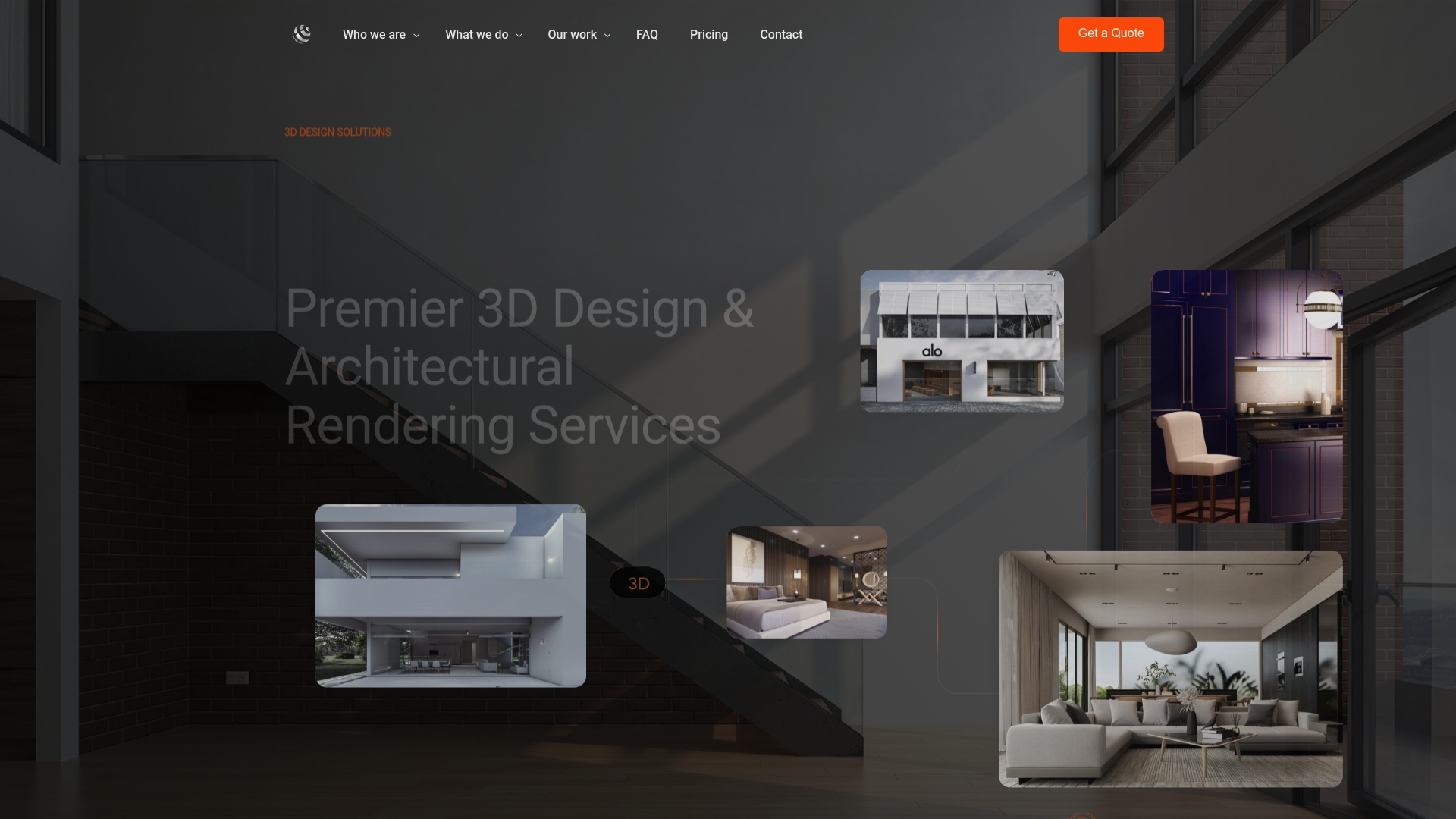
Take the next step to enhance your design storytelling and impress stakeholders today. Visit Rendimension to explore how our expert team can turn your vision into unforgettable visual experiences.
Frequently Asked Questions
What is detailed 3D modeling, and why is it important for architects and designers?
Detailed 3D modeling involves creating precise digital representations of designs, which helps in visualizing concepts clearly. Start using advanced 3D modeling software to improve dimensional accuracy and visual communication in your projects.
How can photorealistic rendering enhance client presentations?
Photorealistic rendering creates lifelike images that simulate light and materials, making concepts more relatable for clients. Focus on mastering material properties and lighting techniques to enhance the emotional impact of your visual presentations.
What are the benefits of using real-time rendering in design?
Real-time rendering provides instant visual feedback, allowing for immediate design changes without lengthy processing times. Use this technology to drastically reduce design iteration times and improve client interaction during presentations.
How does virtual reality change the way clients experience design concepts?
Virtual reality offers immersive experiences where clients can explore designs in 3D, enhancing their spatial understanding. Implement VR technology in your presentations to provide dynamic, engaging walkthroughs of architectural projects.
What steps can I take to personalize product visualizations for clients?
Personalizing product visualizations involves understanding clients’ preferences and tailoring presentations to meet their specific needs. Conduct thorough client interviews and adjust your visualization style based on their feedback to create more resonant design discussions.
How can I integrate 360-degree product views into my presentations?
Integrating 360-degree product views allows clients to explore designs comprehensively from all angles. Use high-resolution imaging and intuitive controls to create engaging interactions that enhance your overall presentation impact.
Recommended
- 7 Essential Architectural Visualization Examples For Pitch Success
- 7 Types Of Architectural Renderings For Better Project Success
- 7 Essential Types Of 3D Visualization For Architects
- What Is Product Visualization: Elevating Client Presentations
- 7 Essential Types of Architectural Blueprints Explained – FloridaLicensedEngineers.com
