Bold design proposals often lose impact when clients struggle to picture the finished space. For North American architects and developers, the shift toward photorealistic visualizations offers not just artistic flair but a practical advantage in selling ideas. By bridging the gap between abstract plans and client understanding, these lifelike images make presentations clear, compelling, and universally accessible. Discover how photorealistic renderings capture the precise way light interacts with surfaces, how textures feel, and how spaces will actually appear to someone standing in them, helping you move projects forward with confidence.
Table of Contents
- Defining Photorealism In Architectural Design
- Core Types Of Photorealistic Visualization
- Photorealism’s Impact On Client Engagement
- Key Advantages For Decision-Making And Marketing
- Cost Implications And Common Pitfalls
Key Takeaways
| Point | Details |
|---|---|
| Importance of Photorealism | Photorealistic visualizations provide an accurate representation of designs, crucial for client understanding and decision making. |
| Types of Visualization | Different formats like still renderings, 360-degree panoramas, and VR experiences cater to various stakeholder needs and enhance engagement. |
| Impact on Client Engagement | Utilizing photorealistic renderings fosters trust, transforms discussions into actionable decisions, and enhances client satisfaction. |
| Cost Considerations | Understanding the investment needed for quality visualizations prevents budgeting issues and aligns expectations for project outcomes. |
Defining Photorealism in Architectural Design
Photorealism in architecture means creating images that look exactly like photographs taken of a completed building. When clients see your design, they’re viewing a visualization so accurate that lighting, materials, shadows, and spatial relationships match reality. This goes beyond simple 3D models or sketches. Photorealistic renderings capture the precise way light interacts with surfaces, how textures feel, and how spaces will actually appear to someone standing in them.
The power of photorealism lies in bridging the gap between abstract architectural plans and human understanding. Traditional orthogonal projections and floor plans communicate technical information brilliantly to other architects, but they mean little to clients, investors, or city officials who haven’t spent years reading blueprints. Photorealistic perspective images transform these abstract representations into comprehensible, lifelike illustrations that anyone can grasp instantly. A client looking at a photorealistic rendering doesn’t need architectural training to visualize how their office, apartment, or retail space will function in the real world.
What makes photorealism different from other visualization methods is precision and intent. Photorealistic architectural visualization involves producing images that mimic photographic documents, establishing it as the standard for presenting projects to stakeholders. This isn’t casual artwork or approximate imagery. Every element matters: the warmth of sunlight at 3 PM, the reflection in glass facades, the weathering on stone, the way landscaping frames the entrance. When you’re investing millions in construction, stakeholders deserve visuals that show exactly what they’re paying for, not approximations or artistic interpretations. Photorealism has become integral to how architects think about and present their work, functioning as a core working method in modern digital design workflows rather than simply a marketing afterthought.
Pro tip: When requesting photorealistic renderings, specify the exact time of day, weather conditions, and viewing angles that matter most to your project’s marketing strategy or design validation. This precision ensures the visualization addresses your specific stakeholder concerns rather than generic presentation defaults.
Core Types of Photorealistic Visualization
Photorealistic visualization comes in several distinct formats, each serving different project needs and stakeholder expectations. Understanding these types helps you choose the right approach for your specific presentation goals. The main categories include still renderings, 360-degree panoramas, walkthroughs, and virtual reality experiences. Each type communicates different aspects of your design, from static moments to immersive spatial navigation.
Still renderings are the foundational type and the most commonly requested visualization format. These single, high-resolution images capture a specific moment in time, showing your design from a particular viewpoint with controlled lighting and weather conditions. A still rendering might show your office building at sunset with specific furniture placement, or a residential development on a sunny morning with landscaping in full detail. These work exceptionally well for marketing materials, permits, investor presentations, and billboard advertising because they’re easy to distribute and immediately compelling. A skilled visualization team can produce variations of the same scene from multiple angles, giving stakeholders several perspectives without the cost of creating entirely different projects.

360-degree panoramas and interactive walkthroughs add a layer of engagement that still images cannot provide. Panoramas let viewers rotate and look around a complete environment, feeling present in the space rather than viewing it from a fixed camera angle. Walkthroughs go further by allowing movement through the design, navigating between rooms, walking down corridors, or traveling through landscapes. These formats work brilliantly for real estate marketing, architectural presentations to clients who haven’t visited the site, and design reviews where stakeholders need to understand spatial flow and connections. How 3D rendering transforms architecture increasingly relies on these interactive formats to create meaningful engagement with potential buyers and decision-makers.
Virtual reality and immersive experiences represent the cutting edge of photorealistic visualization. VR allows stakeholders to stand inside your design, walk through spaces, and experience proportions and spatial relationships with their entire body, not just their eyes. This level of immersion catches design issues early, helps investors truly grasp the project’s scale, and dramatically increases client confidence in the vision. For North American developers working on significant residential or commercial projects, VR walkthroughs have become a distinguishing factor in competitive pitches.
Pro tip: Start with still renderings from your project’s most compelling angles to build initial investor interest, then expand to panoramas or walkthroughs once stakeholders are engaged and want to explore the design in greater depth.
Here is a comparison of photorealistic visualization formats and their business impact:
| Visualization Format | Engagement Level | Typical Use Case | Impact on Stakeholders |
|---|---|---|---|
| Still Rendering | Moderate | Marketing, Permits | Speedy initial approval |
| 360° Panorama | High | Real Estate Tours | Improved spatial grasp |
| Walkthrough | Very High | Client Presentations | Deeper design feedback |
| Virtual Reality | Maximum | Investor Pitches | Strong emotional buy-in |
Photorealism’s Impact on Client Engagement
When clients see a photorealistic rendering for the first time, something shifts in the conversation. Suddenly they’re not trying to decode abstract floor plans or imagine what materials will look like under natural light. They’re seeing their project as it will actually exist. This clarity transforms the client relationship from conceptual discussions into concrete decision-making conversations. Clients who previously felt uncertain about design choices now have tangible visual evidence to evaluate, which dramatically changes their confidence level and involvement throughout the entire process.
Photorealistic rendering enhances design communication by offering stakeholders clear, detailed previews that allow them to grasp spatial relationships, material selections, and lighting conditions without guesswork. This level of clarity fosters better-informed decision-making because clients can see exactly how their office will function, how natural light will move through spaces at different times of day, and how materials interact with the architecture. Instead of asking “Will this feel cramped?” or “What color will those stone walls really be?” clients can see the answers visually. This reduces the gap between expectation and reality, which means fewer costly change orders after construction begins and fewer surprises that undermine client satisfaction.
The trust factor cannot be overstated. When you present a photorealistic rendering alongside your design rationale, you’re demonstrating expertise, attention to detail, and confidence in your vision. Clients recognize that creating accurate visualizations requires skill and investment. They see a team that cares enough about the project to show them exactly what they’re paying for, rather than handing them sketches and asking them to believe in the vision. This psychological shift increases client buy-in at critical decision points. Investors viewing photorealistic renderings move faster through approval processes because they can assess market appeal immediately. Real estate brokers can market properties more effectively with accurate visuals rather than generic descriptions.
Beyond initial approval, photorealistic visualizations keep clients engaged throughout design development and construction phases. They provide a reference standard against which progress can be measured. When construction begins and stakeholders compare the photorealistic rendering to the actual building taking shape, they feel confident that their investment matches the vision they approved.
Pro tip: Include photorealistic renderings at every major presentation milestone, not just the final design phase; this builds client confidence incrementally and prevents surprises when the project approaches completion.
Key Advantages for Decision-Making and Marketing
Photorealistic visualizations give you a powerful tool for making smarter design decisions before construction ever begins. Instead of debating whether a layout works or how materials will perform together, you can actually see the results. Photorealistic visualization supports iterative design exploration, allowing you to assess different design options and optimize project outcomes efficiently. You might discover that a particular material choice clashes with natural light patterns, or that a space feels smaller than expected from floor plans alone. These insights emerge from visual analysis rather than abstract speculation. Architects can test multiple design iterations, compare material palettes side by side, and evaluate how structural elements interact with surrounding spaces. This ability to rapidly prototype ideas visually accelerates the design refinement process and reduces costly mistakes that would otherwise surface during construction.
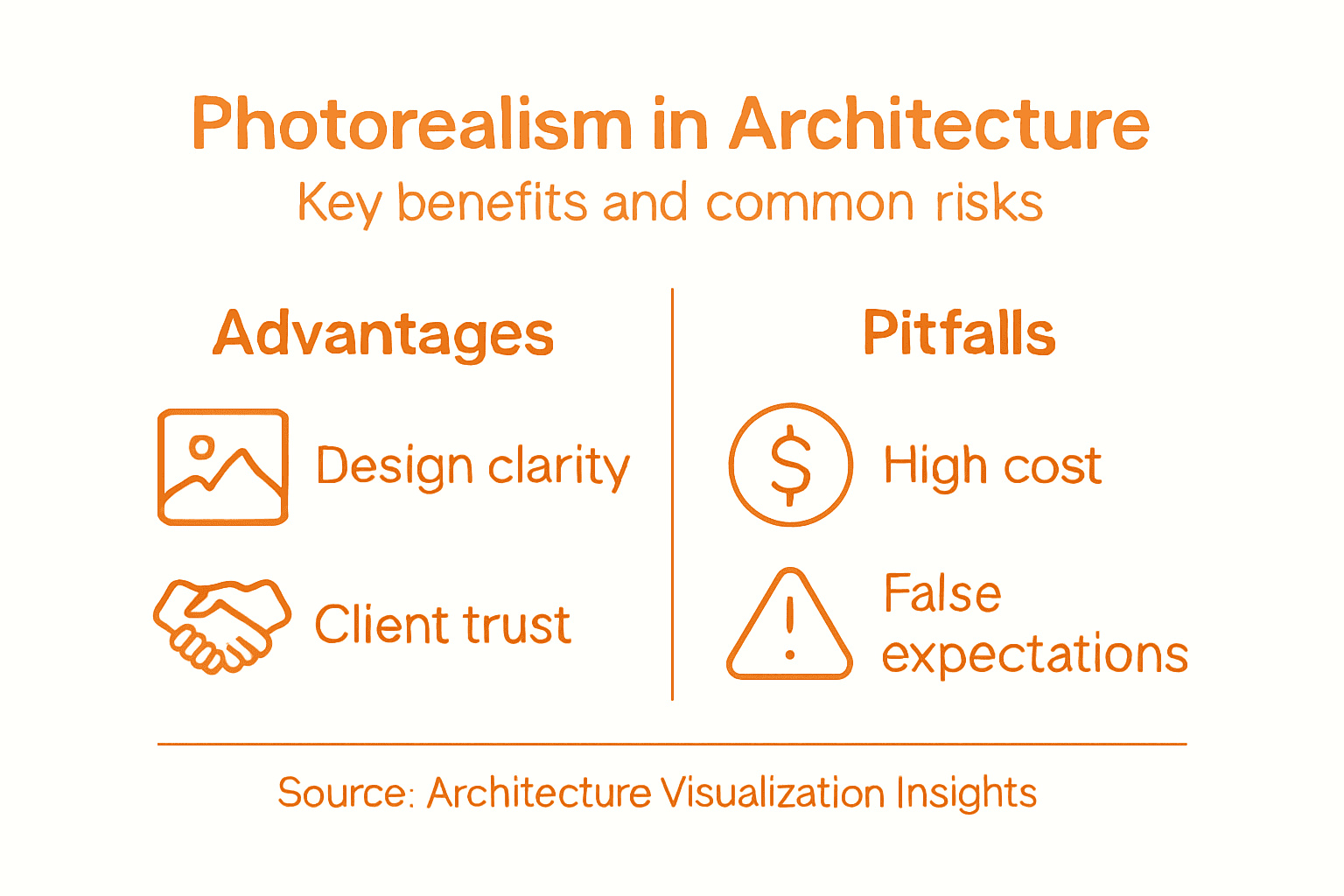
The marketing advantages are equally compelling. A photorealistic rendering is inherently more persuasive than any written description or basic 3D model. When you’re competing for investor funding, pre-sales in a residential development, or commercial tenant commitments, compelling visuals matter enormously. Real estate professionals know that quality imagery directly correlates with inquiry rates and conversion speeds. A photorealistic rendering showcasing your project’s best features provides an immediate competitive edge in a crowded marketplace. Potential buyers or investors form emotional connections to spaces they can visualize clearly. They imagine themselves working in the office, dining in the restaurant, or walking through the lobby. This emotional engagement drives purchasing decisions far more effectively than floor plans ever could.
Market timing also shifts when you have photorealistic assets ready. You can launch marketing campaigns months before groundbreaking, building momentum and securing commitments that fund construction. Projects with compelling visual previews attract media attention and social media engagement. Your renderings become content that brokers, developers, and agents share across their networks, extending your reach exponentially. For North American developments, where pre-sales and investor confidence significantly impact project feasibility, photorealistic visualizations often determine whether a project gets greenlit or stalls.
Beyond individual projects, these visualizations establish your firm’s reputation for design excellence. Clients remember strong visual presentations. When architects consistently deliver compelling renderings alongside their designs, they position themselves as design leaders in their market. This reputation advantage translates into higher fees, easier client acquisition, and more selective project selection.
Pro tip: Create multiple rendering variations highlighting different project selling points, such as amenity spaces, street level experience, and interior environments, then tailor which renderings you emphasize based on your specific audience’s priorities.
Cost Implications and Common Pitfalls
Photorealistic visualizations are an investment, and understanding the cost structure upfront prevents budgeting surprises. A single high-quality still rendering typically ranges from $2,500 to $8,000 depending on complexity, scene detail, and revision rounds. Interactive walkthroughs cost significantly more, often between $15,000 and $50,000 for a medium-sized project. Virtual reality experiences can exceed $60,000. These figures matter because many architects initially underestimate visualization budgets, then face difficult conversations when they realize quality comes at a price. The key is treating photorealistic rendering as a strategic investment that directly impacts your ability to secure clients, win approvals, and accelerate sales timelines. A $5,000 rendering that closes a $20 million development deal pays for itself immediately.
The bigger pitfall happens when clients develop unrealistic expectations about what renderings represent. A photorealistic image shows one perfect moment under ideal lighting conditions. It doesn’t necessarily represent how the space will look at 2 PM on an overcast Tuesday, or how it will function during peak occupancy. AI and rendering software are evolving in photorealistic architectural visualization, potentially reducing costs and production time, but improper use or unrealistic expectations remain common challenges. Clients sometimes see a flawlessly rendered interior and then are surprised when the actual space includes construction tolerances, real-world wear, or unforeseen site conditions. This disconnect damages trust. Set clear expectations from the beginning by explaining what your rendering shows and what it doesn’t. Discuss that renderings represent the design intent under optimal conditions, not a guarantee of how every angle and moment will appear in reality.
Another frequent mistake is requesting too many revisions without clear parameters. Each revision adds hours of work, which means additional costs. Define revision limits in your initial scope. Specify exactly how many rounds of changes are included, and what constitutes a new revision versus a minor adjustment. Vague revision policies lead to scope creep that frustrates visualization teams and inflates your costs.
Timing also matters significantly. Requesting renderings too late in the design process means you can’t use them to inform major decisions. Requesting them too early wastes money on visualizations of designs that will change substantially. Integrate photorealistic visualization planning into your project timeline from the start, allocating specific design milestones where renderings add the most value.
Pro tip: Build photorealistic rendering into your project budget and schedule early, and clearly document what revisions are included in your contracted scope to avoid unexpected cost increases and scope creep.
The table below summarizes common pitfalls and best practices in photorealistic rendering projects:
| Issue | Risk for Project | Solution | Long-term Benefit |
|---|---|---|---|
| Budget Underestimate | Cost overruns | Early cost planning | Predictable expenses |
| Unrealistic Expectations | Disappointed clients | Clarify deliverables | Higher client trust |
| Excessive Revisions | Delayed delivery | Define revision rounds | Efficient workflow |
| Poor Timing | Missed opportunities | Align with design milestones | Enabled decision-making |
Unlock the Full Potential of Photorealistic Architectural Visualization with Rendimension
Photorealism in architectural design bridges the gap between complex blueprints and clear client understanding by delivering lifelike images that reveal exactly how a project will look and feel. If you struggle with communicating your vision or engaging stakeholders effectively, Rendimension offers powerful solutions tailored to your needs. Our expertise in high-quality 3D renderings, immersive walkthroughs, and virtual reality experiences ensures that every lighting nuance, material texture, and spatial detail matches your design intent with perfect precision.
Experience firsthand how professional photorealistic visualizations transform client confidence and accelerate decision-making. Visit Rendimension to explore how our architectural visualization services create compelling, realistic previews that reduce costly revisions and maximize marketing impact. Whether you need detailed still renderings or interactive virtual reality presentations, take the next step today and bring your architectural concepts to life with Rendimension’s expert 3D solutions.
Frequently Asked Questions
What is photorealism in architectural visualization?
Photorealism in architectural visualization refers to creating images of designs that closely resemble actual photographs of finished buildings. This approach captures accurate lighting, materials, shadows, and spatial relationships, allowing clients and stakeholders to visualize a project as it will exist in reality.
How does photorealism improve client engagement in design projects?
Photorealism enhances client engagement by providing clear, detailed visual representations that clarify spatial relationships and material choices. This clarity helps clients make informed decisions, boosting their confidence and satisfaction throughout the design process.
What types of photorealistic visualization formats are available?
There are several types of photorealistic visualization formats, including still renderings, 360-degree panoramas, interactive walkthroughs, and virtual reality experiences. Each format serves different purposes, from providing static views to immersive experiences that enhance spatial understanding.
What are the cost implications of photorealistic renderings?
The cost of photorealistic renderings varies significantly based on complexity and type. Still renderings typically range from $2,500 to $8,000, while interactive walkthroughs and virtual reality experiences can cost significantly more, ranging from $15,000 to over $60,000. It’s important to budget appropriately to avoid unexpected expenses.
Recommended
- Transform Architecture With Advanced 3D Rendering : Rendimension
- Future Of 3D Rendering | Trends & Innovations – Rendimension
- 3D Rendering – Rendimension
- Architectural Rendering Services Near Me Insights – Rendimension
- Architectural photography tips – Amateur Photographer Guide

2 thoughts on “Role of Photorealism in Architecture Visualization”