Standing out in a crowded real estate market demands more than polished floor plans or glossy brochures. Today’s North American buyers expect to see not just what a property is, but how it lives, feels, and transforms the surrounding community. Architectural visualization bridges this gap by transforming design ideas into photorealistic images and immersive experiences, helping developers turn abstract concepts into concrete buyer confidence and increased sales.
Table of Contents
- What Is Architectural Visualization in Real Estate
- Key Types of Visualization Tools and Methods
- How Visualization Enhances Buyer Decision-Making
- Accelerating Sales With Immersive Marketing Media
- Common Pitfalls When Using Visualization Solutions
Key Takeaways
| Point | Details |
|---|---|
| Architectural Visualization Enhances Understanding | Transforming design concepts into photorealistic images allows buyers to visualize properties, increasing clarity and confidence in pre-construction sales. |
| Diverse Visualization Tools Meet Buyer Needs | Different visualization methods, such as static renderings, animations, VR, and AR, serve various purposes throughout the project lifecycle, enhancing buyer engagement. |
| Emotional Connection Drives Sales | Immersive experiences create emotional investment and reduce purchase anxiety, leading to quicker decision-making and higher conversion rates. |
| Avoid Common Visualization Pitfalls | Misleading images and outdated visualizations can damage buyer trust; maintain realistic representation and keep materials updated to ensure credibility. |
What Is Architectural Visualization in Real Estate
Architectural visualization transforms design concepts into photorealistic images and interactive experiences that allow buyers, investors, and stakeholders to see projects before they exist. Unlike traditional 2D floor plans or sketches, these visual representations bring properties to life through three-dimensional modeling, accurate lighting, realistic materials, and immersive perspectives. For real estate developers in North America, this means the ability to showcase your vision with stunning clarity, whether you’re presenting to lenders, marketing to potential buyers, or securing investor approval.
[Architectural rendering] creates images and animations showing buildings from concept through completion, allowing audiences to understand both aesthetic qualities and technical specifications. The process involves sophisticated 3D modeling software that replicates how light interacts with surfaces, how materials age and reflect, and how spaces feel when occupied. Renderings come in multiple formats to suit different needs and audiences. Still images provide polished marketing materials for websites, brochures, and advertisements. Animations and walkthroughs let viewers experience movement through spaces, revealing how rooms connect and how natural light changes throughout the day. Interactive VR experiences take engagement further by allowing potential buyers to explore properties at their own pace, examining details from any angle they choose.
What makes visualization particularly powerful for your sales process is its ability to bridge the gap between imagination and reality. When you’re selling pre-construction properties, raw land, or conceptual designs, buyers struggle to envision the finished product. They see concrete foundations and steel frames, not the elegant finishes, inviting layouts, or carefully designed outdoor spaces. Visualization solves this problem by showing exactly what will be built, eliminating uncertainty and hesitation. [Building Information Modeling combined with AR and VR technology] enhances this further by enabling immersive interaction with building models, improving communication among all stakeholders during the entire project lifecycle. Developers can demonstrate how designs solve real problems, showcase premium finishes, highlight neighborhood context, and communicate the complete lifestyle experience your project offers.
Architectural visualization serves multiple purposes throughout your sales cycle. Early-stage renderings help secure financing by demonstrating project viability and appeal to potential lenders. Marketing renderings attract qualified buyers and differentiate your projects from competitors. Presentation renderings convince investors and boards that your vision aligns with market demand. For complex mixed-use developments or large residential communities, visualization helps people understand how different components work together and how the finished project will transform the area. The ability to show different design options, material palettes, and configurations allows buyers to visualize personalization possibilities, increasing emotional investment in their purchase decision.
Pro tip: Start with high-quality exterior renderings for your marketing materials and website, as these create the critical first impression that determines whether potential buyers will explore further—invest in images that show your property in its best light, ideally during golden hour with realistic landscaping and street-level context that helps viewers imagine themselves in the space.
Key Types of Visualization Tools and Methods
Real estate developers have multiple visualization approaches to choose from, each serving different purposes at different stages of your project lifecycle. The tools available today range from straightforward static renderings to fully immersive virtual reality experiences that let potential buyers explore properties as if they were physically present. Understanding which method works best for your specific project, timeline, and target audience is crucial for maximizing marketing impact and accelerating sales cycles.
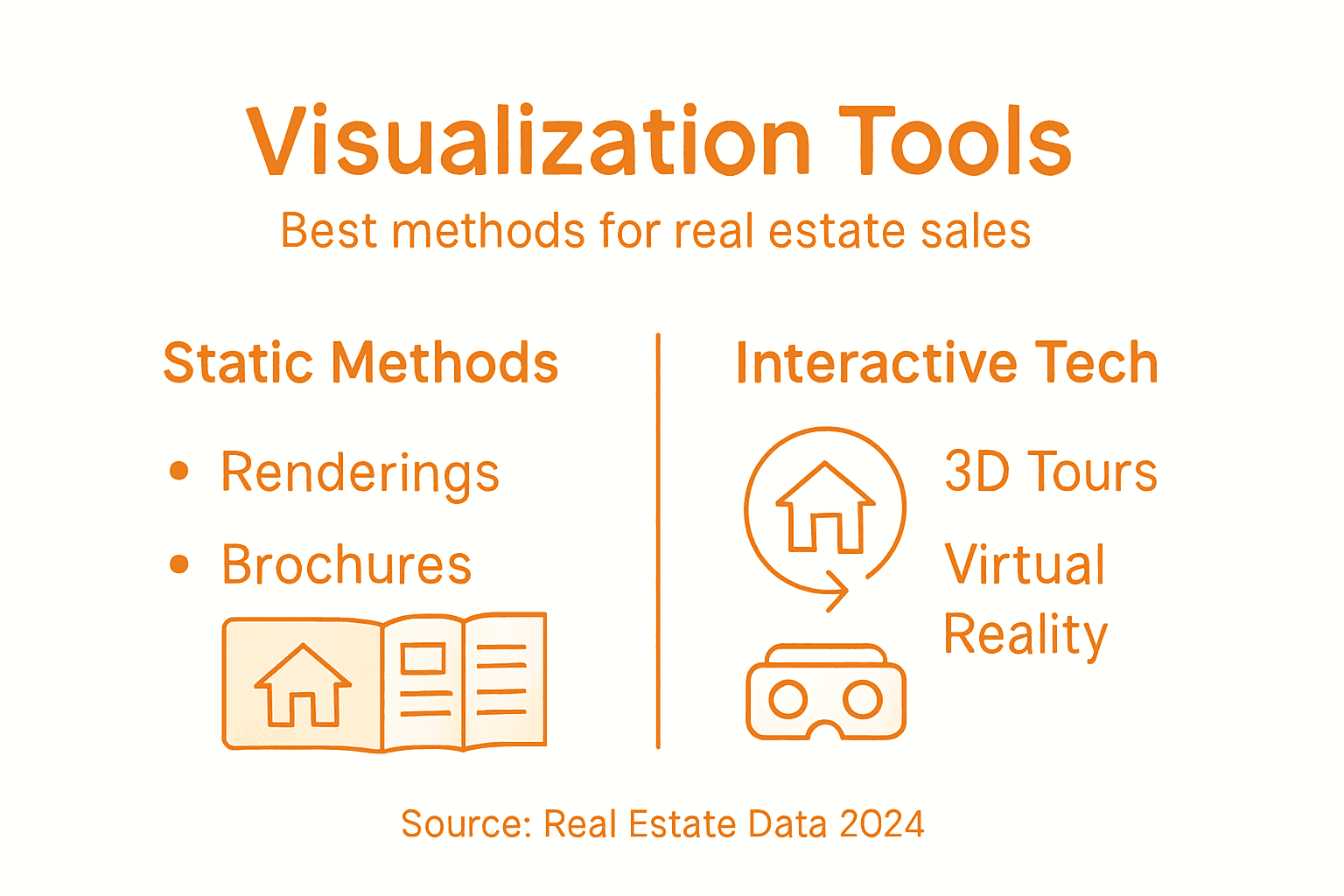
Static renderings form the foundation of most marketing campaigns and remain incredibly effective for initial buyer engagement. These are photorealistic still images created using advanced 3D modeling software that accurately simulates how light behaves on surfaces, how materials reflect and absorb light, and how shadows fall at specific times of day. You might use static renderings for your website hero images, social media advertising, printed brochures, or presentation decks. They work beautifully because they’re polished, controllable, and don’t require viewers to interact with anything. A single stunning exterior rendering can drive significant traffic to your listing page. Animations and walkthroughs take this further by introducing movement through space. These videos show how buyers will navigate through your property, revealing the flow between rooms, the quality of finishes, how natural light enters at different times, and the relationship between interior and exterior spaces. An animated walkthrough of a residential unit, for example, might start outside the building, move through the lobby, travel up an elevator, and pan through the fully furnished apartment. This creates emotional connection in a way static images simply cannot achieve.
[VR technology serves distinct purposes during design and construction phases], with immersive exploration dominating early design stages where stakeholders need to evaluate spatial relationships and design choices. Virtual reality experiences represent the most advanced option available and create unparalleled buyer engagement. When someone puts on a VR headset and enters your property, they’re not just viewing images on a screen—they’re experiencing the space from a first-person perspective, walking through rooms at their own pace, examining details up close, and developing genuine spatial understanding. For North American real estate, VR experiences work particularly well for luxury developments, large commercial properties, or complex mixed-use projects where the design is difficult to convey through traditional means. [Building Information Modeling combined with AR technology] also bridges the gap between visualization and physical construction, allowing teams to overlay digital models onto real-world construction sites for quality verification and real-time decision making.
Augmented reality creates another powerful option by layering digital elements onto real-world views through smartphone or tablet cameras. Instead of viewing a property on its own, buyers see the finished project superimposed onto the actual location, helping them understand how your development will relate to existing surroundings, street-level activity, and neighborhood context. This proves especially valuable for urban developments where streetscape presence matters enormously. The method you choose depends on your project stage, budget, and audience. Pre-construction projects benefit from complete VR walkthroughs and high-quality static renderings. Under-construction properties perform well with site documentation combined with AR overlays showing the completed vision. Finished developments can leverage interactive 3D models that let online shoppers explore floor plans and customize finishes.
Here’s an overview comparing common architectural visualization methods and their main applications in real estate:
| Visualization Method | Best Use Case | Level of Buyer Engagement | Technical Requirements |
|---|---|---|---|
| Static Renderings | Website, brochures, ads | Low, visual only | Basic computer/smartphone |
| Animations/Walkthroughs | Presentations, online tours | Medium, spatial flow | Video-compatible device |
| VR Experiences | Luxury, complex projects | High, immersive | VR headset, fast computer |
| Augmented Reality | Urban/infill sites | Medium, context overlay | Smartphone/tablet camera |
Matching Tools to Your Marketing Timeline
Early in your project lifecycle, invest in comprehensive static renderings and conceptual animations. These tools help secure financing and attract initial interest with relatively faster turnaround times than full VR experiences. As you move toward launch, introduce interactive elements and VR experiences to drive qualified buyer traffic and increase conversion rates. During the sales phase, leverage all available formats to accommodate different buyer preferences and engagement styles.
Pro tip: Develop your visualization strategy around buyer journey stages—use stunning static renders and preview videos for awareness and interest stages, then reserve immersive VR experiences for serious buyers during consideration and decision stages, ensuring you maximize impact while controlling production costs.
How Visualization Enhances Buyer Decision-Making
Buyers making real estate decisions face a fundamental challenge: they must commit significant capital to something they cannot fully experience until after purchase. This uncertainty creates friction in the sales process, extends decision timelines, and increases buyer anxiety. Architectural visualization eliminates this friction by transforming abstract concepts and incomplete construction sites into vivid, interactive representations that buyers can genuinely understand. When prospective purchasers can visualize exactly what they’re buying—from the spatial flow of rooms to the quality of finishes to how natural light fills the space—they move through the decision journey faster and with greater confidence.

The psychological impact of visualization on purchasing behavior is substantial. [Immersive visualization using BIM combined with AR and VR] significantly enhances decision-making by providing realistic, interactive representations that allow buyers to explore spatial layouts and design details before construction even begins. When a buyer can virtually walk through a luxury penthouse, examine how the kitchen flows into the living space, and see how afternoon light transforms the primary bedroom, they develop genuine emotional connection to the property. This emotional engagement drives purchase intent far more effectively than reading floor plans or viewing exterior photos. For pre-construction properties especially, visualization reduces perceived risk. Buyers no longer wonder if the developer’s promises match reality—they can see the reality themselves. They understand the exact size of rooms, how windows and doors are positioned, what views they’ll have, and how their future space will function. This eliminates surprises after purchase and reduces post-purchase regret.
Visualization also accelerates the comparison process that buyers naturally conduct. When shopping for residential units in a high-rise development, buyers can quickly explore multiple floor plans, unit configurations, and finishes packages through interactive 3D models. They can customize virtual spaces to see how their furniture might fit, whether they prefer corner units versus mid-line units, or how different finishes palettes affect the overall ambiance. For commercial properties, decision-makers can evaluate how office layouts support workflow, how conference rooms and collaboration spaces function, and how natural light impacts productivity. This ability to rapidly evaluate options and modifications means buyers can make informed decisions rather than guessing. Research confirms that [bridging the gap between abstract design concepts and tangible reality] through visualization facilitates better understanding and confidence in purchase decisions. Buyers who have thoroughly explored a property through immersive experiences are more likely to proceed with purchases and less likely to experience buyer’s remorse.
Beyond emotional and psychological factors, visualization provides practical decision-making support. Buyers can understand neighborhood context by seeing how your property relates to surrounding buildings, streets, and amenities. They can evaluate parking, pedestrian access, and how the development transforms the streetscape. For residential communities, visualization reveals how different home types relate to shared amenities, landscaping, and common areas. For mixed-use developments, buyers can understand the complete ecosystem—how residential, retail, and office components integrate and benefit each other. This comprehensive understanding reduces uncertainty and builds conviction.
The Conversion Impact
Developers who provide rich, interactive visualization experiences see measurable improvements in sales metrics. Properties with comprehensive virtual tours and VR experiences typically see higher online engagement, more qualified showings, and faster sales cycles compared to properties marketed with traditional images alone. Buyers spend more time exploring properties when immersive visualization is available, and this extended engagement correlates directly with purchase intent.
Pro tip: Include customization visualizations in your marketing materials—show potential buyers how their unit could look with different finishes, furniture layouts, and design preferences to increase emotional ownership and purchasing confidence before they’ve committed.
Accelerating Sales With Immersive Marketing Media
Traditional real estate marketing relies on static photographs, written descriptions, and floor plans to convey property features. While these tools remain useful, they create a significant gap between what buyers imagine and what they ultimately experience. Immersive marketing media closes this gap by allowing potential buyers to explore properties in vivid, interactive environments from anywhere, at any time. This accessibility combined with engagement power fundamentally changes how quickly properties move from listing to sale.
[3D virtual tours have gained significant popularity in real estate] by allowing potential buyers to walk through properties digitally, creating experiences that supplement traditional marketing efforts. When a buyer can virtually navigate through a property at their own pace, examining finishes, room sizes, and spatial relationships without scheduling a showing, they arrive at in-person viewings far more informed and committed. This pre-qualification effect means your sales team spends time with genuinely interested buyers rather than curious shoppers. The conversion impact is measurable. Properties marketed with immersive visualization experiences see faster sales cycles, higher offer quality, and increased buyer confidence throughout the negotiation process. For North American developers, this translates directly to reduced holding costs, faster project completion, and improved profitability. Additionally, immersive technologies such as AR, VR, and mixed reality enable personalized and memorable consumer experiences that significantly enhance visualization and emotional connection with properties, directly increasing sales effectiveness.
The accessibility advantage cannot be overstated. In traditional marketing, interested buyers must coordinate schedules, arrange transportation, and spend hours visiting properties. This friction eliminates many otherwise qualified buyers who lack time or geographic proximity. With immersive digital experiences, a buyer in Toronto can explore your Miami development at midnight. An institutional investor in San Francisco can thoroughly evaluate a commercial property in Vancouver without flying. Busy professionals can preview multiple projects in an evening. This expanded reach transforms your addressable market from local or regional to genuinely national or international. You attract buyers you would never have met through traditional showings. For pre-construction or under-construction properties, immersive media becomes even more critical. Without visualization, buyers struggle to envision completed projects from bare land or concrete frames. They cannot understand how finishes will transform spaces or how natural light will function. Visualization eliminates this gap entirely, allowing you to market with confidence from the earliest stages.
Converting Viewers Into Buyers
Immersive experiences dramatically increase engagement metrics that correlate with purchase intent. Buyers spend significantly more time exploring properties through interactive 3D models and virtual walkthroughs than viewing traditional photo galleries. This extended engagement signals genuine interest and creates more touchpoints for emotional connection to develop. Each additional minute spent exploring a property increases the likelihood of purchase. When marketing teams track which features receive the most viewing attention in immersive experiences, they gain valuable insights into buyer priorities, allowing them to adjust marketing messaging and emphasize features that resonate most strongly.
The personalization aspect transforms passive browsing into active decision-making. Buyers can customize visualizations to match their preferences, from finishes packages to furniture layouts to landscape designs. This interactive element creates psychological ownership before purchase, reducing post-purchase regret and increasing satisfaction. Buyers feel they have personally designed their ideal space rather than accepting a predetermined offering. This sense of customization and control drives emotional investment in ways that passive viewing simply cannot achieve.
Pro tip: Prioritize 3D walkthroughs for your highest-value properties and primary market segments, while using 360-degree virtual tours for secondary properties to maximize marketing impact per development dollar spent.
Common Pitfalls When Using Visualization Solutions
Architectural visualization is a powerful marketing tool, but it comes with real risks when implemented poorly. Many developers launch visualization campaigns without thinking strategically about how visualizations fit into their overall marketing approach, resulting in wasted investment and missed sales opportunities. Understanding common mistakes helps you avoid expensive missteps and maximize return on your visualization investment. The difference between effective visualization and ineffective visualization often comes down to avoiding these predictable pitfalls.
One of the most significant mistakes is creating visualizations that misrepresent the actual finished product. This happens when renderings show overly idealized conditions that do not reflect reality. Imagine a buyer viewing a stunning exterior rendering showing a luxury residential tower gleaming in perfect sunlight with manicured landscaping and pristine surroundings, only to visit the actual site and discover construction nearby, less attractive neighboring buildings, or incomplete landscaping. The disconnect between visualization and reality damages trust and kills deals. [Overly idealized images can obscure practical construction challenges] and set expectations that final projects cannot meet. This does not mean your visualizations should be ugly or uninspiring. Rather, they should be honest. Show the property in excellent condition and lighting, but include realistic context. Show actual neighboring buildings, existing street conditions, and realistic landscaping maturity timelines. If construction is happening nearby, acknowledge it. If views are partially obstructed by other buildings, show that accurately. Buyers who understand the real property context before visiting are far more likely to proceed with purchases because they have not experienced disappointment.
Another critical pitfall involves using visualization without a coherent strategy across your entire project lifecycle. Many developers invest heavily in stunning renderings for initial marketing, then fail to provide updated visualizations as construction progresses. This creates confusion and undermines credibility. Buyers wonder why the project looks different from the original renderings and question whether developers are cutting corners. [Limited focus on individual explorations rather than holistic visualization strategies] reduces overall effectiveness and wastes your initial investment. Instead, develop a visualization roadmap. Use high-quality renderings for pre-sales and early marketing. As construction progresses, add photorealistic updates showing actual construction progress. Provide construction documentation and comparison visualizations that show how the project is tracking against original designs. For properties near completion, transition to photography of the actual finished product. This consistent approach builds confidence that your project will deliver on its promises.
Technology selection presents another minefield. Many developers adopt AR or VR experiences because they sound impressive without considering whether these tools actually serve their target buyers. A luxury residential project targeting busy executives might see better results from quick, accessible 360 virtual tours than from VR experiences requiring headsets and technical setup. A large mixed-use development might benefit tremendously from VR, while a single residential unit might not. Additionally, overshooting on visualization complexity creates accessibility issues. If your immersive experience requires cutting-edge technology or has high processing requirements, you exclude buyers using older devices or with slower internet connections. Conversely, undershooting means your visualizations look dated and fail to differentiate your project from competitors.
To help developers avoid common visualization risks, here is a summary of pitfalls and recommended solutions:
| Common Pitfall | Impact on Sales | Recommended Solution |
|---|---|---|
| Misleading images | Damaged buyer trust | Use realistic context and details |
| Outdated visualizations | Buyer confusion | Update materials after changes |
| Inaccessible technology | Lost potential buyers | Choose tools fit for audience |
| Poor image quality | Negative brand perception | Invest in professional rendering |
Additional Strategic Mistakes to Avoid
Failing to update visualizations after design changes creates major credibility issues. If you modify floor plans, finishes, or amenities after releasing visualizations, update all marketing materials immediately. Buyers who see outdated renderings feel misled, even if changes are minor improvements. Similarly, using low-quality renderings to save money backfires catastrophically. Poor quality visualizations signal poor quality construction to buyers. Invest in professional visualization that reflects the quality of your actual project.
Missing the context entirely represents another common error. Visualizations showing only individual units or rooms without showing how they fit into the broader development fail to tell the complete story. For residential communities, show how individual homes relate to common areas, schools, and neighborhood amenities. For commercial properties, show how office spaces connect to lobbies, parking, and street-level presence. Context makes projects meaningful to buyers.
Pro tip: Create a visualization update schedule that aligns with your project timeline—release initial renderings for pre-sales, update visualizations quarterly as construction progresses with actual site photography, and transition to finished photography six months before completion to maintain buyer confidence and reduce post-purchase surprises.
Elevate Your Real Estate Sales with Expert Architectural Visualization
The article highlights the challenges real estate developers face when buyers cannot fully envision unfinished projects or conceptual designs. Common pain points include buyer hesitation, extended decision timelines, and trust issues due to unrealistic or incomplete visuals. Key concepts like photorealistic renderings, immersive VR experiences, and augmented reality are emphasized as transformative tools that bridge the gap between imagination and reality, accelerating buyer confidence and engagement.
At Rendimension, we understand these challenges and deliver tailored architectural visualization solutions that align perfectly with your project’s sales goals. Our high-quality 3D renderings, interactive walkthroughs, and virtual reality experiences help you showcase your developments with stunning realism and immersive detail. By partnering with us, you ensure your marketing materials not only captivate but also build trust and emotional connection with your buyers. Explore how our professional services can transform your sales cycle and reduce uncertainty by visiting Rendimension’s architectural visualization services.
Ready to turn your vision into a compelling visual story that drives sales?
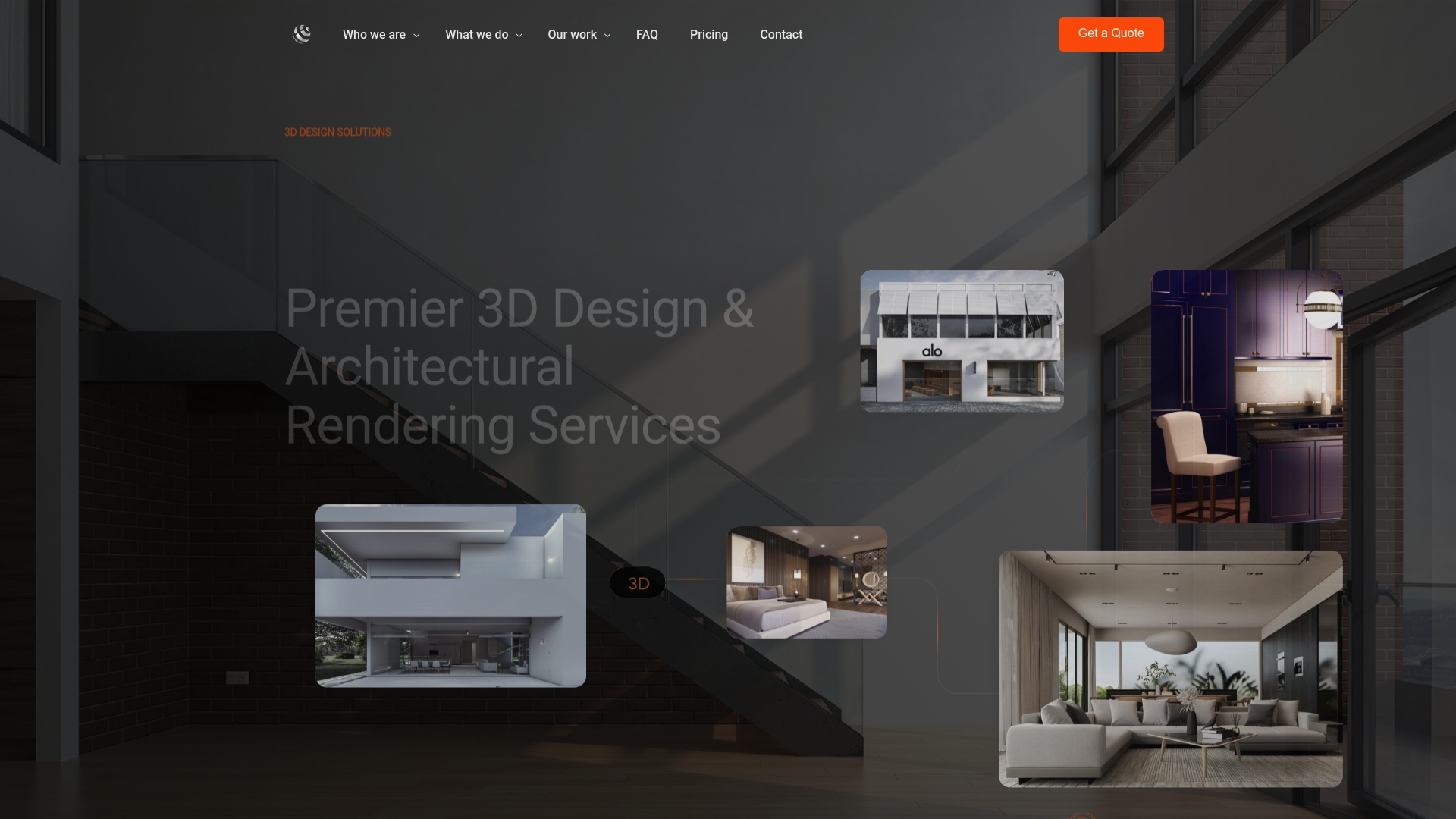
Discover the difference that precision, quality, and collaboration make for your real estate project. Visit Rendimension today and start creating immersive visual experiences that accelerate decision-making and solidify buyer confidence. Your next successful sale begins with a clear and captivating visual presentation.
Frequently Asked Questions
What is architectural visualization in real estate?
Architectural visualization is the process of creating photorealistic images and interactive experiences that represent design concepts, allowing potential buyers and investors to envision properties before they are built.
How does visualization enhance buyer decision-making?
Visualization helps buyers overcome uncertainty by providing realistic representations of properties, allowing them to explore layouts and finishes, which fosters confidence in their purchasing decisions.
What types of visualization methods are available for real estate?
Common methods include static renderings, animations/walkthroughs, virtual reality experiences, and augmented reality, each serving different purposes and levels of buyer engagement throughout the project lifecycle.
How can developers effectively use visualization in their marketing strategy?
Developers should create a visualization roadmap that includes high-quality renderings for early marketing, regular updates during construction, and transitioning to finished photography as the project nears completion to maintain buyer interest and confidence.
Recommended
- 3D Walkthroughs Real Estate Agents – Rendimension
- Transform Architecture With Advanced 3D Rendering : Rendimension
- 360 Virtual Tours – Rendimension
- How To Find The Best Architectural Rendering Services
Article generated by BabyLoveGrowth

One thought on “Why Architectural Visualization Drives Real Estate Sales”