Trying to communicate your architectural vision can often feel frustrating and overwhelming for both professionals and clients. Static blueprints or rough sketches rarely capture the true potential of a space or the impact of thoughtful design. Even small misunderstandings can lead to costly mistakes or missed opportunities to make a lasting impression.
The latest research reveals that smart visualization strategies truly make a difference. For example, the University of Texas at Arlington found that strong curb appeal can increase home sale prices by about 7 percent, underlining just how much exterior presentation matters. Throughout every stage of design, photorealistic renderings, interior visualizations, and interactive walkthroughs offer straightforward ways to clarify ideas, reduce confusion, and add tangible market value.
Get ready to discover proven visualization techniques that will help you present your projects with confidence, impress clients from the very first glance, and avoid common pitfalls. Each approach delivers actionable insights you can use right away to bring your next architectural project vividly to life.
Table of Contents
- Residential Exterior Rendering For Curb Appeal
- Interior Visualization For Layout Communication
- Aerial Views To Showcase Master Planning
- 3D Walkthroughs For Immersive Client Experience
- Photorealistic Commercial Building Renderings
- Day And Night Lighting Visualization
- Virtual Reality For Interactive Project Review
Quick Summary
| Key Message | Explanation |
|---|---|
| 1. Enhance Curb Appeal | High-quality exterior renderings can increase home values by around 7% by attracting potential buyers effectively. |
| 2. Leverage 3D Walkthroughs | Dynamic 3D walkthroughs allow clients to explore designs interactively, improving understanding and emotional engagement with the space. |
| 3. Utilize Day and Night Visualizations | Capture how light interacts with materials at different times to communicate design nuances that static images cannot convey. |
| 4. Implement Virtual Reality | VR technology transforms project reviews into engaging, immersive experiences, helping reduce misunderstandings and foster collaboration. |
| 5. Highlight Contextual Integration | Incorporate environmental elements in visualizations to improve relatability and support stakeholders’ understanding of design intentions. |
1. Residential Exterior Rendering for Curb Appeal
Architectural exterior rendering transforms how potential homebuyers perceive a property’s potential, creating powerful first impressions that dramatically impact market value. By generating photorealistic visualizations, architects and real estate professionals can strategically showcase a home’s most compelling exterior features before construction even begins.
The importance of curb appeal cannot be overstated. According to research by University of Texas at Arlington, strong exterior presentations can increase home sale prices by approximately 7%. This statistic underscores the critical role that high quality architectural visualization plays in real estate marketing.
Residential exterior rendering allows professionals to highlight key design elements such as landscaping, architectural lines, material textures, and environmental integration. Modern 3D rendering techniques enable potential buyers to see precise color schemes, understand spatial relationships, and visualize how the property will look in its intended setting with remarkable accuracy.
Successful exterior renderings typically include several strategic visual components:
- Comprehensive Landscape Visualization: Showing mature trees, garden layouts, and outdoor living spaces
- Realistic Material Representation: Depicting precise textures of stonework, siding, roofing materials
- Lighting and Shadow Dynamics: Capturing natural light interactions throughout different times of day
- Contextual Environment Placement: Integrating the property realistically within its neighborhood setting
Pro Tip: Focus on creating renderings that tell a story about lifestyle and potential, not just architectural details by incorporating subtle human elements like a parked bicycle or well-maintained garden.
2. Interior Visualization for Layout Communication
Interior visualization represents a powerful communication tool that transforms abstract architectural concepts into tangible spatial experiences. By generating precise digital representations, architects can effectively communicate design intent and spatial relationships to clients and stakeholders.
Modern generative AI models enable rapid creation of immersive interior visualizations that help clients understand complex spatial designs with unprecedented clarity. These advanced rendering techniques provide realistic representations that capture material textures, lighting conditions, and functional spatial dynamics.
Effective interior visualization typically encompasses several critical elements:
- Spatial Flow Analysis: Demonstrating how people will move through interconnected spaces
- Functional Zone Mapping: Illustrating designated areas and their potential uses
- Material and Texture Representation: Showing precise surface finishes and color interactions
- Lighting Scenario Simulations: Capturing natural and artificial light dynamics
Virtual Reality technologies have revolutionized interior visualization by providing interactive exploration capabilities. Clients can now virtually walk through proposed spaces, understanding design nuances that traditional 2D drawings cannot communicate.
Pro Tip: Incorporate subtle human scale elements like furniture or silhouettes in your interior renderings to help viewers better understand spatial proportions and livability.
3. Aerial Views to Showcase Master Planning
Aerial visualization represents a transformative approach to communicating complex urban and architectural design proposals through comprehensive overhead perspectives. These expansive views provide stakeholders with an immediate understanding of spatial relationships, site context, and strategic design intentions.
Modern UAV aerial imagery technologies have revolutionized master planning visualization by delivering unprecedented detail and contextual accuracy. Architects and urban planners can now generate high resolution digital representations that capture intricate landscape features and built environment interactions with remarkable precision.
Effective aerial view presentations typically include several strategic visualization components:
- Contextual Landscape Integration: Showing how proposed designs interact with surrounding environments
- Site Infrastructure Mapping: Illustrating transportation networks, utility connections, and access points
- Phased Development Visualization: Demonstrating potential future growth and expansion scenarios
- Topographical Detail Representation: Capturing terrain characteristics and elevation changes
These comprehensive aerial renderings serve multiple critical communication purposes. They help investors understand project scope, municipal planners assess urban impact, and design teams refine complex spatial strategies with unprecedented clarity.
Pro Tip: Incorporate subtle human scale elements like vehicles or architectural silhouettes in aerial views to provide immediate spatial comprehension and design relatability.
4. 3D Walkthroughs for Immersive Client Experience
3D walkthroughs represent a groundbreaking visualization technique that transforms architectural presentations from static representations to dynamic, interactive experiences. By enabling clients to virtually explore proposed designs, architects can communicate spatial concepts with unprecedented clarity and emotional engagement.
Real-time rendering technologies have revolutionized how architectural designs are experienced and understood. These immersive digital journeys allow stakeholders to move through proposed spaces, examining design details from multiple perspectives and gaining intuitive insights that traditional drawings cannot convey.
Effective 3D walkthroughs typically incorporate several strategic visualization elements:
- Spatial Movement Simulation: Enabling fluid navigation through interconnected spaces
- Material and Texture Representation: Showing precise surface finishes and color interactions
- Lighting Scenario Exploration: Demonstrating natural and artificial light dynamics
- Interactive Design Modification: Allowing real-time adjustments and client feedback
These virtual experiences dramatically reduce misunderstandings, accelerate design approvals, and create stronger emotional connections between architects and clients. By transforming abstract concepts into tangible digital environments, 3D walkthroughs bridge imagination and reality.
Pro Tip: Incorporate subtle human scale elements like furniture silhouettes or suggested movement paths to help viewers intuitively understand spatial proportions and design flow.
5. Photorealistic Commercial Building Renderings
Photorealistic commercial building renderings represent a sophisticated visualization technique that transforms abstract architectural concepts into compelling visual narratives. By generating hyperdetailed digital representations, architects can communicate design intentions with unprecedented precision and emotional impact.
Modern generative AI models have revolutionized commercial rendering capabilities by enabling rapid creation of regionally authentic façade visualizations. These advanced technologies allow architects to explore multiple design iterations quickly while maintaining contextual integrity and local architectural identity.
Comprehensive photorealistic renderings typically encompass several critical visualization strategies:
- Material Authenticity: Capturing precise surface textures and reflective qualities
- Contextual Environment Integration: Showing buildings within realistic urban or landscape settings
- Lighting Scenario Simulation: Demonstrating natural and artificial illumination dynamics
- Architectural Detail Precision: Representing intricate design elements with microscopic accuracy
These sophisticated visual representations serve multiple strategic purposes. They help stakeholders visualize complex architectural proposals, facilitate design communication, and create compelling narratives about proposed commercial spaces.
Pro Tip: Incorporate subtle environmental context elements like surrounding buildings, landscape features, or time of day to enhance the rendering’s storytelling potential and realism.
6. Day and Night Lighting Visualization
Day and night lighting visualization represents a sophisticated architectural rendering technique that captures the transformative power of natural and artificial illumination across different temporal environments. By demonstrating how buildings interact with light throughout various times of day, architects can communicate design nuances that static representations cannot convey.
Modern architectural visualization technologies enable precise simulation of lighting conditions, revealing how materials, textures, and spatial configurations respond to changing luminosity. These advanced renderings help stakeholders understand architectural designs through a dynamic lens of visual perception and sensory experience.
Comprehensive day and night lighting visualizations typically include:
-
Natural Light Progression: Showing sunlight transitions from dawn to dusk
-
Shadow Dynamics: Illustrating how building geometry interacts with sunlight
-
Interior Illumination Scenarios: Demonstrating artificial lighting performance
-
Material Light Reflection Properties: Capturing how surfaces interact with different light intensities
These visualizations serve critical communication purposes. They help clients understand spatial quality, design intentions, and the emotional atmosphere a building will generate at different times. By revealing architectural spaces under varied lighting conditions, designers can more effectively communicate design sophistication.
Pro Tip: Incorporate subtle human scale elements or environmental details to enhance the narrative and emotional resonance of your day and night lighting renderings.
7. Virtual Reality for Interactive Project Review
Virtual Reality represents a groundbreaking technological approach that transforms architectural project reviews from passive presentations to immersive, interactive experiences. By enabling stakeholders to explore design concepts through realistic digital environments, VR fundamentally changes how architectural ideas are communicated and evaluated.
Augmented Virtual Reality technologies have revolutionized architectural design processes by providing unprecedented visualization capabilities. These immersive tools allow architects, clients, and project managers to interact with proposed designs in ways that traditional blueprints and static renderings cannot achieve.
Comprehensive VR project review strategies typically include:
- Spatial Exploration: Enabling free movement through proposed architectural spaces
- Interactive Design Modification: Allowing real-time adjustments and scenario testing
- Collaborative Visualization: Supporting multi user design review sessions
- Realistic Material and Lighting Simulation: Demonstrating accurate environmental interactions
Virtual Reality project reviews deliver multiple strategic benefits. They reduce misunderstandings, accelerate design consensus, minimize costly post construction changes, and create deeper emotional connections with architectural proposals.
Pro Tip: Integrate user perspective elements like furniture scale or human silhouettes to help stakeholders intuitively understand spatial relationships and design functionality.
Below is a comprehensive table summarizing the strategies and benefits of architectural visualization techniques discussed throughout the article.
| Technique | Description | Key Benefits |
|---|---|---|
| Residential Exterior Rendering | Photorealistically showcases a property’s exterior features to improve market appeal. | Enhances first impressions, increases perceived value, promotes strategic design highlights. |
| Interior Visualization | Demonstrates interior layouts and design concepts through detailed digital representations. | Improves spatial understanding, facilitates effective communication of ideas, offers immersive exploration. |
| Aerial Views | Provides comprehensive overhead perspectives to communicate master planning intricacies. | Offers spatial relationship insights, showcases contextual integration, assists in phased development. |
| 3D Walkthroughs | Enables interactive exploration of architectural designs with real-time rendering technologies. | Reduces misunderstanding, accelerates client approvals, enhances emotional engagement. |
| Photorealistic Commercial Building Renderings | Depicts commercial projects with hyperdetailed visualizations to highlight design intentions. | Improves stakeholder visualization, conveys contextual authenticity, develops compelling proposals. |
| Day and Night Lighting Visualization | Simulates lighting interactions across different times for comprehensive spatial insights. | Captures dynamic illumination effects, enhances perception of spatial quality, communicates emotional ambiance. |
| Virtual Reality for Project Review | Provides immersive, interactive environments for stakeholders to review design concepts. | Reduces design misunderstandings, supports collaborative evaluations, strengthens project buy-in. |
Elevate Your Architectural Presentations with Rendimension
The article “7 Essential Architectural Visualization Examples for Pitch Success” highlights the critical challenge of effectively communicating architectural concepts through photorealistic 3D renderings, immersive walkthroughs, and virtual reality experiences. It reveals how powerful visualization techniques — such as exterior rendering for curb appeal, interior spatial flow visualization, aerial master planning views, and dynamic day and night lighting simulations — are essential for making lasting impressions and winning stakeholder confidence.
At Rendimension, we understand these pain points. Whether you need to showcase detailed commercial façades, simulate lighting scenarios, or create interactive 3D walkthroughs, our expert team specializes in delivering high-quality architectural visualization services tailored to your project goals. By collaborating closely with you from concept to delivery, we ensure every nuance—from material textures to human-scale elements—is captured vividly. Explore how our photorealistic renderings and virtual reality solutions bring your designs to life, accelerating approvals and empowering marketing strategies.
Discover how Rendimension can transform your pitches and presentations with expert architectural visualization, immersive 3D walkthroughs, and much more. Take the next step toward winning pitch success and elevating your design communication by visiting our website Rendimension today.
Ready to communicate your project vision with unmatched clarity and impact
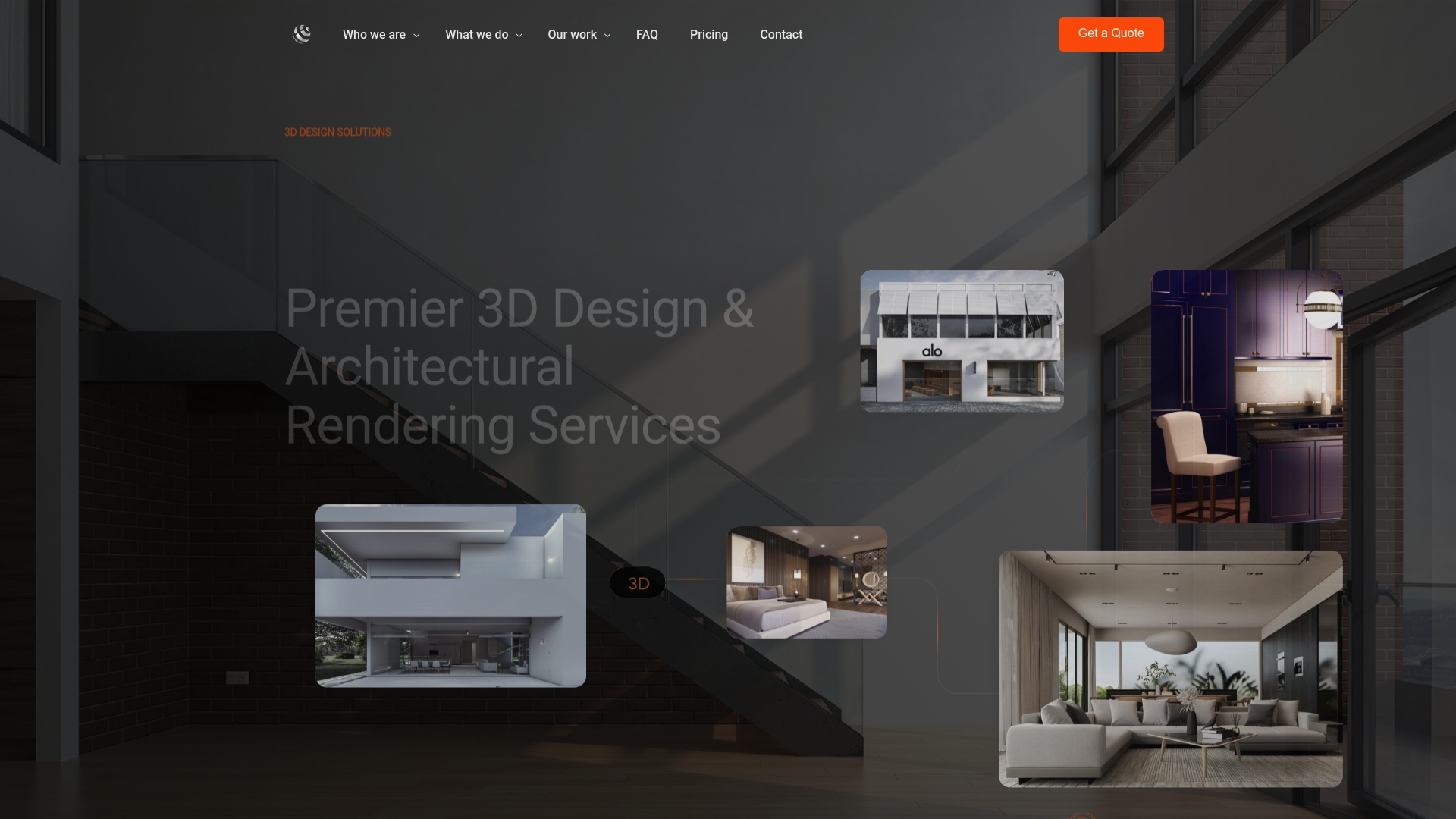
Contact Rendimension now and turn your architectural concepts into captivating visual experiences that win trust and inspire action.
Frequently Asked Questions
What is architectural visualization and why is it important for pitch success?
Architectural visualization is the process of creating visual representations of architectural designs, such as 3D models and renderings. It is crucial for pitch success as it helps convey design ideas clearly, allowing clients and stakeholders to grasp the project’s vision and emotion.
How can residential exterior rendering enhance a property’s market value?
Residential exterior rendering can increase a property’s market value by creating strong curb appeal, leading to higher buyer interest. Aim to implement high-quality renderings that highlight design features and landscaping, potentially raising sale prices by about 7%.
What role do 3D walkthroughs play in client presentations?
3D walkthroughs transform traditional presentations by allowing clients to virtually explore proposed designs. To maximize their impact, incorporate smooth navigation through spaces, which facilitates better understanding and emotional engagement with the project.
How does lighting visualization affect architectural design understanding?
Lighting visualization showcases how natural and artificial light interacts with a building throughout different times of day. Create effective visualizations that highlight shadow dynamics and material properties to deepen clients’ comprehension of spatial quality and ambiance.
What are some key elements of effective interior visualization?
Effective interior visualization includes spatial flow analysis, material representation, and lighting scenario simulations. Focus on depicting human scale elements like furniture to help clients intuitively understand space proportions and functionality.
Why should I use aerial views in my architectural presentations?
Aerial views provide a comprehensive perspective of spatial relationships and site context for urban planning projects. Use them to show how proposed designs integrate with their surroundings and to communicate development phases effectively.
Recommended
- Transform Architecture With Advanced 3D Rendering : Rendimension
- High Quality 3D Rendering And Architectural Visualization
- How To Find The Best Architectural Rendering Services
- 3D Rendering – Rendimension
Article generated by BabyLoveGrowth
