Impressing high-profile clients often comes down to more than sharp technical drawings or ambitious design concepts. For architects and interior designers in competitive markets like the United States, Canada, France, and the United Arab Emirates, the push for perfection centers on creating presentations that feel truly immersive. Mastering photorealism is now essential for transforming ideas into visual stories that capture attention and trust. This guide explores practical strategies that can help you achieve striking, convincing architectural renderings for luxury residential projects.
Table of Contents
- Defining Photorealism In Architectural Rendering
- Core Elements Of Photorealistic Visuals
- Techniques For Achieving True Realism
- Real-World Uses In High-End Projects
- Common Mistakes And How To Avoid Them
Key Takeaways
| Point | Details |
|---|---|
| Mastering Technical Elements | Focus on geometry, materials, and lighting to create highly realistic architectural renderings. |
| Invest in Quality Resources | Use high-quality texture libraries and advanced rendering software to enhance visual authenticity. |
| Utilize Strategic Lighting Techniques | Carefully orchestrate light sources to replicate real-world conditions and add depth to your visualizations. |
| Avoid Common Pitfalls | Pay attention to lighting balance and material representation to prevent flat or unrealistic visuals. |
Defining Photorealism in Architectural Rendering
Photorealism represents a sophisticated visualization technique transforming architectural presentations from simple technical drawings into immersive, lifelike representations. At its core, photorealistic rendering creates digital images indistinguishable from actual photographs, capturing every nuanced detail with remarkable precision. Architects and designers now utilize advanced 3D rendering technologies to generate visual experiences that blur the lines between imagination and reality.
The fundamental goal of photorealistic architectural rendering involves recreating physical environments with unprecedented accuracy. This involves meticulously simulating complex interactions between light, materials, textures, and spatial geometry. Advanced rendering engines calculate how light reflects, refracts, and interacts with different surface materials – whether glass, concrete, wood, or metal – producing images that capture minute imperfections and atmospheric conditions that make visualizations feel authentic.
Photorealistic rendering goes beyond mere visual representation by enabling stakeholders to comprehend architectural designs before construction begins. Clients can now walk through virtual spaces, experiencing proposed designs with near-photographic fidelity. This technology eliminates communication barriers, allowing architects to translate complex spatial concepts into compelling, immediately understandable visual narratives that resonate with both technical professionals and non-technical audiences.
Pro Tip: Invest in high-quality texture libraries and reference photography to enhance the realism and precision of your architectural renderings.
Core Elements of Photorealistic Visuals
Achieving photorealistic architectural visualizations requires mastering several critical technical elements that transform digital representations into stunningly lifelike images. Precise 3D modeling techniques form the foundational framework, demanding meticulous attention to geometric accuracy, scale, and intricate surface details that mirror real-world architectural environments.
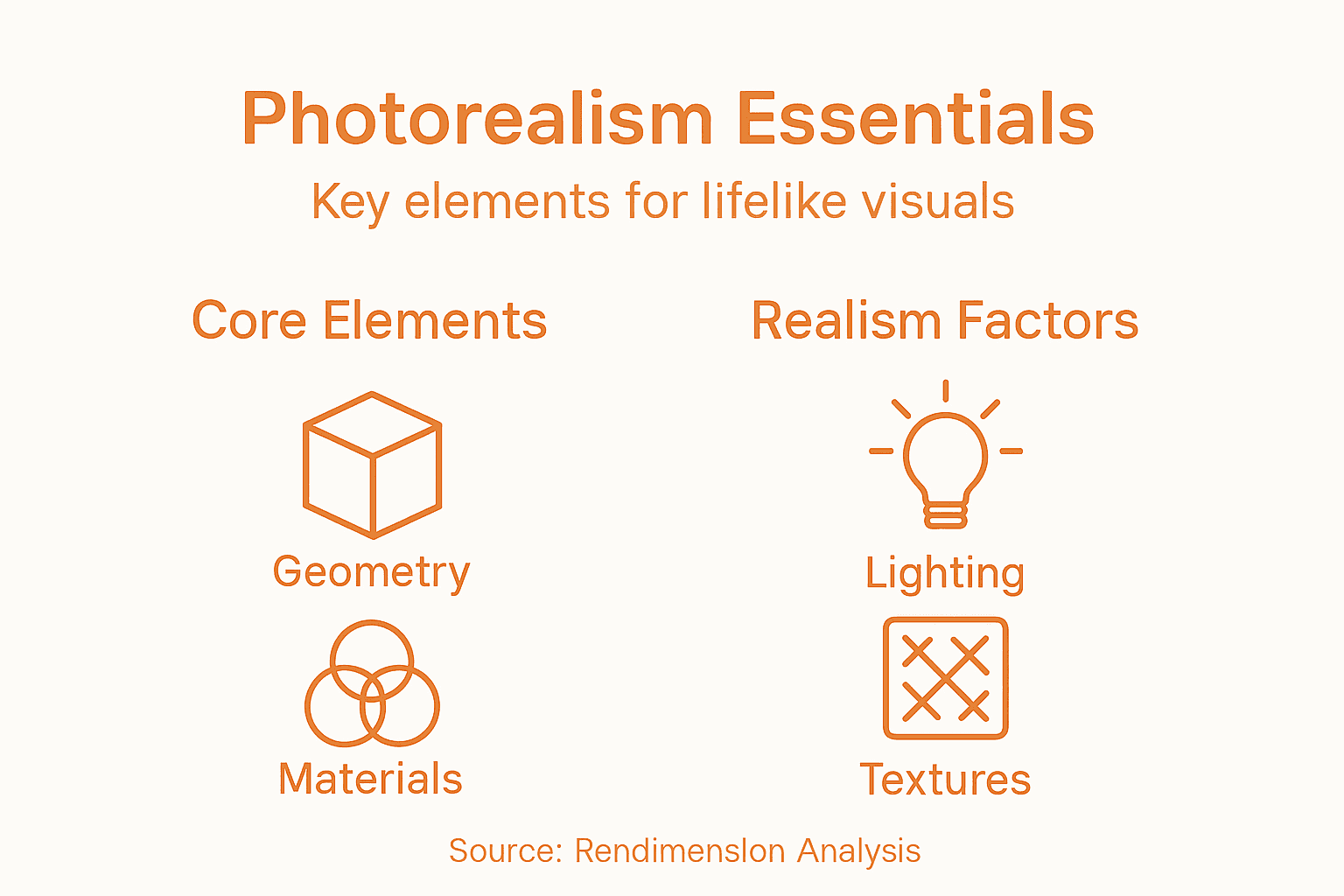
Three primary components define photorealistic visual quality: geometry, materials, and lighting. Geometric modeling demands extraordinary precision, where every architectural element must be constructed with mathematical exactness, capturing structural nuances from precise angles and perspectives. Material rendering represents another crucial dimension, requiring high-resolution texture maps that replicate real-world surface characteristics – including reflection, transparency, roughness, and subtle imperfections that make digital representations feel authentic.
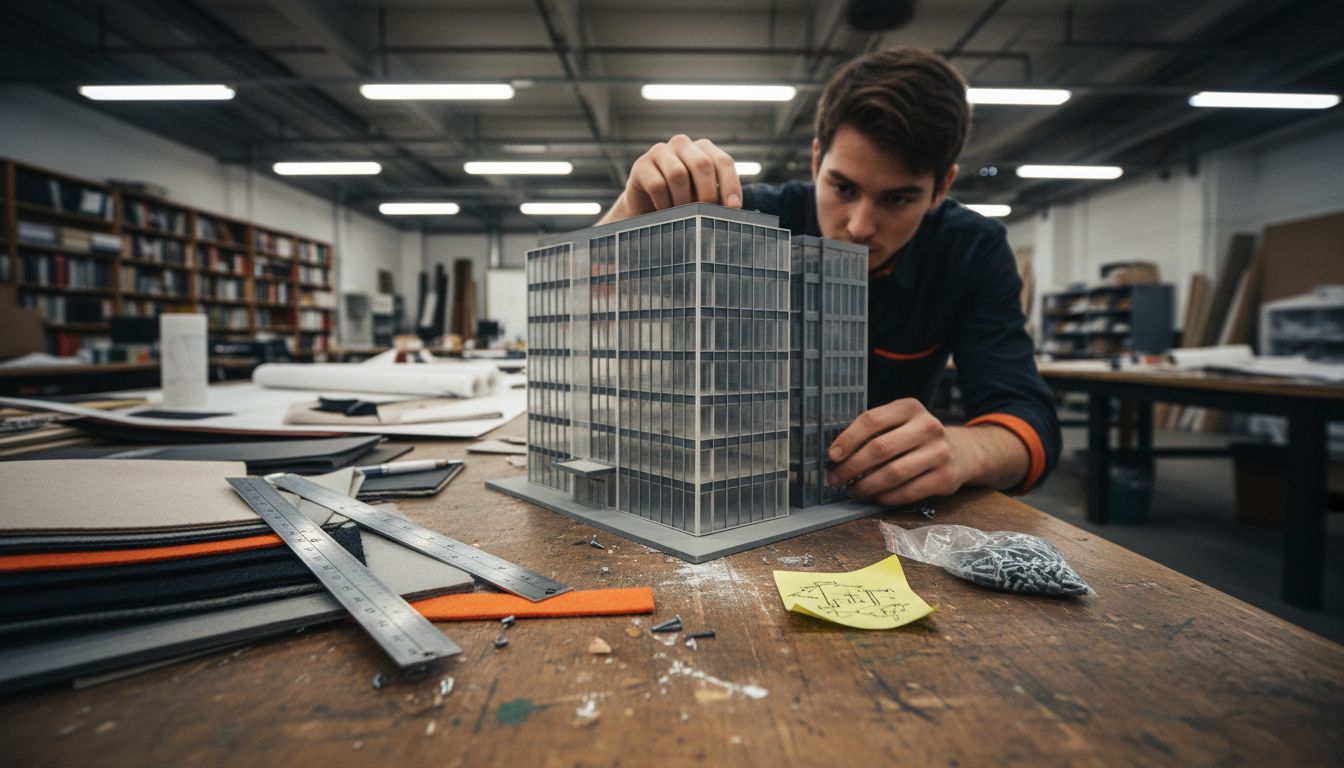
Lighting emerges as perhaps the most sophisticated element in photorealistic rendering, acting as the critical bridge between digital simulation and perceived reality. Advanced rendering techniques simulate complex light interactions, calculating how natural and artificial light sources penetrate, reflect, and interact with different architectural surfaces. This intricate process involves sophisticated algorithms that model light’s behavior, accounting for atmospheric conditions, indirect illumination, and subtle chromatic variations that breathe life into digital architectural visualizations.
Pro Tip: Invest in physically based rendering software that offers advanced light simulation capabilities to elevate your architectural visualization from good to extraordinarily realistic.
Here is a summary of essential elements that impact photorealistic architectural visuals:
| Core Element | Role in Rendering | Typical Challenges |
|---|---|---|
| Geometry | Ensures accurate form and scale | Capturing fine details |
| Materials | Simulates realistic surfaces | Consistent texture mapping |
| Lighting | Creates lifelike environments | Balancing multiple sources |
Techniques for Achieving True Realism
Achieving photorealistic architectural visualization demands a sophisticated blend of technical skill and artistic perception. Strategic lighting techniques serve as the cornerstone of creating immersive, lifelike digital representations that transcend traditional rendering methods. Architects and visualization specialists must carefully orchestrate light sources to simulate real-world environmental conditions, capturing nuanced interactions between natural sunlight and artificial illumination.
Texture mapping represents another critical dimension in generating authentic architectural visualizations. Advanced rendering approaches require high-resolution material simulations that meticulously replicate surface characteristics – from the subtle grain of weathered concrete to the reflective complexity of glass facades. These techniques go beyond simple image application, involving complex algorithms that calculate how light interacts with different surface properties, creating depth, reflection, and microscopic imperfections that distinguish professional renderings from amateur attempts.
Camera composition and perspective management play equally pivotal roles in achieving true visual realism. Skilled visualization artists manipulate depth of field, focal length, and subtle lens distortions to mimic professional photographic techniques. This approach involves understanding how human perception interprets architectural spaces, strategically framing views to create emotional resonance and spatial understanding that extends beyond mere technical accuracy. By combining precise geometric modeling, advanced material simulation, and sophisticated lighting techniques, architects can transform digital representations into compelling visual narratives that feel remarkably tangible.
Pro Tip: Experiment with physical camera settings in your rendering software to replicate real-world photographic characteristics and enhance visual authenticity.
Real-World Uses in High-End Projects
Photorealistic architectural rendering has revolutionized how complex projects are conceived, developed, and presented across multiple high-stakes industries. Advanced 3D rendering techniques enable architects and developers to create immersive visual experiences that transform abstract concepts into tangible, compelling narratives for stakeholders, investors, and clients.
In luxury residential developments, photorealistic visualizations have become instrumental in marketing premium properties before construction begins. Developers can now showcase intricate interior designs, exterior landscaping, and spatial relationships with unprecedented detail, allowing potential buyers to virtually explore million-dollar properties from initial conceptual stages. These hyper-realistic representations capture minute design elements – from custom marble textures to precise lighting conditions – that communicate the exceptional quality and emotional potential of architectural spaces.
Beyond residential markets, photorealistic rendering plays critical roles in large-scale commercial and institutional projects. Urban planning initiatives, cultural centers, corporate headquarters, and complex infrastructure projects leverage these visualization techniques to communicate sophisticated design intentions. By creating immersive digital representations that accurately simulate materials, lighting, and spatial dynamics, architects can effectively communicate complex design strategies to diverse stakeholder groups, including municipal authorities, funding committees, and community representatives who may lack specialized technical knowledge.
Pro Tip: Develop a comprehensive digital asset library of high-quality textures and lighting presets to streamline your photorealistic rendering workflow and maintain consistent visual quality across projects.
Below is a comparison of where photorealistic rendering adds value across different project types:
| Project Type | Primary Benefits | Key Visualization Features |
|---|---|---|
| Luxury Residential | Persuades potential buyers | Realistic interiors, fine detail |
| Commercial | Clarifies design intentions | Accurate materials, lighting |
| Institutional | Engages diverse stakeholders | Spatial context, atmosphere |
Common Mistakes and How to Avoid Them
Photorealistic architectural rendering demands precision, and even experienced professionals can fall prey to subtle yet critical errors that compromise visual authenticity. Photorealism requires meticulous attention to nuanced details that separate exceptional renderings from mediocre representations. Understanding common pitfalls is the first step toward creating truly immersive visualizations that capture the intricate essence of architectural design.
One of the most prevalent mistakes involves improper lighting techniques that undermine the entire rendering’s credibility. Architects and visualization specialists often struggle with balancing natural and artificial light sources, resulting in flat, unrealistic scenes that lack depth and emotional resonance. Accurate light simulation demands understanding how different materials interact with light – including subtle reflections, shadows, and atmospheric scattering that create true-to-life visual experiences. Professionals must invest time in studying real-world lighting conditions, experimenting with complex light interactions, and developing a nuanced approach to illumination that goes beyond basic rendering settings.
Texture and material representation presents another significant challenge in achieving photorealistic architectural visualizations. Inexperienced artists frequently apply generic textures without considering scale, context, and microscopic surface variations that define realistic materials. High-end renderings require an almost forensic approach to material simulation – understanding how surfaces reflect light, how wear and aging impact textures, and how different materials interact within a complex architectural environment. This level of detail separates professional visualizations that communicate design intent from amateur attempts that feel sterile and disconnected from real-world architectural experiences.
Pro Tip: Create a personal reference library of high-resolution texture photographs and lighting reference images to continuously refine your understanding of material and light interactions.
Elevate Your Architectural Presentations with Photorealistic Visualization
Struggling to bring your architectural visions to life with true photorealism and immersive detail This article highlights the challenges of mastering geometry precision material realism and advanced lighting techniques to create believable environments that captivate clients and stakeholders. At Rendimension we understand how critical it is to overcome these hurdles to deliver visuals that deeply resonate and drive decisions Our professional 3D rendering services specialize in transforming complex designs into stunningly accurate lifelike images that reduce communication gaps and accelerate project approval.

Unlock the full potential of your next project by partnering with Rendimension Our expert team delivers high-quality architectural visualization and virtual walkthroughs tailored to your unique concept From luxury residential spaces to commercial developments gain a competitive edge with photorealistic renderings that engage and persuade leading clients worldwide Discover how our collaborative process and precision detail can elevate your presentations today Visit Rendimension to explore our full range of solutions and start turning your designs into breathtaking visual stories now.
Frequently Asked Questions
What is photorealism in architectural rendering?
Photorealism in architectural rendering is a sophisticated visualization technique that creates digital images that look indistinguishable from actual photographs, enhancing the presentation of architectural designs.
What are the core elements of photorealistic architectural visuals?
The core elements include geometry, materials, and lighting. Each of these elements must be precisely modeled and rendered to create lifelike images that accurately represent the intended design.
How do lighting techniques impact photorealistic rendering?
Lighting techniques play a crucial role in photorealistic rendering by simulating real-world environmental conditions and creating depth and emotion in the visuals, ensuring the representation feels authentic.
What common mistakes should be avoided in photorealistic rendering?
Common mistakes include improper lighting balance, the use of generic textures, and neglecting the intricate details that define realistic materials. Understanding these pitfalls can significantly improve the quality of architectural visualizations.
Recommended
- Transform Architecture With Advanced 3D Rendering : Rendimension
- Future Of 3D Rendering | Trends & Innovations – Rendimension
- 3D Rendering – Rendimension
- Architectural Rendering Services Near Me Insights – Rendimension
Article generated by BabyLoveGrowth
